

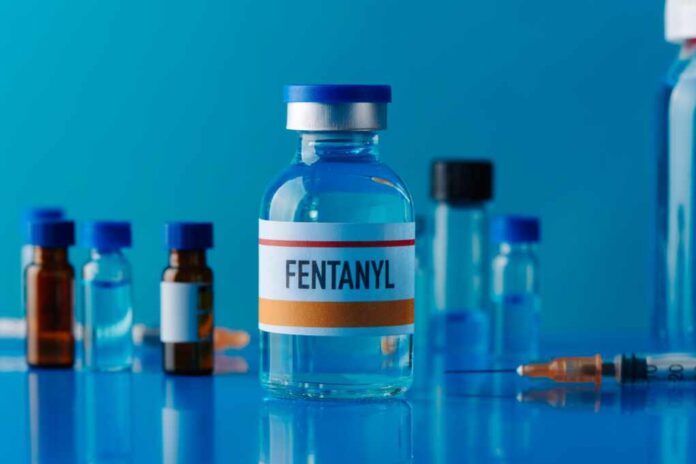
The designation of fentanyl as a weapon of mass destruction (WMD) by President Trump marks a historical shift in the U.S. response to the opioid crisis. On December 16, 2025, President Donald Trump signed an Executive Order classifying illicit fentanyl and its precursor chemicals as WMDs, thereby redefining the opioid crisis as a national security issue. By invoking counter-WMD frameworks, the administration aims to disrupt supply chains, impose stricter penalties on traffickers—especially foreign producers in China and cartels in Mexico—and empower federal agencies like the DEA with enhanced tools and national security protocols typically reserved for chemical or nuclear threats. This decisive action signals a bold federal commitment to tackle a crisis that has escalated since the 2010s and is now responsible for a majority of the nation’s overdose deaths.
Story Highlights
- President Trump declares fentanyl a weapon of mass destruction.
- The decision redefines the opioid crisis as a national security threat.
- The U.S. aims to disrupt supply chains and impose penalties on foreign producers.
- DEA gains enhanced tools to combat fentanyl trafficking.
Trump’s Executive Order and Its Implications
On December 16, 2025, President Donald Trump signed an Executive Order classifying illicit fentanyl and its precursor chemicals as weapons of mass destruction. This decisive action redefines the opioid crisis as a national security issue, moving beyond a public health or criminal matter. By invoking counter-WMD frameworks, the administration aims to disrupt supply chains and impose stricter penalties on traffickers, especially targeting foreign producers such as those in China.
The Executive Order directs federal agencies to prioritize fentanyl cases using national security protocols typically reserved for chemical or nuclear threats. This approach empowers law enforcement to reallocate resources without needing new legislation, signaling a bold federal commitment to tackle the crisis. The GOP has emphasized consequences for non-cooperative foreign producers, aligning with their tough stance on crime and border security.
President Donald Trump has signed an executive order classifying fentanyl as a weapon of mass destruction, giving his administration broad legal authority to combat the trafficking of the synthetic narcotic. https://t.co/JGMbbGt4Kb pic.twitter.com/l6VPv7o0zZ
— TheFinancialDistrict (@TheFinancialD) December 23, 2025
The Historical Context of the Opioid Crisis
The opioid crisis in the U.S. has been escalating since the 2010s, initially driven by prescription opioids and later transitioning to synthetic fentanyl. By 2023, opioids were responsible for approximately 107,000 overdose deaths, with fentanyl accounting for 70% of these fatalities. The Drug Enforcement Administration (DEA) has seized over 60 million fentanyl-laced pills and 8,000 pounds of powder, equating to more than 380 million lethal doses.
Fentanyl precursors primarily originate from China and are trafficked through Mexico by organized cartels. During Trump’s first term, he declared a border emergency and pushed for the HALT Fentanyl Act, which aimed to permanently classify fentanyl as a Schedule I substance. In his second term, he designated eight cartels as Foreign Terrorist Organizations, authorized military strikes on smuggling boats, and imposed tariffs on nations failing to curb the production of fentanyl precursors.
Impact and Stakeholders
The designation of fentanyl as a WMD is expected to have significant short-term and long-term impacts. In the short term, it will likely lead to harsher charges for traffickers, improved agency coordination, and disruptions in supply chains through military strikes and tariffs. Long-term implications could include a precedent for treating drugs as WMDs, potential military involvement in related crises, and diplomatic tensions with China and Mexico. The decision aims to reduce the number of overdose deaths, bolster the GOP’s tough-on-crime image, and scrutinize the pharmaceutical and chemical industries for their role in precursor production.
The Trump administration’s aggressive stance has centralized authority through executive action, with agencies such as the DEA and DOJ gaining leverage over cartels and foreign suppliers. This move aligns with conservative values of national security and limited government intervention, focusing on protecting American citizens from what is perceived as an existential threat.
Watch the report: Trump designates fentanyl as weapon of mass destruction
Sources:
- Trump Labels Fentanyl a Weapon of Mass Destruction
- Trump Labels Fentanyl a Weapon of Mass Destruction, DEA Signals Broader Crackdown
- Trump Declares Fentanyl a WMD in Bold Crackdown on Drug Crisis
- Designating Fentanyl as a Weapon of Mass Destruction