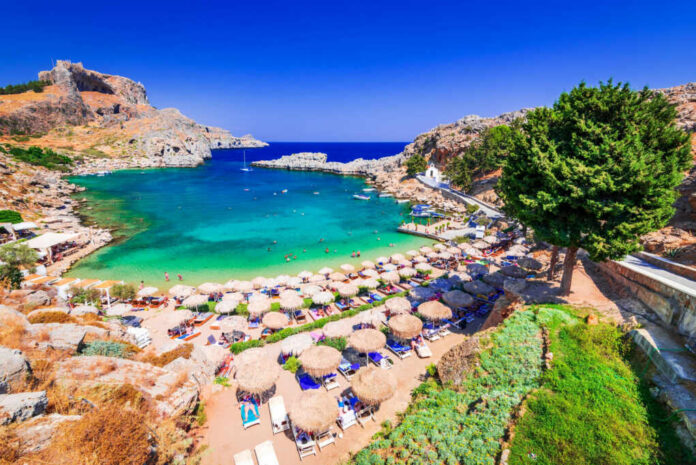
Global marketers turned a handful of foreign beaches into wallpaper for the modern age—then “sustainable tourism” rules moved in to ration access after the crowds arrived.
Story Snapshot
- Travel media’s “beach you’ve seen 1,000 times” trope points to iconic shorelines repeatedly used in ads, films, and stock imagery.
- Navagio Beach in Greece, Anse Source d’Argent in the Seychelles, and Whitehaven Beach in Australia became globally recognizable largely through media exposure.
- Maya Bay’s film-driven surge became a cautionary tale, leading to closures and strict reopening rules meant to limit environmental damage.
- Authorities increasingly manage access through caps, boat-only entry, and tighter drone rules—shifting these places from open destinations to regulated experiences.
How a Few Beaches Became “Famous Without a Name”
Travel outlets increasingly describe certain shorelines as places you “know” even if you can’t name them, because the images have been recycled for decades in commercials, movies, and stock photography. The research behind the trope highlights a short list: Navagio Beach on Zakynthos, Greece; Anse Source d’Argent on La Digue in the Seychelles; and Whitehaven Beach in Australia’s Whitsundays. Their visual signatures—shipwreck cliffs, granite boulders, and silica-white sand—make them instantly identifiable in a scroll.
That familiarity did not happen by accident. Media moments pushed these beaches from local landmarks into global branding assets. A Bacardi campaign in 1991 helped cement Anse Source d’Argent as an advertising staple, while the 2000 film The Beach turned Thailand’s Maya Bay into a bucket-list phenomenon. Over time, drone footage and social platforms accelerated the effect, giving tourism boards and private operators a steady stream of free marketing that no public relations budget could easily replicate.
Iconic Geology, Iconic Footage, and the Tourism Machine
Each beach cited in the research has a concrete, camera-friendly feature that explains why it keeps getting reused. Navagio’s identity is tied to a rusting shipwreck (the MV Panagiotis) below sheer cliffs, a scene that reads like a movie set even in still photos. Whitehaven’s sand stands out because it is extremely high in silica, producing that bright, clean look travel brands love. Anse Source d’Argent’s granite boulders and shallow turquoise water create a naturally staged foreground-background composition for commercials.
The same machine that spreads these images also concentrates economic incentives. Tourism boards and local authorities promote access because visitor fees and tour revenue matter to island economies, while film and advertising crews seek reliable “paradise” backdrops that translate across cultures. The research also flags an important limitation: outside of high-level claims about revenue and crowding, the sources do not provide consistent, comparable metrics on how much visitor volume changed year to year. What is clear is the basic cycle—exposure drives demand, and demand drives pressure on fragile ecosystems.
Maya Bay: When Pop Culture Turns Into Park Policy
Maya Bay remains the cleanest example in the research of what happens when viral beauty collides with finite space. After the success of The Beach, reported crowds reached thousands per day, and Thai officials later closed the area in 2018 for environmental recovery. When the site reopened, rules were notably stricter, including limits on visitor numbers and controls on activities such as swimming and rafting. Officials have pointed to coral recovery in later updates, reinforcing the argument that restrictions can deliver measurable ecological benefits.
Regulated Access Expands: Caps, Boat-Only Entry, and Drone Rules
Across multiple locations, the research points to a broader shift: these are no longer simply beaches—they are managed assets with rules that can change quickly. Navagio’s beach access is commonly described as boat-only, with viewing often occurring from above the cliffs, and recent years have brought tighter drone regulation in some destinations. Remote access adds to the mystique, but it also creates choke points where authorities can enforce quotas and where tour operators can effectively control entry through scheduling and pricing.
For American readers watching global trends, the takeaway is straightforward: the combination of mass marketing and regulatory management can turn what looks like “public nature” into a permission-based experience. The sources here focus on travel, not U.S. law, but the pattern is familiar—institutions market an ideal, crowds follow, and then bureaucracies step in with restrictions to mitigate damage. The environmental need may be real, yet the end state often resembles rationing, not freedom of access.
Sources:
10 Most Photogenic Beach Destinations Around the World
The World’s Most Insanely Gorgeous Beaches
Five Most Photogenic Beaches Around the World
Robert Capa’s Iconic Images from Omaha Beach
Photos of Historical Figures at the Beach