

One alpine afternoon in 1988 distilled the hazards of off-piste skiing and the weight of public life: a crown-in-waiting survived an avalanche by seconds while a close friend died within yards, and the first thing he did was start digging.
At a Glance
- On March 10, 1988, an avalanche struck a small ski party near Klosters, Switzerland; Prince Charles narrowly escaped while Major Hugh Lindsay was killed and Patricia Palmer-Tomkinson was seriously injured.
- Contemporaneous reports describe Charles unhurt yet visibly shaken; he and others immediately joined rescue efforts, digging to reach those buried.
- Swiss authorities later ended a criminal inquiry, finding no personal fault by Charles while concluding the group’s off-piste choices collectively triggered the slide.
- The episode has since become a case study in avalanche risk and responsibility: route choice, conditions, and group judgment matter as much as individual skill.
What Happened on the Mountain
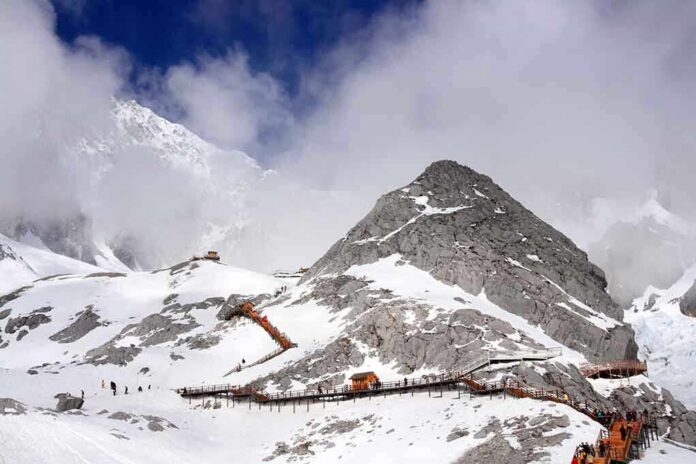
In mid-afternoon on March 10, 1988, a six-person party skiing off marked runs above the Swiss resort of Klosters was hit by a slab avalanche. Prince Charles, then the Prince of Wales, avoided the main flow; two companions were swept hundreds of meters downslope. Major Hugh Lindsay, 34, a former equerry to Queen Elizabeth II, suffered fatal injuries. Patricia Palmer-Tomkinson was buried and severely hurt but survived after a rapid, improvised rescue that began with fellow skiers digging in the debris field before helicopters and organized responders arrived. Contemporary news accounts, drawing on statements from Buckingham Palace and Swiss officials, are aligned on these core facts: Charles was physically unharmed but distressed; Lindsay died at the scene; Palmer-Tomkinson was evacuated with serious leg injuries.
The violence of a dry-slab avalanche is not cinematic flourish. When a cohesive layer of snow fractures and accelerates, victims are tumbled and battered as the moving snow entrains more beneath it; arrest is often a matter of terrain. Witnesses and subsequent coverage placed the burial zone hundreds of meters below the trigger, consistent with a significant slab release on a steep alpine face. The group’s initial response—locate last-seen points, probe, dig—conformed to the basic avalanche-rescue sequence of the era, when transceiver penetration among recreational parties was patchy and professional teams could be precious minutes away.
How Avalanches Punish Group Decisions
Modern avalanche education emphasizes three variables: conditions (snowpack structure and recent weather), terrain (slope angle and exposure), and human factors (group dynamics and risk tolerance). The Klosters party was skiing “off-piste,” outside controlled runs; the avalanche released above them and engulfed part of the line traversing beneath. Months later, Swiss investigators closed a criminal inquiry: Charles was exonerated of personal fault, yet authorities concluded the six-person group collectively caused the slide by skiing outside marked routes in unstable conditions—a finding that tracks with how responsibility is often assessed when accidents stem from shared route choices rather than a single reckless act.
This is not legal hair-splitting; it is a recognition of mechanism. Avalanches are frequently human-triggered when a skier’s weight collapses a weak layer, propagating a fracture across a slope. On marginal days, stringing a party across suspect terrain increases exposure windows and potential trigger points. Liability research in mountain sports repeatedly shows that outcomes tend to map to collective decisions about terrain and timing, especially in youth or guided groups; formal fault is less common than findings of shared risk assumption when parties leave controlled areas.
The Record and Its Afterlives
Because the central facts were established within hours—one dead, one injured, the heir apparent shaken but alive—the incident quickly acquired layers of meaning. For the press, it was a royal near-miss with tragic consequence; for avalanche professionals, a case study in human-triggered slides on popular off-piste terrain; for the people on that slope, a personal catastrophe. Subsequent retellings have sometimes braided the event into broader narratives about royal character or relationships. Those interpretations are downstream of the event itself. The backbone remains what was reported and later affirmed: the slide struck a small party traversing off-piste; Charles escaped; Lindsay died; Palmer-Tomkinson survived; and investigators attributed causation to collective choices rather than individual culpability.
The British and international press captured details that have held up under scrutiny. Early BBC summaries framed it starkly—“narrowly avoided death”—while reporting that Lindsay was carried hundreds of meters by the slide. The Los Angeles Times, drawing on Swiss and Palace statements, identified the victims and confirmed Charles’s physical safety while noting his distressed condition. Months later, the same outlet reported the inquiry’s conclusion, clearing Charles personally while citing the group’s off-piste decisions as the precipitating factor.
Mechanics of Rescue Then and Now
In 1988, recreational avalanche rescue was a race against the asphyxiation clock conducted with minimal tools. The gold standard remains the same—immediate companion rescue—but the means have advanced. Today, widespread use of modern transceivers, probes, compact shovels, and airbags, coupled with swift deployment by helicopter teams equipped with RECCO reflectors, canine units, and even thermal drones, shortens search time and improves odds. The Klosters response began as many still do: by the people already there, digging where the snow and terrain indicated a burial, before organized teams could land. Survival curves in avalanche science are brutal; minutes matter. That Palmer-Tomkinson was recovered alive underscores that even without today’s kit, decisive action can change outcomes—while also illustrating how quickly the window closes.
The incident also reinforces an unglamorous truth that experienced skiers internalize: when the hazard rating pushes higher and the snowpack shows persistent weak layers, the most aggressive decision is restraint. The safest choice is often to stay on controlled pistes or conservative terrain features that keep slope angles below the most avalanche-prone thresholds. Collective decision-making—who speaks up, who sets the line, who enforces spacing—can be as protective as any piece of equipment.
Why This Endures
Fatalities in proximity to public figures are never just accidents in the public imagination; they become parables. Yet the enduring value of the Klosters avalanche, beyond royal biography, lies in how cleanly it illustrates the chain that produces most recreational avalanche deaths: a tempting line off the marked run, ambiguous warnings, a group confident in its abilities, a slab that fails, and the razor-thin boundary between a story retold and a name on a memorial. The Swiss finding that responsibility was collective, coupled with Charles’s lack of personal fault, aligns with both the physics of snow and the sociology of mountain travel.
For those who still venture off-piste, the lesson is not abstinence but discipline. Avalanche risk is probabilistic, not fated; it is managed by terrain choices, attention to conditions, humility about uncertainty, and an agreement within the group that turning back is not failure. The Klosters party had skill and experience; the mountain had the last word. That is the logic of winter in steep country, whether the skier is anonymous or globally recognized.
King Charles nearly died in a 1988 avalanche that killed his close friend — and the constitutional implications would have been staggering.
The monarch recently reflected on the disaster at his favorite Swiss resort of Klosters, telling a mountain rescue team “it was a close… pic.twitter.com/VdwLrNY7dQ
— Fox News Entertainment (@FoxNewsEnt) August 22, 2026
The Human Ledger
Major Hugh Lindsay left behind a pregnant wife and friends who had expected a week in the Alps, not a funeral. Patricia Palmer-Tomkinson endured severe injuries and a long recovery. Charles walked away, changed by proximity to loss that was measured in meters and moments. Those outcomes are the true stakes of avalanche risk: the asymmetry between a day’s recreation and a lifetime’s consequence. The official record captures the facts; the lasting lesson is how to keep a recreation day from turning into a case file—one conservative choice at a time.
Sources:
facebook.com, news.bbc.co.uk, latimes.com, blog.nationalmuseum.ch, bbc.com, express.co.uk