

California’s move to convert every death sentence to life without parole sets up a showdown over justice, power, and trust in government.
Story Snapshot
- Governor Gavin Newsom moved to commute 548 death sentences to life without parole, citing ethics.
- The plan needs legal steps, including state Supreme Court review for many cases, before it takes effect.
- Los Angeles County District Attorney Nathan Hochman warned some inmates may later seek parole or court relief.
- Victims’ families say they were not consulted before the announcement.
What Newsom Ordered And Why It Matters
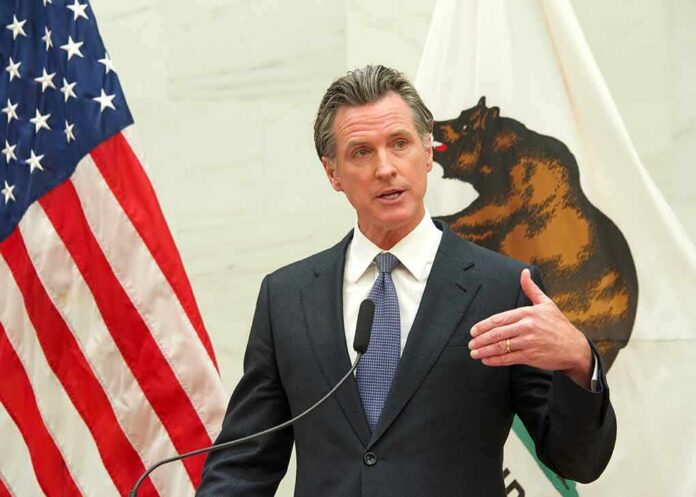
Governor Gavin Newsom said he will use his clemency power to change every California death sentence to life in prison without any chance of parole. He called it the harshest penalty the state can ethically enforce. He said he has opposed executions for decades and framed the move as a moral duty. His office said the people affected will remain in prison and will not be eligible for release if the change stands.
Newsom’s announcement follows years without an execution in California. The last execution occurred in 2006. In 2019, Newsom set a moratorium that blocked executions from happening on his watch. Reporters noted the new step seeks to resolve the gap between death sentences on paper and a system that does not carry them out. That history helps explain why the governor sees commutation as a clearer, final outcome than a stalled death row.
How The Plan Would Work In Law
Newsom’s office described the action as a formal use of constitutional clemency power. The state said the commutations will not take effect until the required legal steps are complete. Many cases need review by the California Supreme Court before they can be finalized. The governor’s letter said all 548 people under a death sentence would receive the same commutation to life without parole, applying one rule across the board.
Reuters reported that the California Supreme Court must review 382 of the cases, adding time and uncertainty to the process. That review could narrow or delay some commutations. It also means the move is not yet finished, and some requests could lapse if not resolved by set deadlines. That legal path is routine for clemency in complex cases but raises questions about timing and implementation before every case is locked in.
Why Prosecutors And Victims’ Families Are Pushing Back
Los Angeles County District Attorney Nathan Hochman said the decision does not erase the death penalty from California law. He said only lawmakers or voters can do that. He also warned that some people whose sentences are changed might later seek parole or other court relief, which would force his office to respond case by case. He said his office will keep evaluating death-eligible cases under current law.
California prosecutors slam Newsom's death row commutations, accuse governor of putting 'politics over people' https://t.co/098UfjBA3a #FoxNews This is just a disgrace….JLN
— Jack Nethercot (@JackNethercot) November 7, 2026
Hochman and other critics said victims’ families were not asked for input before the public rollout. They argued the blanket move sidelines juries, judges, and survivors who endured long trials and appeals. Supporters of the governor’s plan counter that life without parole keeps the public safe while avoiding the ethical and practical problems linked to executions. This clash shows a wider split between the desire for finality and the push to reform an execution system that rarely functions.
What This Says About Power And Public Trust
California voters kept the death penalty in past statewide votes, yet the state has not carried out an execution in two decades. That tension fuels charges from both sides that leaders are not honoring the will of the people. The governor says clemency is a lawful, ethical fix. Opponents say it sidesteps voters and victims. Many Americans, left and right, see a system that drifts without clear results, which deepens the belief that elites make big calls without real accountability.
Key Questions To Watch Next
Courts will decide how many commutations take effect, and on what timeline. The state will need to show that life without parole truly blocks release in practice across all cases. Prosecutors will test legal routes if inmates seek new hearings. Victims’ families will press for a say in process and notice. The answers will shape whether this is seen as a principled reset that brings finality, or another top-down move that widens the gap between law on paper and justice people can trust.
Sources:
nypost.com, gov.ca.gov, us.cnn.com, rmb.reuters.com, upi.com, bostonherald.com, da.lacounty.gov