

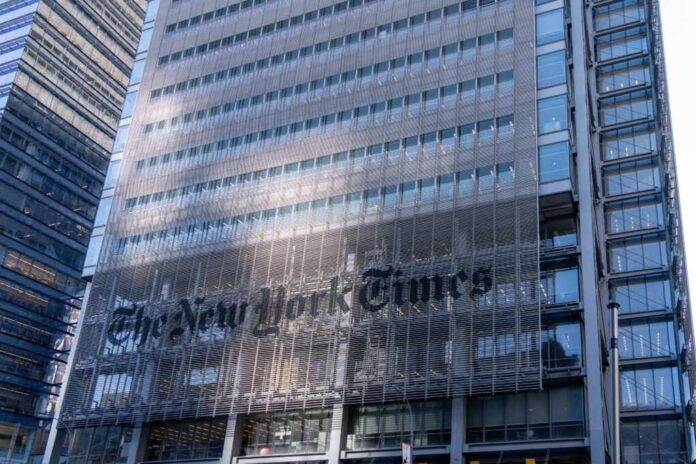
The New York Times ignited a firestorm of conservative outrage with a recent article scrutinizing President Trump’s stamina and suggesting “fatigue.” Conservative outlets swiftly denounced the coverage as a politically motivated “hit piece,” arguing it demonstrates a clear media bias by holding Trump to a different standard than former President Joe Biden on age-related issues. The controversy has been amplified by the article’s resurfacing of Trump’s past controversial rhetoric, further polarizing the political discussion on media integrity and fairness.
Story Highlights
- The New York Times questions Trump’s stamina, labeling it as fatigue.
- Conservative media denounces the report as biased, ignoring Biden’s similar issues.
- The article ties Trump’s remarks to a history of racism, intensifying political polarization.
- Trump counters with recent health results, challenging the media’s narrative.
Media Bias and Double Standards
In early December 2025, a provocative article by *The New York Times* examined President Trump’s alleged fatigue, citing a reduction in his public appearances and a compressed workday compared to his first term. This coverage has been criticized by conservative outlets as a politically motivated attack, especially given the media’s leniency towards Joe Biden’s age-related issues during his presidency. This perceived double standard has fueled claims of media bias, with Trump supporters arguing that the mainstream media selectively targets Trump while sparing Biden from similar scrutiny.
Blaze Media’s Sara Gonzales and other conservative commentators have highlighted this disparity, pointing to Biden’s history of gaffes and cognitive lapses, which were often downplayed or ignored by the same outlets. This has reinforced the narrative of a biased media landscape, where progressive figures receive more favorable coverage compared to their conservative counterparts.
Trump working up to 12-hour days, Oval Office logs show — refuting NY Times report on ‘fatigue’ limiting events https://t.co/ick3zXQTrz pic.twitter.com/rdY2OTKUuB
— New York Post (@nypost) December 2, 2025
Trump’s Response to Allegations
President Trump has strongly refuted the *Times*’ claims, taking to Truth Social to label the article a “hit piece.” He cited his recent health evaluations, which reportedly demonstrated his physical and cognitive fitness, to counter the narrative of fatigue. Trump and his allies argue that his second-term agenda and recent achievements, including a strong economic performance and foreign policy wins, are evidence of his continued vigor and capability.
The controversy has also reignited debates over Trump’s rhetoric, particularly after the *Times* highlighted a cabinet meeting where Trump allegedly made derogatory remarks about Somali immigrants. This aspect of the article has further polarized the discussion, with critics accusing Trump of maintaining a pattern of racially insensitive remarks, while his supporters decry what they see as unfair characterizations by a hostile media.
Impact on Political Discourse
The fallout from the *Times*’ article has significant implications for the political landscape. It energizes Trump’s base, reaffirming their distrust of mainstream media and bolstering the “us vs. them” narrative. This incident also underscores the ongoing challenges in covering presidential health and rhetoric without crossing into perceived bias, a balancing act that media organizations must navigate carefully.
As the story continues to unfold, it remains a focal point for both conservative and liberal commentators, each using it to reinforce their respective worldviews. The debate over media credibility and fairness is likely to persist, impacting future election cycles and the broader discourse on age, race, and media integrity in American politics.
Watch the report: ‘Healthier than a horse’: New York Times slammed for ‘laughable article’ questioning Trump’s health
Sources:
- Blaze Media: NYT Diagnoses Trump with ‘Fatigue’ and History of Racism
- WCCS Radio: Trump Scolds New York Times as ‘Creeps’ Over Hit Piece
- AOL News: Trump Scolds New York Times ‘Creeps’ Over Energy Levels Story