

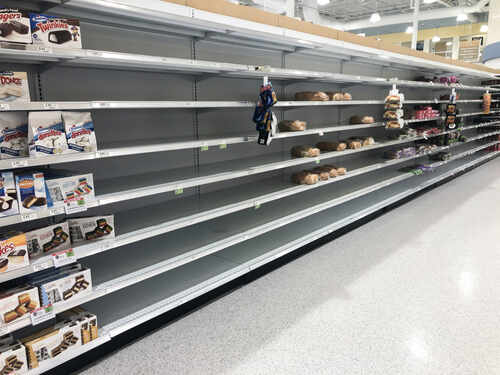
Inflation just hit its highest level in three years, and once again it is energy costs and foreign chaos squeezing American families instead of real accountability in Washington.
Story Snapshot
- Inflation jumped to 4.2% in May, the highest since April 2023, driven mostly by energy costs.
- Energy prices soared nearly 4% in a single month and over 23% in a year as the Iran conflict disrupts oil.
- Gasoline prices are up more than 40% in a year, hitting working families, commuters, and small businesses hardest.
- Core inflation is lower at 2.9%, confirming that the main pain is coming from energy and policy failures, not a booming economy.
Inflation Hits 4.2%: A Three-Year High Americans Cannot Ignore
The federal government’s own data show that consumer prices rose 0.5% in May, pushing annual inflation to 4.2%, up from 3.8% in April and the highest reading since April 2023.[2][5] That means the cost of nearly everything, from groceries to utilities, is rising faster again, after a brief period of cooling. This is the third straight month that overall inflation has accelerated, a clear warning sign that the price problem many families hoped was behind them is not going away.[3][5]
The Bureau of Labor Statistics reports that the index for all items less food and energy, often called core inflation, rose 0.2% in May and 2.9% over the last 12 months.[2][4] That rate is lower than the headline number, which confirms that the main surge is coming from energy, not from every part of the economy at once.[2][3] For families, this means the biggest new hit is at the gas pump, on utility bills, and anywhere high fuel costs ripple through to shipping and travel.[1][3]
Energy Shock: Iran Conflict and Skyrocketing Fuel Prices
Official data show that the energy index jumped 3.9% in May alone and is up 23.5% over the past year.[2][3] Gasoline prices rose 7% in just one month and are now 40.5% higher than a year ago, while fuel oil is up 58.9% over 12 months.[2][3] The Bureau of Labor Statistics notes that energy accounted for more than 60% of the total monthly increase in the Consumer Price Index, underscoring how central fuel costs are to this inflation spike.[2][1]
Market trackers link this energy surge directly to the conflict with Iran, describing an “energy shock” as Middle East tensions disrupt oil supplies and drive global prices higher.[3] The Joint Economic Committee Republicans report that from May 2025 to May 2026, energy price inflation reached 23.54%, far above the overall rate of 4.25%.[6] This pattern shows that geopolitical turmoil and years of weak energy policy leave America exposed when foreign crises hit, forcing families to pay more every time they fill their tank or heat their homes.[3][6]
Beyond Energy: Shelter, Food, and the Risk of Sticky Inflation
While energy is the main driver, other key costs are also rising. The Bureau of Labor Statistics reports that shelter, which includes rent and owners’ equivalent housing costs, increased 0.3% in May.[2] Food prices rose 0.2% for the month and are 3.1% higher than a year ago, with “food at home” up 2.7% annually.[1][2] Those numbers may look smaller than the energy spikes, but they hit every budget, from retired couples on fixed incomes to families trying to save for college.[2][5]
The index for all items less food and energy rose 2.9% over the year, slightly higher than 2.8% in April.[2][4] That uptick shows that some inflation pressure is seeping into broader categories like communication, airline fares, medical care, personal care, and recreation, even as other items such as motor vehicle insurance and new vehicles moved lower.[2] For conservatives, this mix highlights a serious concern: if energy shocks are allowed to linger, they can feed into rents, services, and wages, making inflation harder to tame later, especially after years of overspending and loose money.[3][6]
What This Means for Conservative Families and Policy Choices
For middle-class and working Americans, this 4.2% inflation rate is not an abstract statistic; it is a pay cut.[2][5] Every extra dollar spent on gasoline, utilities, and groceries is a dollar not saved for retirement, not tithed at church, and not invested in a child’s future. High energy costs hit rural drivers, tradesmen, and small business owners especially hard, because their work depends on trucks, tools, and travel that all run on fuel.[1][3] These are the same people who already felt the squeeze during the earlier inflation waves.
Inflation is officially back on the rise. New numbers from May show the annual inflation rate has surged to 4.2%—up from 3.0% when the current administration took office. Families are feeling the squeeze on everything from energy to groceries. We need results, not excuses.…
— tiberius zebulon (@isthisamovie) June 10, 2026
Data from the Bureau of Labor Statistics and Congress confirm that this latest spike is concentrated in energy, where prices have been driven higher by foreign conflict and years of weak domestic energy policy.[2][3][6] At the same time, rising shelter and food costs show how fragile household budgets remain.[1][2] For conservatives, the lesson is clear: America needs stable, affordable energy at home, restrained federal spending, and leaders who treat inflation as a real threat to family security, not just a talking point in economic speeches.[3][5]
Sources:
[1] Web – Inflation Soars to Highest Level Since April 2023
[2] Web – Inflation topped 4% in May as CPI surged to its highest level in more …
[3] Web – Current U.S. Inflation Rate Is 4.2%: Chart and Why It Matters
[4] Web – Consumer price inflation, UK: May 2024
[5] Web – United States Inflation Rate – Trading Economics
[6] Web – Current U.S. Inflation Rates: 2000-2026