

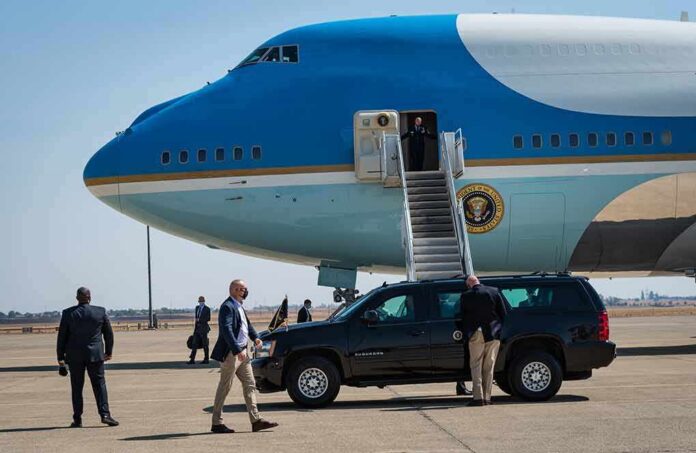
A sweeping U.S. security alert warned that Middle East violence could “escalate rapidly,” and President Trump headed back to the White House without delay.
Story Highlights
- President Trump cut short his Camp David weekend and returned to the White House as security risks rose in the Middle East.
- The State Department warned Americans to exercise heightened vigilance and prepare for travel disruptions.
- Advisories cited Iranian-backed Houthi attacks and the risk of rapid escalation across the region.
- U.S. embassies echoed the alert, signaling concern for airports and other civilian targets.
Trump’s Rapid Return Signals Hands-On Crisis Management
President Trump left Camp David early and returned to the White House on Saturday evening. The decision followed a new State Department security alert tied to rising Middle East hostilities. The alert urged Americans to “exercise heightened vigilance” and be ready for travel delays, as the situation could escalate fast. The move brought key national security staff closer to the Situation Room. The aim was to speed decisions and responses as threats evolved by the hour.
The White House did not release a detailed readout alongside the travel alert. Reports noted the State Department’s warning came as Iranian-backed Houthi forces stepped up attacks against Saudi Arabia, including threats to civilian airports. The advisory language stressed that risks could change without warning. It also asked travelers to monitor airlines and airport operations in case flights were rerouted, delayed, or canceled.
What the State Department’s Warning Actually Means
The State Department issued a region-wide alert to Americans in or traveling through the Middle East. The message highlighted a complex security environment and the “potential for unforeseen escalation”. This type of alert is designed to warn and prepare citizens, not to declare a war footing. The guidance often urges common-sense steps: avoid crowds, review personal security, carry identification, and have exit plans if tensions intensify or flights get disrupted.
U.S. embassies in the region amplified the alert through their local channels. That helped reach Americans on the ground, including business travelers and families planning to fly soon. Embassy messages often include country-specific notes and remind citizens to enroll in the Smart Traveler Enrollment Program. That system lets consular teams push timely updates. The goal is to keep Americans informed if airports close, carriers pause service, or new threats emerge with little notice.
Why This Matters to Security, Energy, and American Families
Rising Houthi activity and the chance of spillover conflict raise the risk to air travel and regional stability. Disruptions in the Middle East can ripple into global shipping lanes and energy markets. Families with service members, missionaries, or business ties in the region watch these alerts closely. The administration’s swift posture places American safety first and aims to deter attacks on civilians and partners. Clear warnings and quick coordination reduce chaos if conditions worsen.
IMPORTANT TAKE-AWAYS Summarized.
Trump cut his Camp David trip short and returned to Washington Saturday night.The White House gave no reason for the early return.
🚨 The State Department warned Americans in the Middle East to stay alert and prepare for travel disruptions.…
— Scarlett_OHara (@BluFnxResists) September 21, 2026
For readers at home, practical steps matter. If you or loved ones are in the region, check flight status often and keep travel documents ready. Follow embassy updates and consider backup routes. If you plan travel soon, review current advisories and talk with your airline about flexible options. These alerts do not guarantee escalation, but they signal real risk. Prepared citizens face fewer surprises, and that is the point of the State Department’s message.