
Democrats’ bid to tie ICE reforms to DHS funding triggered a shutdown that left TSA, Coast Guard, and FEMA personnel working without pay—then sparked a new fight over whether the government crossed the line into partisan messaging.
Story Snapshot
- A DHS-only shutdown began February 15, 2026 after negotiations broke down over Democratic demands to attach ICE reforms to funding.
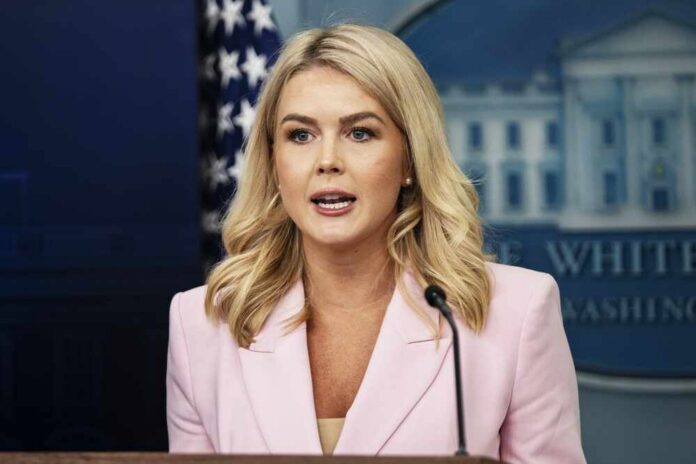
- White House Press Secretary Karoline Leavitt blamed Democrats for refusing to fund DHS without conditions, while Democrats argued Republicans controlled Washington and still allowed a lapse.
- TSA officers, Coast Guard personnel, and FEMA workers continued working without paychecks; more than 90% of TSA employees were considered “essential.”
- DHS Secretary Kristi Noem authorized a video blaming Democrats and sought to display it at TSA checkpoints, prompting Hatch Act and anti-lobbying complaints and airport pushback.
How a DHS-Only Shutdown Landed on the Front Lines
The partial shutdown started Saturday, February 15, 2026, and it hit a narrow but critical slice of government: the Department of Homeland Security. TSA, the Coast Guard, and FEMA were among the operations affected, even as other federal departments remained funded. The immediate human impact was straightforward—workers showed up, did the job, and missed paychecks—while the political impact quickly became a blame battle over who used funding as leverage.
Karoline Leavitt, speaking for the Trump White House, pinned responsibility on Democrats, arguing they refused to fund DHS unless the administration accepted major changes to Immigration and Customs Enforcement. Reporting described Democrats delivering a ten-point list of demands on February 4, ahead of the funding deadline. The available reporting does not fully detail that list, beyond references to agents being unmasked and tighter warrant requirements tied to two reported deaths.
What Democrats Demanded—and Where Negotiations Broke Down
Democrats’ position centered on conditioning DHS funding on ICE reforms, and the timeline in public reporting shows the gap widened quickly. Republicans received the Democratic proposal around February 13, after the White House had already engaged the issue. Senate Minority Leader Chuck Schumer called the White House counterproposal “not serious,” underscoring that the dispute wasn’t over small edits. Key details of the counterproposal were not publicly described in the cited reports.
One pivotal moment came February 12, when Senate Democrats blocked a funding bill from advancing after House members had already left Washington, setting up a weekend lapse. That procedural move matters because DHS functions are uniquely tied to immediate public safety—airports, borders, disaster response, and maritime operations. For a conservative audience that prioritizes order and basic government competence, using security funding as a bargaining chip predictably looked like a high-risk tactic.
TSA Staffing Strain and National Security Concerns
TSA’s situation was especially fragile because this was described as the second shutdown affecting the agency within six months. During the prior shutdown, TSA experienced increased unscheduled absences and localized spikes in wait times, according to cited accounts. With spring travel approaching and major global events on the horizon, even “localized” disruptions become a national concern. More than 90% of TSA employees were classified as essential, meaning they worked anyway—without pay.
House Homeland Security Republicans argued the shutdown weakened cybersecurity operations, disrupted intelligence sharing, and threatened Coast Guard missions including search and rescue and drug interdiction. Those claims reflect the standard DHS mission set, and the broader point is hard to dispute: a funding lapse complicates operations that depend on continuity, staffing, and coordination. Even when frontline employees keep showing up, prolonged uncertainty can degrade readiness across the system.
The TSA Video Controversy and Limits on Taxpayer-Funded Messaging
The political fight intensified when DHS Secretary Kristi Noem authorized a video blaming Democrats for the shutdown’s impacts and the administration requested airports display it at TSA checkpoints. Multiple major airports declined, citing policies against political content and concerns about the Hatch Act. Democratic senators demanded the videos be removed and asked for details about costs, approvals, and contractors, while another request sought an investigation by the Office of Special Counsel.
TSA Blames the Democratic Party https://t.co/L4BawpdAWq
— Twitchy Updates (@Twitchy_Updates) March 8, 2026
The legal questions raised by Democrats pointed to restrictions designed to keep federal programs nonpartisan, including Hatch Act limits and an anti-lobbying provision that bars using appropriated funds for materials meant to influence legislation. The political fallout was immediate: on March 5, 2026, President Trump fired Noem and replaced her with Sen. Markwayne Mullin. The episode left a clear lesson for both parties—shutdown brinkmanship and taxpayer-funded messaging can collide fast.
Sources:
Leavitt says Democrats caused DHS-only shutdown, leaving TSA, Coast Guard and FEMA unpaid
Democratic senators demand investigation into Noem’s TSA video that blamed Democrats
Leavitt says Democrats caused DHS-only shutdown, leaving TSA, Coast Guard and FEMA unpaid