A Trump-brokered Israel–Hezbollah truce barely got off the ground before rockets and drones tested whether ceasefires still mean anything in a region ruled by militias and mixed signals.
Quick Take
- Israel says Hezbollah fired rockets at Israeli troops in southern Lebanon and sent a drone toward the border, violating the new ceasefire; Israel struck the launcher in response.
- Hezbollah confirmed the attack but framed it as retaliation for what it calls Israel’s earlier ceasefire violations south of the Litani River.
- The 10-day truce was imposed after escalating cross-border fire, including barrages that injured civilians in northern Israel.
- Prediction-market odds still favored the ceasefire holding short-term, but the immediate breach highlighted how fragile enforcement remains.
Rockets and a drone put the ceasefire’s credibility on the line
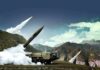
Israeli officials said Hezbollah breached the newly announced ceasefire by firing rockets at Israeli forces in southern Lebanon and launching a drone toward the border, prompting the Israel Defense Forces to strike the rocket launcher. Hezbollah acknowledged the rocket and drone activity but insisted it was responding to Israeli “infringements” that occurred after the truce began. Both sides’ confirmation matters: it reduces uncertainty about what happened, while sharpening the dispute over who is responsible for restarting fire.
The incident landed in the narrow window when ceasefires are most vulnerable: the first hours, when commanders test limits and political leaders sell “calm” back home. Under the truce terms described in reporting, Israel was barred from offensive operations but retained the ability to act in self-defense against threats. That structure creates a predictable flashpoint—each side can describe its actions as reactive. When rockets and drones appear immediately, the agreement stops looking like enforcement and starts looking like a pause.
How the 10-day truce emerged—and why it started shaky
The ceasefire took effect around April 16–17, 2026, after the Trump administration imposed a 10-day truce intended to stop the spiral of attacks along the Israel–Lebanon border. The run-up was violent. Reporting described rocket fire into northern Israel that injured civilians in places such as Karmiel and Nahariya, with more than 25 rockets reported in one wave, followed by extensive Israeli strikes on Hezbollah targets. That sequence set a tone of deterrence rather than reconciliation, making compliance harder.
The broader context includes a separate U.S.–Iran truce announced earlier in April, with a key dispute: Iran claimed Lebanon fell under that understanding, while U.S. and Israeli accounts said Lebanon was excluded. That kind of ambiguity is not just diplomatic trivia—it affects incentives on the ground. If Hezbollah believes regional pressure is shifting because of U.S.–Iran dynamics, it may feel freer to probe Israel. If Israel believes Hezbollah is acting as an Iranian proxy, it may treat even small violations as strategic threats.
Ceasefire history: “mutual violations” and a weak enforcement model
Since the 2024 Israel–Lebanon ceasefire framework, both parties have alleged repeated violations, including claims of Hezbollah movement and Israeli strikes aimed at stopping threats south of the Litani River. A public record of allegations and counter-allegations has built a familiar pattern: one side cites security necessity, the other cites sovereignty and retaliation. The immediate 2026 breach fits that pattern. When enforcement depends on each side judging its own “self-defense,” the line between deterrence and escalation becomes subjective and unstable.
For American readers, the uncomfortable takeaway is that negotiated “paper calm” can be quickly undermined when an armed non-state actor maintains independent military capacity inside a neighboring country. That dynamic also places Lebanon’s government in a political vise—expected to restrain Hezbollah while lacking full control over it. The available reporting notes Lebanese leadership was invited to talks, but it also highlights the ongoing reality of violence and the risk of broader conflict returning on short notice.
What the early breach means for U.S. leverage and public trust
Prediction markets still priced the ceasefire as likely to hold in the near term—around a low-to-mid 90% chance by late April—yet the odds dipped after the breach, reflecting real risk. Markets are not policy, but they aggregate sentiment about whether agreements can endure the next provocation. Politically, the Trump administration’s approach signals an emphasis on fast stabilization and clear red lines, but the episode underscores a bigger constraint: Washington can broker terms, yet it cannot personally police every launcher, drone, or militia commander.
Israel Says Hezbollah Fired Rockets, Breaching Lebanon Ceasefire https://t.co/8H8mRIEGST
— zerohedge (@zerohedge) April 21, 2026
Domestically, this is the kind of foreign-policy episode that feeds a bipartisan cynicism many Americans already feel—elites announce “deals,” while reality on the ground keeps producing rockets, reprisals, and mixed messages. Conservatives tend to read that as proof that strength and enforceable boundaries matter more than diplomatic theater; many liberals see it as another example of the human costs of militarized stalemates. Either way, the early breach is a reminder that ceasefires without credible enforcement mechanisms can become temporary headlines, not lasting security.
Sources:
2024 Israel–Lebanon ceasefire agreement
Hezbollah fires rockets towards Israel over ceasefire breach
Hezbollah fires at Israel after attacks on Lebanon & US-Iran …
Israel-Hezbollah ceasefire takes effect; two seriously hurt by rocket hours before truce
Hezbollah launches rockets into northern Israel hours after ceasefire