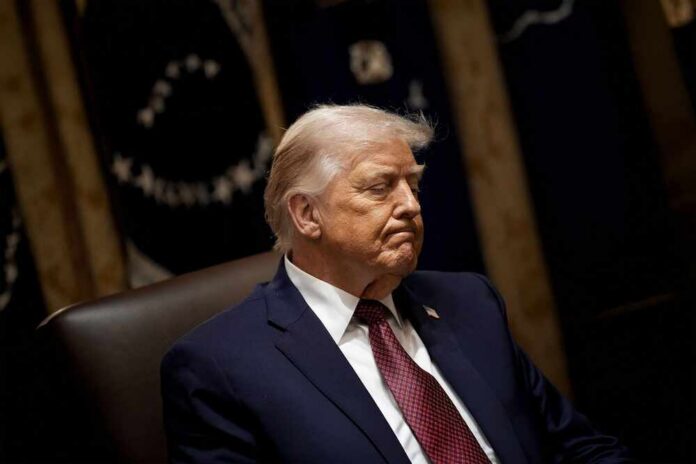
President Trump blasts NATO allies for abandoning America in the escalating Iran war, exposing Europe’s free-riding betrayal as U.S. forces bear the burden alone.
Story Snapshot
- US-Israel airstrikes devastate Iranian military assets, Supreme Leader’s plane, and senior leaders since February 28, 2026.
- Iran retaliates with drone and missile attacks killing over 40, paralyzing the Strait of Hormuz and spiking U.S. gas prices.
- Trump rejects NATO support, declaring America needs no help from reluctant allies refusing to commit warships.
- Iran threatens U.S. industrial targets like Amazon and Microsoft; no confirmation of Ali Larijani’s death despite rumors.
War Erupts Amid Nuclear Talks
United States and Israel launched coordinated airstrikes against Iran on February 28, 2026, targeting military assets during stalled nuclear negotiations. Iranian forces suffered heavy losses, including destruction of air force bases, navy vessels, and radar systems. President Trump stated Iranian capabilities stand obliterated, emphasizing American-led dominance to neutralize regime threats. This action echoes a 2025 assault, disrupting diplomacy Iran labels as repeatable aggression. Conservative priorities of strong defense prevail over endless talks.
Iran’s Desperate Retaliation
Iran responded with thousands of drones and missiles striking U.S.-allied Gulf states, bases, and infrastructure, causing at least 40 deaths. On March 16, IRGC threatened attacks on U.S.-owned facilities worldwide, naming tech giants Amazon and Microsoft. Five drones targeted the U.S. embassy in Baghdad; UAE intercepted 45 drones and 10 missiles. Strait of Hormuz remains effectively blockaded, halting 20% of global oil shipments despite no formal closure. Iraq negotiates limited tanker passage for energy security.
Trump Rejects NATO’s Cowardice
President Trump publicly criticized NATO allies on March 17 for refusing military involvement, with Germany’s defense minister declaring it not their war. Trump asserted the U.S. needs no assistance, planning a near-future exit while eyeing seizure of Iran’s Kharg Island oil terminal. This stance protects American sovereignty from globalist burdens, where Europe free-rides on U.S. defense spending. Strained alliances highlight Trump’s America First doctrine amid high domestic gas prices from the blockade.
Risky Path Forward
Israeli strikes destroyed Supreme Leader Khamenei’s plane at Mehrabad Airport and killed additional senior IRGC leaders. Former U.S. Army intelligence officer Harrison Mann warns ground operations on Kharg Island amount to a suicide mission, trapping troops without supply lines. Iran vows defense as long as necessary, rejecting ceasefires. U.S. counterterrorism chief resigned over the conflict. Stalemate persists without clear exit strategy, as Trump decides based on instinct.
Iran-US war latest: Tehran confirms death of security chief Ali Larijani as Trump slams Nato for abandoning US
US president launches scathing attack on military alliance over its refusal to help in Strait of Hormuz
Iran confirmed the death of its top security chief Ali Larijani…
— Nino Brodin (@Orgetorix) March 18, 2026
Global oil chaos burdens American families with soaring prices, while Gulf allies face militia threats. Long-term risks include U.S. ground invasion pitfalls and regime collapse efforts favoring Israel over clear U.S. gains. Iranian defiance rallies its base, but military gutting weakens proxies. China loses access to 90% of pre-war Iranian oil exports. This war underscores limited government intervention abroad, prioritizing American energy independence and security.
Sources:
CBS News: Iran War, Oil Prices, Strait of Hormuz, Trump Threat Kharg Island
Institute for the Study of War: Iran Update Evening Special Report March 15, 2026
Democracy Now: Harrison Mann on Iran War
CBS News: Latest US-Israeli Airstrikes Against Targets in Iran War
Times of India: Cracks in the Endgame – Trump Falling Short of His Biggest Iran War Objective