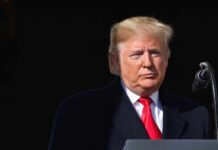

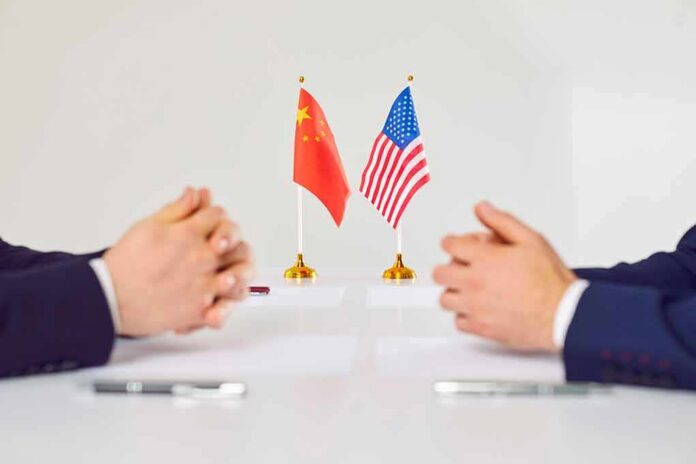
What Rubio is really describing is not rapprochement, but crisis management: the United States and China can compete hard only if they keep enough contact to prevent competition from turning into a collision.
Intro Header
- Rubio said the United States and China “have to have a relationship” and that refusing dialogue would be “reckless and irresponsible.”
- His remarks in Manila fit a broader pattern of U.S. diplomacy: deterrence on substance, communication on procedure.
- The immediate context is a working-level effort to keep trade, investment, and summit planning from being derailed by larger strategic disputes.
- The central logic is simple: the deeper the rivalry, the more valuable the channel.
What Rubio Said, and Why It Matters
In Manila, Secretary of State Marco Rubio gave one of the clearest contemporary explanations of U.S.-China diplomacy: the two countries are too large, too intertwined, and too consequential to operate without a relationship. He said there are “areas of great differences,” but that those differences have to be managed so they “never get out of control,” adding that it would be “reckless and irresponsible” for Washington and Beijing not to maintain ties. That is not a soft line. It is the hard-headed logic of great-power statecraft.
The key point is that Rubio framed communication not as a concession to China, but as a safeguard for American interests. He tied the need for dialogue to the size of the two economies, the strategic weight of both countries, and the global damage that would follow from a breakdown in contact. Earlier comments made the same case in slightly different language: the United States and China “have to have a relationship,” and that relationship must continue even when the two governments are rivals or direct adversaries. The consistency matters. This was not an offhand remark; it was an articulation of policy doctrine.
The Diplomatic Logic Behind a “Working Relationship”
Rubio’s formulation rests on a durable principle of diplomacy: rivals do not stop being dangerous simply because they stop speaking. During the Cold War, the United States and the Soviet Union kept channels open precisely because silence raised the odds of miscalculation. Rubio invoked that history directly, and the comparison is instructive. The point is not that China and the Soviet Union are the same, but that nuclear-armed competitors with global reach create enough risk that managed communication becomes part of deterrence itself.
This is why his language consistently pairs competition with contact. In another exchange, the State Department said Rubio discussed a “constructive relationship of strategic stability based on fairness and reciprocity,” language that signals discipline rather than friendliness. That phrase is doing a lot of work. “Strategic stability” means reducing the chance that routine friction, military signaling, or trade pressure spirals into a broader crisis. “Fairness and reciprocity” adds the American condition: the relationship is acceptable only if it does not become one-sided or naïve.
Rubio’s public posture also fits the practical reality of the relationship. The United States and China are not merely competitors in trade; they are strategic systems with deep contact across finance, manufacturing, shipping, technology, and security. That interdependence is why even officials who are sharply skeptical of Beijing still describe dialogue as necessary. If the relationship were trivial, Washington could afford estrangement. Because it is not, channel discipline becomes a national-security tool, not a diplomatic nicety.
Why This Is Not a Retreat from Competition
The mistake many observers make is to hear “working relationship” and infer moderation. That is too crude. Rubio did not retract U.S. concerns about China, and the structure of his remarks makes that clear. He spoke of enduring differences, a future in which those differences remain, and the need to manage them while defending American interests. That is classic strategic competition language. It preserves room for pressure, technology controls, alliance coordination, and military deterrence; it simply rules out the fantasy that rivalry works better in a diplomatic vacuum.
That balance also appears in the surrounding reporting. Coverage of the Manila meeting described Rubio as taking a cordial tone with China’s top diplomat while seeking to ease tensions ahead of a planned Trump-Xi summit. At the same time, the reporting notes that the two sides were trying to prepare practical mechanisms, including boards or working groups on trade and investment. Those mechanisms matter because they convert abstract slogans into procedures: who talks, about what, and before which dispute becomes public crisis. In diplomacy, procedure is often the first line of defense.
There is also an institutional dimension worth emphasizing. Rubio is not speaking as a private senator or a commentator; he is the chief diplomat for the United States. That means his job is to keep the line open even when the substance is contentious. The message is not that Washington trusts Beijing. It is that Washington understands the cost of severing the relationship entirely. A functioning channel does not erase the rivalry. It makes rivalry governable.
The Real Stakes: Avoiding Accidental Escalation
The deepest significance of Rubio’s remarks is that they treat U.S.-China relations as a management problem, not a moral drama. That distinction is easy to miss, but it is the foundation of serious statecraft. When two nuclear powers with global economic reach misread one another, the damage is not confined to the bilateral relationship; it ripples through allies, markets, supply chains, and regional security. Rubio’s insistence on continuing to talk to China is, in effect, an admission that in a high-stakes rivalry, communication is not generosity. It is insurance.
That is why the language of “delicate balancing” often follows these exchanges. The balance is delicate because both sides are trying to do two things at once: defend core interests and preserve enough contact to keep disagreements from becoming irreversible. Rubio’s remarks show an administration trying to hold both truths simultaneously. China is a competitor, sometimes an adversary, and still a necessary interlocutor. The durable lesson is blunt: in great-power politics, the absence of dialogue is not strength. It is risk.
Secretary of State Marco Rubio says maintaining a working relationship with China requires a "delicate balancing act."
He warns that any military or economic conflict between the U.S. and China would be "catastrophic" for both countries and the world.
Rubio adds the U.S. must…
— ►Boboski (@ayoakinkunle) August 2, 2026
Sources:
facebook.com, state.gov, china.usembassy-china.org.cn