

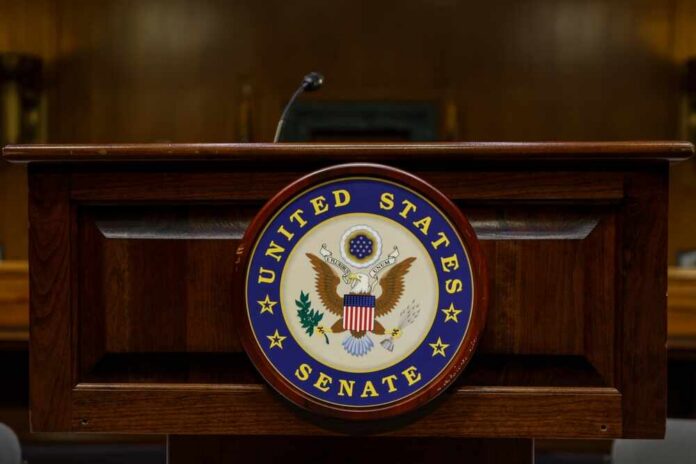
Senate Republicans fractured as Sen. Rand Paul broke ranks to oppose Trump’s homeland security nominee, while Democrats largely united against a border hawk poised to restore constitutional warrant protections after Kristi Noem’s chaotic tenure.
Story Snapshot
- Senate committee advanced Markwayne Mullin’s DHS nomination on March 19, 2026, despite GOP Sen. Rand Paul’s dissent over past conduct
- President Trump fired Kristi Noem earlier in March after violent immigration enforcement controversies, including warrantless entries and civilian shootings
- Mullin pledged to restore warrant-based enforcement and end daily DHS scandals, winning support from law enforcement and tribal groups
- Pennsylvania Democrat John Fetterman was the sole Democrat backing advancement, highlighting unusual bipartisan crosscurrents
- DHS employees remain unpaid amid funding shutdown as nomination awaits full Senate vote
Committee Advances Mullin After Heated Paul Clash
The Senate Homeland Security Committee voted March 19, 2026, to advance Sen. Markwayne Mullin’s nomination as homeland security secretary following contentious hearings. The mostly party-line vote featured rare Republican opposition from Sen. Rand Paul, who chairs the committee and cited Mullin’s past confrontational behavior, including challenging a witness to physical combat and disparaging Paul himself. Despite Paul’s concerns over “special missions” and temperament, Republicans backed Mullin as President Trump’s choice to restore order after firing predecessor Kristi Noem. Pennsylvania Democrat John Fetterman cast the lone Democratic vote supporting advancement, signaling fractures in both parties over border enforcement philosophy.
Noem’s Ouster Followed Constitutional Violations
Trump removed Kristi Noem from DHS leadership after escalating controversies centered on warrantless immigration enforcement operations. Immigration agents shot two protesters in Minneapolis, including U.S. citizen Alex Pretti, whom Noem labeled a domestic terrorist without evidence during Capitol Hill testimony. Her defense of warrantless home entries sparked bipartisan alarm over Fourth Amendment violations, undermining constitutional protections conservatives hold sacred. Noem’s combative style and refusal to acknowledge overreach left the agency demoralized and DHS employees unpaid amid funding disputes. Trump nominated Mullin shortly after Noem’s grilling, seeking a border security leader capable of enforcing immigration law without trampling individual liberties or generating daily scandals that distract from legitimate sovereignty concerns.
Mullin Pledges Warrant-Based Enforcement Strategy
During his March 18 confirmation hearing, Mullin adopted a diplomatic tone contrasting with his pugilistic congressional history. The Oklahoma senator, a former MMA fighter and House member with Native American heritage, committed to obtaining warrants in most immigration enforcement cases and vowed to “bring peace of mind and confidence to the agency” within six months. This pledge addresses conservative concerns about government overreach while maintaining Trump’s mass deportation agenda. Mullin expressed regret for previously calling Pretti “deranged,” acknowledging the need for measured leadership at America’s largest law enforcement agency. His approach aims to balance border security with constitutional constraints, earning praise from GOP Main Street Caucus members and law enforcement organizations who view warrant requirements as both legally sound and operationally necessary.
Political Implications for Border Security Agenda
Mullin’s nomination tests Republican unity as Paul’s opposition highlights tensions between personal accountability and party loyalty. GOP lawmakers including Reps. Elise Stefanik and Tom Cole praised Mullin’s “steadfast commitment to border security” and urged swift confirmation to end DHS paralysis. Democrats largely opposed advancement, questioning whether Mullin’s temperament suits managing 240,000 employees amid heightened deportation operations. The confirmation battle arrives as DHS funding remains shuttered due to partisan disputes over immigration tactics, straining operations and morale. If confirmed by the full Senate, Mullin faces pressure to deliver results without repeating Noem’s constitutional violations, a balance critical to maintaining conservative support for enforcement while respecting the limited government principles and due process protections that distinguish lawful action from authoritarian excess.
BREAKING: Senate committee narrowly advances homeland security secretary nominee Markwayne Mullin to replace Kristi Noem in 8-7 vote, with Democrat John Fetterman voting yes and GOP Chairman Rand Paul voting no pic.twitter.com/BBGQSq2ziH
— Fox News (@FoxNews) March 19, 2026
The outcome will shape border policy credibility heading toward midterm elections, with conservatives demanding both sovereignty protection and adherence to constitutional guardrails that prevent government abuse of power.
Sources:
Mullin’s nomination to be DHS chief advances out of committee
Temperament matters: Senators question homeland security nominee at confirmation hearing
Sen. Markwayne Mullin’s Nomination for DHS Secretary Draws Bipartisan Acclaim