The Trump administration has reestablished full diplomatic relations with Venezuela for the first time in seven years, following a decisive military operation that removed socialist dictator Nicolás Maduro and opened the door to economic recovery and democratic transition.
Story Highlights
- U.S. and Venezuela restored diplomatic ties on March 5-6, 2026, ending a seven-year freeze that began when Maduro severed relations in 2019
- The diplomatic breakthrough follows a January 2026 U.S. military operation that ousted Maduro, who now faces drug trafficking charges in American custody
- Trump administration officials have made multiple high-level visits to Caracas, securing reforms to Venezuela’s oil and mining sectors that favor American investment
- Acting President Delcy Rodríguez, Maduro’s former vice president, leads an interim government preparing for elections while collaborating with U.S. officials on economic recovery
Trump’s Bold Move Ends Venezuela Standoff
The State Department announced the diplomatic agreement after months of strategic engagement with Venezuela’s interim government led by Acting President Delcy Rodríguez. This marks a dramatic reversal from the Obama-Biden era policies that failed to dislodge Maduro’s socialist regime through sanctions alone. The Trump administration’s decisive January military operation fundamentally changed the equation, removing Maduro and creating conditions for genuine reform. Laura Dogu has been designated as U.S. ambassador to Caracas, while Venezuela will send Félix Plasencia to Washington, signaling serious commitment from both sides to rebuild the relationship.
Strategic Visits Secure American Energy Interests
High-level Trump administration officials have made a coordinated push to Caracas since Maduro’s removal. Energy Secretary Chris Wright visited in February to discuss oil sector opportunities, followed by CIA Director John Ratcliffe and U.S. Southern Command chief Francis Donovan in early March. Interior Secretary Doug Burgum’s March visit focused specifically on mining investments, demonstrating the administration’s comprehensive approach to securing American access to Venezuela’s vast natural resources. These visits weren’t just diplomatic pleasantries—they resulted in concrete reforms, including an overhauled Hydrocarbon Law that attracts Western investors and U.S. Treasury licenses enabling oil investments that benefit American companies rather than Chinese or Russian competitors.
Venezuela Reforms After Decades of Socialist Destruction
Venezuela’s interim government has implemented reforms unthinkable under Maduro’s authoritarian socialist regime. The National Assembly passed amnesty measures freeing political prisoners who suffered under leftist oppression for years. The reformed Hydrocarbon Law opens Venezuela’s massive oil reserves—the world’s largest—to legitimate investment after decades of mismanagement and corruption under Chavismo. These changes represent a sharp break from the policies of Hugo Chávez and Maduro that destroyed Venezuela’s economy, created hyperinflation, and drove millions to flee. Rodríguez’s government describes the diplomatic restoration as fostering “mutual benefit and social happiness,” language that signals pragmatic engagement replacing ideological rigidity.
Opposition Watches Transition With Cautious Hope
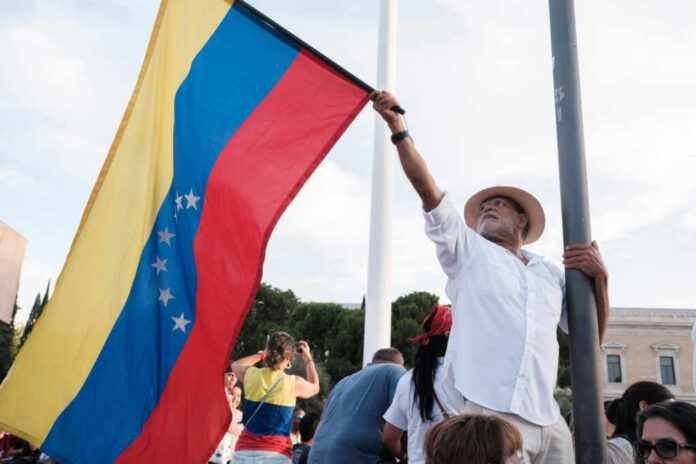
Democratic opposition leader María Corina Machado, who won the 2025 Nobel Prize for her courage standing against tyranny, plans to return to Venezuela soon and continues pushing for timely elections. While some critics worry about working with former Maduro loyalists like Rodríguez, the reality is that Trump’s approach prioritizes stability and prevents the power vacuum that leftist chaos typically exploits. Venezuelans are showing signs of newfound freedom, with protests emerging that would have been violently crushed under Maduro’s regime. However, legitimate concerns remain about whether the interim government will follow through on democratic commitments or attempt to perpetuate Chavista control under a different face.
The agreement positions America to counter decades of Chinese and Russian influence in Venezuela while helping millions of Venezuelans rebuild after socialist devastation. With $170 billion in debt to renegotiate and frozen assets like CITGO at stake, the coming months will test whether this diplomatic gamble delivers the democratic transition and economic recovery that Venezuela desperately needs. Trump’s willingness to use American strength decisively—something his predecessor never contemplated—has created opportunities that diplomacy alone could never achieve.
Sources:
A Statement on U.S.-Venezuela Relations – U.S. Department of State