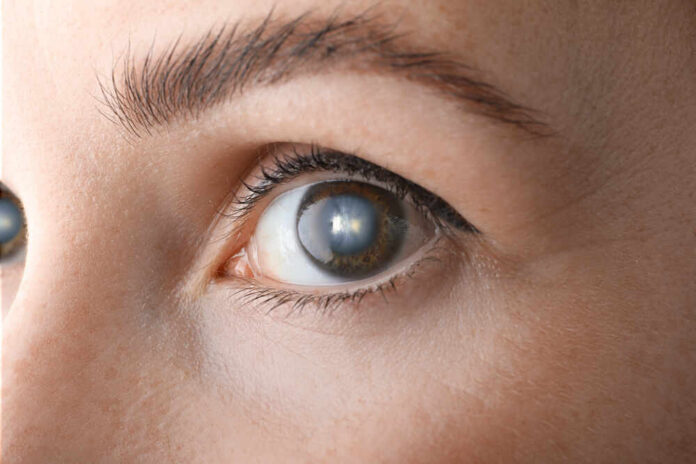
Human eyes trace their origins to a single “cyclops” organ in a worm-like ancestor 600 million years ago, upending long-held evolutionary assumptions and linking our pineal gland to ancient light-sensing.
Story Highlights
- Vertebrate eyes evolved from one central median eye atop a sedentary, filter-feeding worm-like creature 600 million years ago.
- A lifestyle shift to active swimming prompted small eye cups to form beside the median eye, splitting into modern paired vision.
- The human pineal gland remains a functional remnant, regulating sleep via light cycles inherited from this ancient organ.
- Research from Lund University and University of Sussex, published in Current Biology, analyzed light-sensitive cells across 36 animal groups.
Ancient Ancestor’s Single Eye
Approximately 600 million years ago, a small worm-like creature lived a stationary life on the seafloor. This ancestor filtered plankton from seawater, burrowing in place. Paired eyes proved unnecessary and costly, so evolution favored a single median eye on its head. Researchers at Lund University and University of Sussex reconstructed this structure through comparative analysis of living animals. This complex organ featured multiple photoreceptors and neural connections, setting the stage for vertebrate vision. The findings challenge decades of debate on eye origins.
Lifestyle Shift Drives Eye Evolution
Within a few million years, the creature’s descendants resumed active swimming. This demanded directional vision for filter-feeding and evading predators. Small eye cups formed on each side of the median eye. These cups separated and migrated to the head’s sides, becoming paired image-forming eyes. Vertebrate retinas develop from brain tissue in embryos, unlike insect eyes from skin. Lenses form from surface cells, creating stacked, brain-like layers. Professor Dan-E Nilsson called these results surprising, overturning prior assumptions.
Pineal Gland’s Surprising Legacy
The pineal gland in modern human brains descends directly from the ancient median eye. It regulates sleep according to light cycles, a trait preserved over 600 million years. This connection highlights how embryonic development mirrors deep evolutionary history. Neuroscientists gain insights into brain evolution from this remnant. The research demonstrates complex structures evolve via transformation, not independent origins. Small eye cups’ outward migration explains bilateral features in vertebrates.
Evolutionary biologists now question if other paired organs arose from single ancestors that duplicated. Developmental biologists see clearer links between embryos and ancient forms. The study’s multi-species approach across 36 groups strengthens its credibility over fossil reliance alone. Published in peer-reviewed Current Biology, it signals scientific consensus on this paradigm shift.
Sources:
Human eyes can be traced back to an ancient ‘Cyclops’ ancestor
Ancient ‘Cyclops’ eye evolution
A 600-million-year-old one-eyed creature shaped modern human eyes and vision
University of Sussex research on eye evolution
One-eyed creature gave rise to modern eyes
SciTechDaily on cyclops ancestor