

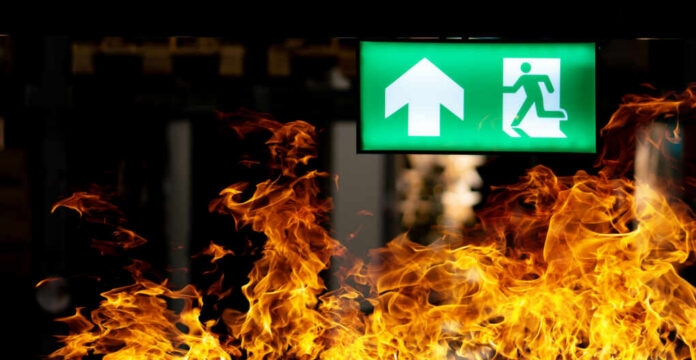
The central fact in the Bangkok pub fire is not mystery but recurrence: the death toll is horrific, the immediate cause is still under investigation, and the deeper story is Thailand’s long-running failure to make nightlife venues genuinely safe.
Key Points
- Officials confirmed 27 bodies recovered and 63 injured, making this one of Bangkok’s deadliest recent entertainment-venue fires.
- The cause has not been formally determined; the investigation remains open, even though early witness accounts point toward an electrical origin.
- Reports indicate locked or compromised exits may have intensified the fatality count, but that claim is still unverified by official forensic findings.
- The fire fits a familiar Thai pattern: packed venues, flammable interiors, inadequate egress, and reform promises that have not reliably prevented the next catastrophe.
The Death Toll Is Settled; the Cause Is Not
By the standards of disaster reporting, this case already has one hard number and one unresolved question. Prime Minister Anutin Charnvirakul personally confirmed that 27 bodies were recovered from the scene, and multiple outlets reported 63 injured. That is the factual core around which the public narrative is built. What remains unsettled is the origin of the blaze. The prime minister said the cause is still under investigation, and the available reporting does not yet include a published forensic finding that would justify a definitive conclusion.
That distinction matters. In the first hours after a fire, eyewitness accounts can be directionally useful without being dispositive; they describe what people saw, heard, and felt, not necessarily what investigators can later prove. In this case, several reports cite witnesses saying the fire may have started at an electrical circuit or cut-out switch, then spread rapidly through the venue. Those details are plausible, but they remain allegations until investigators release technical evidence: wiring inspection, breaker analysis, burn pattern reconstruction, and a chain-of-custody record for the scene.
Why the Exit Question Is So Important
The most consequential disputed detail is not simply where the fire began, but why so many people could not get out. Al Jazeera’s coverage, echoed by other reports, says the building had four exits and that some were reportedly locked; it also places many bodies near the rear of the venue and the toilets. ABC’s summary similarly reports that survivors described smoke filling the space quickly and people fleeing toward the back where there were no usable fire escapes. If those accounts hold up, the venue’s internal safety design, not just the ignition source, becomes central to the death toll.
This is where fire science is blunt. In a crowded entertainment venue, smoke often kills faster than flame. Once visibility collapses and panic starts, people move toward familiar pathways, which is why blocked exits are so deadly: they convert an emergency into a trap. The transcript summaries mention people sheltering in toilets, a common but often fatal instinct when smoke overtakes a room. If escape routes were locked, obstructed, or poorly marked, then the fire’s lethality would reflect a systems failure as much as a combustion event.
Thailand Has Seen This Pattern Before
The Bangkok fire is best understood against Thailand’s history of nightclub disasters. The 2009 Santika Pub fire remains the country’s deadliest nightclub tragedy, with 66 deaths and 229 injuries, and it established a grim template: packed crowds, combustible interior materials, and catastrophic exit failure. A later 2022 fire at Mountain B killed 14 to 15 people and again drew attention to flammable acoustic foam and regulatory lapses. These are not isolated freak events; they are repeated failures in a high-risk venue category that should be governed by ordinary, enforceable safety rules.
That historical context explains why official promises after each disaster are greeted with skepticism. The public has heard the language of reform before, and the recurrence of similar fires weakens confidence in inspections that are announced after the fact but not visibly effective before the next disaster. The present case fits that pattern too closely to be dismissed as an aberration. Even without a final investigative report, the structural lesson is already plain: if exits are not workable, crowd density is high, and interior materials accelerate smoke and flame, a venue can become unsurvivable in minutes.
🚨🇹🇭 BREAKING: Reports are emerging of a devastating fire at a bar in Bangkok.
🔥 Videos circulating online appear to show people fleeing the blaze as thick smoke engulfs the area.
Authorities are responding, but the number of casualties has not yet been officially confirmed.…
— Kirikaar (@Kirikaar77) July 12, 2026
What the Counter-Claims Do and Do Not Prove
The strongest counterpoint is not that the official death toll is wrong; it is that the cause, occupancy, and exit conditions are not yet fully documented in public. That is a narrow but important distinction. The research package contains no forensic report contradicting the officials’ body count, no named source refuting the prime minister’s confirmation, and no documented alternative explanation for the fire’s origin. In other words, the counter-evidence is mostly evidentiary absence, not affirmative rebuttal.
There is also some noise around casualty counts and crowd size, including social-media posts that vary on how many guests were inside. Those inconsistencies matter for public confusion, but they do not amount to a serious challenge to the official 27-dead figure. If anything, they underscore why disaster scenes should be treated cautiously until hospitals, rescue teams, and forensic investigators reconcile admissions, identities, and recovery records. The responsible reading is straightforward: the death toll is established, the mechanism is not, and the safety failures around egress are the most credible and consequential line of inquiry.
What This Fire Means Going Forward
The next phase of this story will be decided by evidence that the public rarely sees in real time: inspection records, electrical forensics, witness depositions, and the venue’s compliance history. Those records will determine whether the fire began with a wiring fault, a circuit breaker failure, or some other ignition source; they will also determine whether locked or blocked exits materially worsened the death toll. Until then, the broader meaning of the disaster is already legible. Bangkok’s nightlife economy depends on density and atmosphere, but those same ingredients become lethal when oversight is weak and evacuation planning is decorative rather than operational.
That is why this tragedy resonates beyond a single venue. It is a test of whether Thailand’s safety regime can finally move from post-disaster outrage to pre-disaster enforcement. The historical record argues for caution, because the country has already lived through enough similar fires to know the consequences of delay. If the coming investigation is rigorous, it will not merely assign blame for one blaze; it will reveal whether the most basic obligations of crowded public life — clear exits, fire-resistant materials, working alarms, and enforceable occupancy limits — are being treated as law or as aspiration.
Sources:
thegatewaypundit.com, sciencedirect.com, facebook.com, nbcnews.com, boisestatepublicradio.org, 11alive.com, wkzo.com, instagram.com, bbc.co.uk