
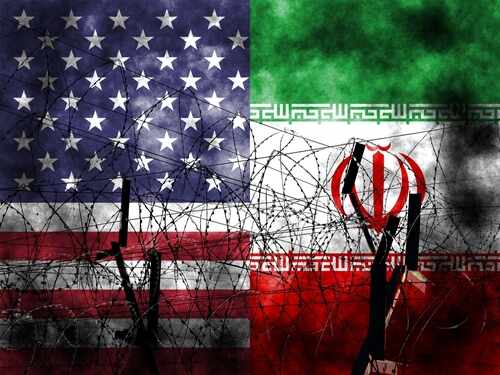
Iran’s reported 30-minute ultimatum to a U.S. warship near the Strait of Hormuz is the kind of “ceasefire” that can collapse the moment America tests it.
Quick Take
- Iranian forces reportedly warned a U.S. Navy ship near the Strait of Hormuz that it would be attacked if it entered Iranian-claimed waters, and the ship reportedly turned back.
- The standoff unfolded as indirect ceasefire talks continued in Islamabad, underscoring how fragile the two-week halt in fighting remains.
- The Strait of Hormuz is a narrow global energy chokepoint that normally carries about one-fifth of the world’s oil and gas, making even “near-miss” incidents economically serious.
- Reporting remains murky on ship movements and enforcement details, but multiple outlets agree the strait is still heavily disrupted, with many vessels stranded.
A naval warning tests whether the ceasefire has teeth
Iranian military-linked channels reportedly issued a direct warning to a U.S. Navy ship approaching the Strait of Hormuz, threatening a strike if it entered Iranian-claimed territory and setting a short window for compliance. Accounts circulating in recent coverage say the U.S. vessel avoided escalation by turning back, though some reporting disputes exactly how far the ship proceeded. The episode matters because it treats the ceasefire as conditional—enforced by threat—rather than a stable security arrangement.
The confrontation comes during indirect negotiations hosted in Islamabad, Pakistan, where mediators are trying to keep the post-war framework from unraveling. Iran’s posture has centered on sovereignty claims and leverage over maritime traffic, while U.S. officials have emphasized freedom of navigation and the need to restore commercial flows. A ceasefire that depends on day-to-day “permission” for passage is inherently brittle, especially when both sides still view the waterway as a strategic pressure point.
Why Hormuz is the economic pressure valve for the entire world
The Strait of Hormuz is only about 21 miles wide at its narrowest, but its economic footprint is enormous because energy shipments funnel through it. Estimates cited in recent reporting put roughly 20% of global oil and gas moving through the corridor in normal times. When shipping slows or stops, fuel markets react quickly, insurance premiums climb, and downstream costs can show up in everything from trucking to groceries—exactly the kind of inflationary stress U.S. voters have been fighting for years.
Recent accounts describe the strait as largely closed or severely constricted even after a two-week ceasefire was announced, with tracking data and on-the-water reports pointing to minimal movement compared with pre-war traffic. Some reporting indicates a limited transit by U.S. warships since the conflict began in late February, yet the bigger picture is continued uncertainty for commercial operators. In practical terms, a “ceasefire” that doesn’t reliably reopen the sea lane still functions like a blockade in the marketplace.
The bargaining fight: free transit versus enforced control and fees
At the center of this showdown is a basic question: who sets the rules in an international chokepoint. Iranian officials have signaled they intend to coordinate “safe passage” during the ceasefire window, and some reports describe Iranian demands that include control mechanisms and potential fees tied to vessel type and cargo. U.S. leaders, including the Defense Department, have publicly reiterated that free passage must occur. The gap between “free transit” and “paid, coordinated transit” is not a technicality—it is the dispute.
Supporters of limited government tend to bristle when any actor tries to turn a shared global corridor into a toll booth enforced by missiles and mines. At the same time, skeptics of foreign entanglements argue that repeated crises prove Washington should reduce exposure to chokepoints that can be exploited. Those two instincts collide here: the U.S. economy still depends on global energy stability, but every additional naval “test” of the route carries escalatory risk, particularly given Iran’s asymmetric capabilities and history of threats around the waterway.
What is known, what isn’t, and what to watch next
Several outlets agree on the broad contours: a two-week ceasefire was reached after weeks of conflict that began February 28, and threats around Hormuz have not disappeared. What remains less clear is the precise sequence of the reported warning and whether a U.S. ship fully retreated or merely adjusted course, as well as the enforceability of any claimed fee structure. No public reporting included definitive proof of an attack in this episode, but the absence of a strike is not the same as restored stability.
What Ceasefire? Iranians Threaten to Attack American Navy Ships That Enter the Strait of Hormuz https://t.co/aq9djInMYl
— Pete (@Deepcow1965) April 11, 2026
Americans should watch three indicators in the coming days: whether commercial shipping volumes meaningfully recover, whether U.S. naval escorts become routine, and whether the Islamabad talks produce verifiable terms rather than rhetorical “understandings.” In Washington, Democrats are likely to frame any U.S. firmness as dangerous escalation, while Republicans will argue that credibility and deterrence require keeping the strait open. Either way, if Hormuz remains effectively shut, consumers—not diplomats—pay first.
Sources:
Strait of Hormuz, Iran ceasefire, Trump