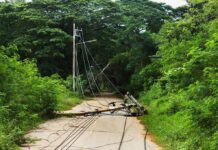


China’s latest summer heatwave underscores a deeper reality: the country’s vast power system is being pushed to unprecedented seasonal peaks by extreme temperatures and economic growth, yet so far it has largely managed to keep the lights — and the air conditioners — on.
Key Points
- Recent heatwaves have driven electricity demand in northern, northeastern, eastern and southern China to record highs, with national load now exceeding 1.55 billion kilowatts at peak.
- Air-conditioning is now responsible for roughly 30 percent of China’s peak power demand nationwide, and more than 40 percent in some provinces, making heatwaves a structural stress test for the grid.
- Despite record loads, official data and Reuters reporting indicate that supply remained broadly stable during the latest surge, supported by cross‑regional power transfers and pre‑planned summer reliability measures.
- The pattern is recurring: each summer brings new load records, but also evidence of a grid architecture deliberately built — and continually adjusted — to withstand extreme weather, even as long‑term risks mount.
Record Heat, Record Loads: What Is Happening on China’s Grid
When temperatures climb into the high 30s and low 40s Celsius across China’s core population and industrial belts, the country’s electricity system enters a different operating regime. During the recent heatwave, State Grid Corporation of China reported that power demand in its northern, northeastern and eastern regional networks hit record levels on consecutive days, explicitly linking the surge to soaring temperatures and air‑conditioning use. In parallel, the energy bureau of Anhui – a heavily industrial eastern province – recorded a new local peak of 69.99 million kilowatts, up 2.1 percent year‑on‑year, again attributing the increase primarily to the heatwave, with added load from computing centers and other economic activity.
These are not isolated spikes. The National Energy Administration (NEA) has confirmed that China’s nationwide electricity load climbed to around 1.551 billion kilowatts at peak during the current summer, passing a previous record set just days earlier. That figure implies a system capable of serving an additional 100–150 gigawatts compared with last year’s maximum, depending on the specific date and measure cited. Provincial‑level grids in central China, along with southern Hebei, Sichuan, Hubei and Hunan, similarly report historic highs, signaling that the heatwave’s impact is geographically broad rather than confined to a handful of coastal cities.
What Drives the Surge: Heat, Cooling, and Structural Demand Growth
At first glance, the story seems simple: hotter weather leads to more air‑conditioner usage, pushing up power demand. The data support that basic intuition, but they also show that the underlying drivers are more layered. NEA and National Development and Reform Commission material, relayed via Reuters, indicate that industrial activity, the rapid growth of electric‑vehicle charging, and data‑center operations all contributed alongside high temperatures. Air‑conditioning alone now accounts for about 30 percent of peak power demand nationwide, with that share exceeding 40 percent in some provinces where cooling penetration and climate combine to amplify load.
That contribution from cooling is measurable in urban load profiles. Peer‑reviewed work on Beijing’s nighttime electricity demand has found a strong correlation between minimum daily temperatures and consumption, with sensitivity increasing once nighttime temperatures exceed roughly 24°C; under simultaneous day‑and‑night heatwave conditions, nighttime usage can rise by as much as 40 percent. In practice, this means that extreme heat not only raises daytime peaks but also flattens the curve, keeping demand elevated well into the evening when systems would otherwise recover.
A Recurring Pattern of “Record Load Plus Operational Control”
One of the most important contextual points is that this is not the first summer in which China has seen unprecedented loads during a heatwave while avoiding large‑scale blackouts. In 2025, the national maximum electricity load exceeded 1.5 billion kilowatts for the first time, a record that was broken multiple times in the same month as extreme heat affected vast areas of the country. Reuters coverage warned of potential supply interruptions and highlighted health risks, but did not describe a cascading grid failure; instead, officials focused on contingency planning and public advisories.
State‑linked and industry reporting echo the same pattern: new records followed by narratives of managed stress. CCTV and NEA data cited by regional outlets show national peak loads of 1.465 billion kilowatts, roughly 200 million kilowatts higher than at the end of June and 150 million higher than the same period the prior year, again primarily driven by heat and economic growth. The China Southern Power Grid has likewise reported record peak loads in its five‑province area, exceeding 238 gigawatts at times, with Guangdong breaking through 160 million kilowatts well ahead of the traditional peak season as both temperatures and industrial activity climbed.
How the Grid Copes: Cross‑Regional Transfers and Summer Readiness
Maintaining stability under these conditions requires more than capacity on paper; it demands active management of a highly interconnected system. Chinese authorities and grid operators have spent more than a decade building out ultra‑high voltage (UHV) transmission corridors that move power across vast distances, allowing surplus generation in one region to cover deficits in another. During the recent demand surge, NEA data show cross‑regional electricity transfers hitting 278 million kilowatts at peak, up from 263 million kilowatts only a week earlier, as operators leaned on these long‑distance lines to balance the system.
This interregional flexibility is supplemented by seasonal operating playbooks. Summer “supply guarantee” measures typically include postponing non‑essential maintenance, ramping up dispatchable thermal generation, securing additional hydro output where reservoirs permit, and coordinating demand‑side management among large industrial users. Reporting on the current heatwave notes that State Grid has optimized grid operations and prepared cross‑region transmission in advance of the highest‑risk days, a form of preemptive stress management that treats extreme heat as a predictable annual phenomenon rather than a one‑off emergency.
Stability, Blackouts, and the Limits of Public Data
Based on the evidence available, the core claim that China’s grid remained broadly stable through the latest record‑breaking demand surge is well supported. Reuters, citing State Grid statements, notes that no blackouts were reported in the northern, northeastern and eastern regions despite record loads, attributing this to timely redirection of baseload power to areas of heavy air‑conditioning use. NEA‑linked coverage likewise emphasizes that the overall national power supply stayed stable, and explicitly states that no demand‑response measures or rationing were required during the recent peak.
That said, these accounts are built primarily on official and quasi‑official data rather than fully transparent outage logs or independent telemetry. Academic work using power‑outage datasets in China suggests that localized interruptions, equipment failures, and short‑duration curtailments can and do occur, often without rising to the level of national news. The absence of reported blackouts in mainstream coverage therefore supports the proposition that there was no large‑scale, sustained loss of supply, but cannot definitively rule out small pockets of disruption at the distribution level. For most observers, the distinction matters: a system that prevents regional collapse under historic stress is operationally robust, even if some neighborhoods or factories experience brief outages.
Climate Extremes, Economic Growth, and a Moving Target
The deeper story in these numbers is that China’s grid is chasing a moving target. On the one hand, climate dynamics are driving more frequent, intense and longer‑lasting heatwaves, which translate directly into higher cooling demand and more aggressive peaks; Ember’s analysis of the 2024 heatwave season estimates that hotter temperatures accounted for roughly a third of the year‑on‑year increase in Chinese electricity demand between April and September. On the other hand, structural changes — rising industrial output, electrification of transport, expansion of digital infrastructure — add non‑weather demand even in moderate conditions, effectively ratcheting up the baseline from which heatwaves push the system higher.
This combination means that “record load” is no longer an outlier; it has become a recurring feature of summer operations. NEA notes that China’s peak power load has set new records repeatedly in recent years, with previous daily peaks of 1.451 gigawatts in 2024 surpassed by the current summer’s 1.465 gigawatts, and likely by later peaks around 1.55 terawatts. Provinces such as Jiangsu, Shandong, Henan and Anhui have broken their local load records multiple times in a single season, indicating that growth is both national and granular.
What This Means for Resilience and Risk
For a reader trying to understand whether China’s grid is “strong” or “fragile,” the evidence points to a nuanced answer. On the resilience side of the ledger, the system has repeatedly absorbed extreme, heat‑driven demand spikes without clear evidence of widespread collapse, thanks to massive investment in generation capacity, long‑distance transmission, and coordinated summer operations. The ability to move hundreds of gigawatts across provincial and regional boundaries in real time, while sustaining national peak loads above 1.5 billion kilowatts, is a meaningful engineering achievement.
On the risk side, the margin for error is narrowing. As air‑conditioning deepens its share of peak demand and climate extremes intensify, the grid’s exposure to synchronized surges grows. Economic development, electrified transport, and digital infrastructure add inflexible loads — data centers cannot easily power down during a heatwave without economic cost, and EV charging needs often coincide with commuter patterns. If investment in flexible capacity, storage, and demand‑side management lags this trajectory, the system could find itself operating closer to its stability thresholds more often, increasing the probability that a miscalculation, equipment failure, or multi‑day weather anomaly translates into larger disruptions.
A powerful heatwave has driven electricity demand to record highs across northern, northeastern, and eastern China as soaring temperatures fuel heavy air-conditioning use, putting added pressure on the power grid. #China #Heatwave #Energy #PowerGrid #Climate #Weather pic.twitter.com/RhbGBPSGVh
— Anya Li (@AnyaLi66) August 5, 2026
Looking Ahead: Managing Heat‑Driven Demand in a Changing Climate
The recurring summer storyline — record demand plus managed stability — is likely to persist, but its long‑term sustainability will depend on how China’s energy system evolves. From a planning standpoint, the priorities are clear. First, deepening energy efficiency in buildings and appliances can blunt the growth in cooling load; international analysis shows that efficiency measures targeted at air‑conditioning and urban design can materially reduce heatwave‑driven peaks without sacrificing comfort. Second, accelerating the integration of storage and flexible demand, particularly in industrial sectors, can provide the buffering needed when weather and economic cycles coincide.
Third, the transparency of operational data will matter more as stress increases. As outage telemetry and provincial‑level incident reporting become more accessible to researchers, it will be easier to quantify not just whether the grid stayed up, but how close it came to its operating limits and which segments endured the most strain. That, in turn, can inform targeted investments in weak links, rather than simply adding bulk capacity everywhere. For now, the pattern is clear enough without perfect data: China’s power system is absorbing record seasonal stress driven by both heatwaves and growth, and the country is relying on a combination of engineering scale and operational choreography to keep the cooling systems running.
Sources:
zerohedge.com, kelo.com, watchers.news, the-independent.com, sciencedirect.com, biz.chosun.com, nbcnews.com, carbonbrief.org, youtube.com, reuters.com, global.chinadaily.com.cn, spglobal.com, oilprice.com