In American politics, allegations of “extremist ties” rarely turn on one smoking-gun document; they are built from networks, roles, donations, and old controversies—and then tested against the standard of direct proof. The Abdul El‑Sayed dispute is a textbook case: a high-profile Senate hearing put association claims on the record, while earlier cycles produced categorical denials and fact-check framing that called those same claims unfounded. Understanding what is actually evidenced, and what remains inference, is the only way to read this fight with clear eyes.
At a Glance
- A Senate hearing created an on-record allegation linking El‑Sayed to a Muslim Brotherhood-adjacent network through his father-in-law’s roles in CAIR Michigan and ISNA.
- Reporting traces significant donations from the father-in-law to a PAC backing El‑Sayed, making the network claim politically salient rather than merely familial.
- El‑Sayed has previously denied Muslim Brotherhood affiliation; mainstream coverage in 2018 framed such accusations as unfounded.
- No primary-source proof shows El‑Sayed’s personal membership in or operational tie to a terrorist group; much of the case relies on associations.
What the on-record allegation actually says
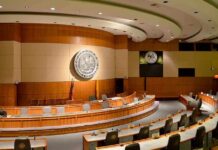
The present controversy did not emerge from rumor mills; it was voiced in a Senate setting focused on the Muslim Brotherhood’s presence in the United States. In that hearing, Senator Ted Cruz stated on the record that Abdul El‑Sayed is connected to a figure identified as a leader in Brotherhood-linked groups through family ties, and that this broader network operates “in plain sight.” The specific groups named—CAIR (Council on American‑Islamic Relations), ISNA (Islamic Society of North America), and Emgage—feature prominently in the network map presented by critics. While hearings are not adjudications, they do create a formal public record of assertions, which is why advocates of the claim point to this venue as evidentiary spine rather than mere punditry.
Within the same hearing context, Kyle Shideler, a counterterrorism researcher, testified that El‑Sayed’s father‑in‑law, often identified as Tayeb (or Jukaku) Jukaku, previously served as CAIR Michigan’s president and sat on an ISNA founders committee—positions he characterized as Brotherhood-linked. This is a consequential claim because it ties family relationships to a set of organizations repeatedly debated in U.S. policy circles for their historical overlaps with Brotherhood-aligned figures, even as those organizations present themselves as mainstream civic actors.
The associative case: roles, donations, and organizational lineage
Independent of the hearing, sympathetic outlets to the allegation have assembled a recurring documentary trail about the father‑in‑law’s roles: that he was CAIR Michigan president in the mid‑2000s and part of a 20‑member ISNA founding committee. The Washington Free Beacon has been the most cited proponent of this account, which is also echoed by later write-ups in the New York Post. The relevance to El‑Sayed is twofold: the family connection and a political finance link, with reporting that the father‑in‑law gave roughly $300,000 to the primary super PAC backing El‑Sayed’s Senate bid. The first is proximity; the second is material support that can shape perceptions of alignment, even absent ideological proof.
Critics also fold El‑Sayed’s college‑era presence in the Muslim Students Association (MSA) into the pattern, arguing that MSA’s historical roots included Brotherhood influence. That move, however, is weaker. In 2018, when the MSA point first became a flashpoint, coverage acknowledged that while historians have traced early ties, experts also said present‑day MSA chapters lack official Brotherhood affiliation—so the inference from student leadership to extremist sympathy does not carry cleanly. It is an old controversy, and one that has never produced direct documentation linking El‑Sayed to Brotherhood membership or operational activity.
The counter-case: categorical denials and the bar for proof
El‑Sayed has publicly denied any Brotherhood affiliation, including when pressed during the 2018 Michigan governor’s race; those denials were carried in mainstream and advocacy journalism that framed the accusations as unsubstantiated or conspiratorial. That framing has real force in the public square, because it sets the default expectation that association-based claims require direct, documentary evidence—membership lists, internal communications, sworn statements—rather than inference stacked on proximity. To date, even coverage sympathetic to the allegation has not produced a document that shows El‑Sayed personally belonged to the Brotherhood or any designated terrorist entity.
A separate allegation that he signed a 2012 pledge supporting Mohamed Morsi surfaces intermittently, but without the full primary-source packet in these materials—original text, signature page, provenance chain—interpretation remains contested. Secondary reporting also notes that fact checkers have found no evidence El‑Sayed supports violence or the imposition of Sharia in the United States, a distinction that further narrows what any resurfaced pledge (if authenticated) would actually establish about his current positions or affiliations.
How to evaluate “network” claims without lapsing into guilt-by-association
Security professionals draw a line between three categories of evidence: historical linkage (who founded or influenced an organization decades ago), personnel overlap (who served where and when), and operational control (who directs strategy, money, or actions today). The strongest cases against a public figure require that last category; the weakest rely solely on the first. Much of the El‑Sayed dispute sits in the middle tier—family ties to leaders of groups critics identify as Brotherhood-linked; donations from those family members to his political efforts; and a civic ecosystem (CAIR, ISNA, Emgage) that opponents describe as ideologically aligned, often citing exhibits from the Holy Land Foundation prosecution and the 1991 “Explanatory Memorandum” to sketch lineage.
The distinction matters. Courts have convicted individuals and shuttered entities for material support to terrorism; those records are concrete and citable. But holding a board seat at a U.S. nonprofit that others portray as ideologically adjacent to the Brotherhood is not synonymous with funding a designated group, and it does not, by itself, prove the officeholder’s relative is a security risk. The case either hardens with primary documents—financial transfers to designated entities, instructions, internal correspondence—or it remains associative and politically arguable rather than legally dispositive.
What would settle the question
Three documentary steps would clarify the record. First, publication of the complete 2012 Morsi pledge packet—text, signature page, date stamp, distribution list, and authenticating details—would resolve whether El‑Sayed signed, and what the statement actually committed signatories to. Second, retrieval of official CAIR Michigan and ISNA rosters, minutes, and IRS filings from the relevant years would solidify the father‑in‑law role claims; if already accurate as reported, that part of the story should be straightforward to confirm. Third, campaign finance documentation connecting the father‑in‑law’s contributions to a supporting super PAC is already described in public reporting; a clean, verifiable donor-path presentation would define the political, not ideological, relevance of those funds.
Additionally, if Emgage is posited as a connector in this network, the relevant corporate records, leadership overlap matrices, and any cited source documents from the hearing witness packet should be placed in the public domain for scrutiny. Hearings advance the debate; exhibits settle it. Absent those, observers will be left adjudicating credibility based on outlet identity and rhetorical confidence rather than primary-source inspection.
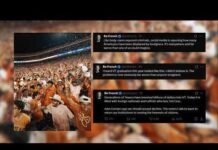
Abdul Linked To Muslim Brotherhood Network!: Sen Ted Cruz Drops Shocking Claim About El-Sayedhttps://t.co/XdWvxmyUKx
— Cyber Avenger (@MsClaritea) August 6, 2026
Why these controversies recur—and how to read them
This is not the first time an American Muslim candidate has been framed through a Muslim Brotherhood lens, nor will it be the last. The pattern repeats because it leverages real historical facts—organizations with complex origin stories, figures whose biographies touch contested institutions—while counting on public unfamiliarity with how today’s nonprofits operate, how designations work, and what evidence standards apply. Critics emphasize continuity; defenders stress institutional evolution and the absence of direct proof. Both instincts have grains of truth, which is why the burden shifts back to documents that can be weighed by anyone, regardless of political priors.
The stakes are not merely academic. Association claims can persuade voters even when they fall short of legal proof, especially if accompanied by large, traceable donations that create an appearance of alignment. Conversely, overreach—treating proximity as proof—can backfire, hardening public skepticism and inviting charges of religious bias. The prudent reader’s posture is not reflexive dismissal or automatic belief; it is disciplined curiosity: what, exactly, is documented, by whom, and to what standard?
Bottom line
There is a documented public record that ties Abdul El‑Sayed to a set of organizations through his father‑in‑law’s leadership roles and significant political donations. There is also a documented record of El‑Sayed’s categorical denials and prior mainstream coverage labeling Brotherhood accusations against him as unfounded. What is missing, in the materials at hand, is a primary-source document that proves El‑Sayed’s personal membership in, or operational support for, a designated terrorist organization. Until such a document exists—or until hearing exhibits substantiate operational linkage rather than association—the claim remains a serious allegation built from associations, not a settled finding. That is the standard a fair-minded reader should apply.
Sources:
townhall.com, loomered.com, thegatewaypundit.com, freebeacon.com, meforum.org, extremism.gwu.edu, vice.com, youtube.com