

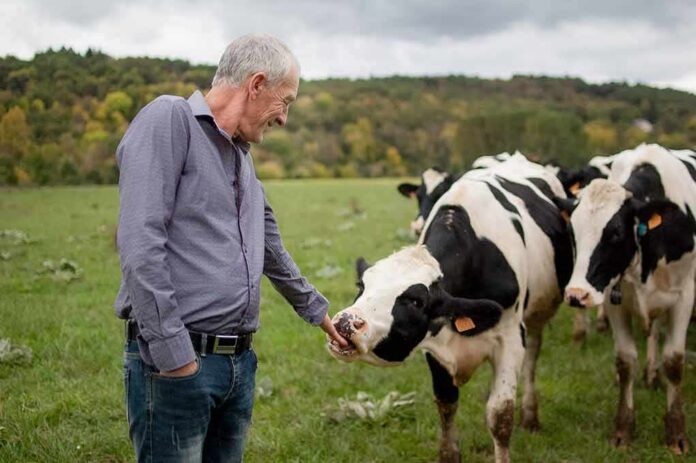
A single fatality can distort our sense of risk; with H5N1 in Washington’s dairy herds, the evidence supports two truths at once: this was a serious occupational infection with a tragic outcome, and the overall risk to the general public remains low.
At a Glance
- Yakima County health officials reported a resident died after confirmed H5N1 infection following exposure to infected dairy cattle.
- CDC identified the virus as H5N1; Washington’s outbreak included multiple infected herds and additional human cases tied to cattle exposure.
- Public risk is assessed as low; risk concentrates in occupational settings and among those handling raw, unpasteurized dairy.
- The case aligns with a broader pattern of sporadic spillover without sustained human-to-human transmission.
What Happened: A fatal, cattle-linked H5N1 infection in Washington
Yakima Health District officials attributed a resident’s death to H5N1 avian influenza following exposure to infected dairy cattle. The person, not publicly identified, was hospitalized with severe illness and had underlying health conditions; death was reported in early November 2026. Federal reporting cited by multiple outlets indicates the Centers for Disease Control and Prevention confirmed the virus as H5N1, the highly pathogenic avian influenza subtype sweeping through poultry and, more recently, dairy cattle in several U.S. states. Local officials also disclosed other human infections among people exposed to infected herds, underscoring that this was not an isolated clinical anomaly but part of a defined outbreak chain within Yakima County’s dairy sector.
Crucially, officials said they were monitoring contacts of the deceased patient and, consistent with national and international assessments to date, reported no evidence of sustained human-to-human transmission. That risk posture—heightened for workers with close animal contact, low for the general public—has guided Washington’s and federal messaging since the first Washington dairy detections in October 2026.
How the virus reached people: Mechanism of occupational spillover
H5N1 is an influenza A virus maintained in wild birds that periodically spills into domestic species. What changed the risk landscape in North America was its entry into dairy cattle in 2024; laboratory and field investigations documented mammary-gland infection, high viral loads in milk from sick cows, and efficient cattle-to-cattle spread—an unusual host expansion for an avian virus that creates new exposure pathways for humans working hands-on with animals and milking systems. In Washington’s case, state authorities confirmed dairy herd infections in Yakima County on October 8, 2026, followed by additional affected herds in the ensuing weeks; the fatal case’s exposure aligns with that timeline and setting.
For people, the plausible routes are direct contact with infected animals, their secretions, contaminated equipment or environments, and, for those who consume it, raw milk. By contrast, pasteurization inactivates influenza viruses, and food-safety controls remove clinically affected milk from the commercial supply—two reasons national agencies have repeatedly stated that the general milk supply remains safe. The CDC and USDA have been explicit: the general public’s risk is low, but occupational exposure elevates risk; that risk distinction is the spine of current guidance.
The state of transmission risk: Spillover without sustained spread
Sporadic human infections have occurred across the current H5N1 panzootic, and the U.S. experience fits that pattern: documented cases almost entirely involve individuals with direct exposure to infected animals, with no established, ongoing person-to-person transmission chains. A recent Congressional Research Service synopsis tallied 57 U.S. human H5N1 infections in the present outbreak period—34 linked to dairy cattle and 21 to poultry—while maintaining that community-level risk remains low. Internationally, a joint FAO/WHO/WOAH assessment likewise reported no established human-to-human transmission of A(H5) viruses in recent years, even as they cautioned that investigations can leave gaps.
That framing helps reconcile the apparent tension between a grave individual outcome and a low population risk: the denominator for risk is not simply the number of infected herds, but the number and intensity of exposed workers, along with how thoroughly they are monitored and protected. Where exposures are concentrated and repeated—parlors, calving pens, and milk-handling lines—the risk rises for those workers, not for shoppers buying pasteurized milk or families walking past a farm fence.
Where the outbreak stands in Washington: Herds, humans, and public messaging
Washington’s first dairy detections in 2026 were in Yakima County, with the count of infected herds climbing through October and into November as surveillance intensified. Local health announcements identified multiple human infections in people exposed to infected cattle, including the fatal case, and reinforced the standard public-health playbook: rapid case identification and isolation, contact monitoring, and worker protection. State health updates and contemporaneous reporting continued to define the public risk as low and advised against consuming unpasteurized dairy products.
That message has two audiences. For the public, the directive is straightforward: drink pasteurized milk, avoid raw dairy, and steer clear of sick or dead animals. For the agricultural workforce and veterinarians, the guidance becomes operational: eye and respiratory protection in milking areas, gloves and dedicated clothing, hygiene around milk and equipment, and prompt reporting of symptoms after exposure. On farms with known infections, routine controls—movement restrictions, testing, and milk diversion or destruction—limit spread among animals and prevent entry of high-risk milk into commerce.
Why this case matters: Signals for clinicians, farms, and policy
The Washington fatality reinforces three durable lessons. First, clinical vigilance: human H5N1 disease in this outbreak has ranged from conjunctivitis and mild respiratory illness to severe disease requiring hospitalization. Clinicians should elicit animal-exposure histories, use appropriate respiratory and eye protection during specimen collection, and arrange specific influenza A subtype testing when H5 exposure is plausible. Antivirals remain the first-line treatment for suspected or confirmed cases, ideally initiated promptly after symptom onset.
Second, farm biosecurity and worker protection are not theoretical. H5N1’s mammary tropism means milk is the high-risk medium on infected dairies; milking equipment, splashes, aerosols in enclosed parlors, and contaminated surfaces can be the conduit. USDA and CDC guidance emphasizes source control (keeping clinically sick cows out of the line), engineering and administrative controls in parlors, and consistent PPE—measures that reduce dose and frequency of exposure, the variables that ultimately govern infection probability.
Bird flu cases in Washington state dairy herds nearly quadruple to 34 in a week as the US outbreak spreads in Yakima and Benton countieshttps://t.co/Yeq95sckAL#H5N1 #BirdFlu #DairyCattle #AnimalHealth #Dairy #eFeedLink pic.twitter.com/xhCMBbOrWt
— eFeedLink (@eFeedLink) November 3, 2026
The long game: Managing a persistent animal outbreak with human interfaces
Even with low public risk, a cattle-adapted H5N1 lineage extending through multiple states is not a static problem. Each mammalian infection is an evolutionary experiment; reducing opportunities for the virus to circulate in large herds is the practical way to starve those experiments of fuel. That implies sustained surveillance of herds, targeted worker monitoring after exposure, swift response to new detections, and continued reinforcement of pasteurization as a non-negotiable consumer protection. These are the pillars of a One Health approach—coordinating animal and human health responses so that what protects cows also protects people.
Sources:
washingtontimes.com, usnews.com, upi.com, cidrap.umn.edu, aol.co.uk, m.dailyadvent.com, microbiologysociety.org, link.springer.com, aphis.usda.gov, woah.org, pmc.ncbi.nlm.nih.gov