

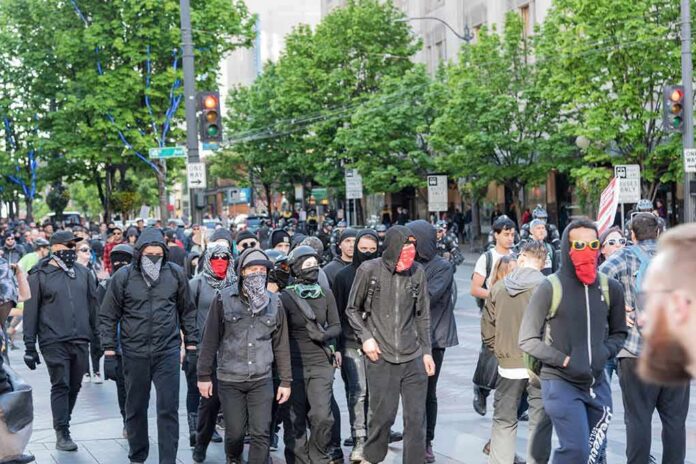
Hooded rioters looted shops and hurled firebombs in central Frankfurt after youth-led protests turned violent, forcing police to seal off a major shopping street.
Story Highlights
- At least two Frankfurt stores were looted and several more damaged after protests escalated.
- Police reported smashed windows, attacks on responders, and Molotov cocktails thrown in the city center.
- Authorities closed the Zeil shopping street to regain control and clear bystanders.
- Germany’s interior minister signaled tough penalties while crediting a strong police presence for limiting wider chaos.
What Happened In Frankfurt
Reuters reported that at least two stores were looted and others damaged in Frankfurt on the night of October 31, after large protests over education and living costs. Police said violent disturbances continued as the evening wore on, with rioters smashing shop windows. Officers faced thrown bottles and firebombs as they tried to push crowds back from the commercial core. The unrest followed daytime marches in multiple cities that drew tens of thousands of people, most of whom protested peacefully.
Police shut down the Zeil, Frankfurt’s major shopping street, to stop further attacks and move people out of danger. The closure aimed to separate remaining shoppers and peaceful demonstrators from small groups turning to crime. Reporters and police described masked groups targeting storefronts, including attempts to break into high-value locations. Officers deployed crowd-control tactics and made arrests while emergency teams worked to secure damaged areas and treat injuries.
How Leaders And Police Responded
Germany’s interior minister vowed tough penalties for looters and rioters after the Frankfurt rampage, while praising heavy police deployment for preventing broader violence across the city. Police statements on social media warned residents to avoid the center and documented attacks on emergency services. Officials urged organizers to help calm tensions and separate from violent actors. The message from authorities was simple: lawful protest is protected, but property crime and assaults will bring charges.
Frankfurt police described a fast-moving situation where small groups split off, struck stores, and regrouped before officers arrived. Water cannons were used in some clashes elsewhere in Germany during the same night to disperse violent pockets. Law enforcement said the priority was to stop the spread of looting and protect bystanders. That required blocking vehicle access, staging arrest teams, and clearing streets in phases. By late night, the center was under tighter control.
Why This Clash Matters Beyond Frankfurt
The protests, organized by a youth campaign, focused on school funding, social services, conscription concerns, and high living costs, issues that cut across politics when people feel the system is not working. Most marchers did not engage in crime, yet the damage and fear still fall on local workers and shop owners. Research on past unrest shows many protests remain peaceful, but a small share can tip into property crime during crowd surges. That pattern appeared here.
Frankfurt, Halloween night.
A "Gen Z" student march of 8,000+ ended with looting on the Zeil, a gun shop targeted, and riot police clearing the Hauptwache.
54 arrested, ages 13 to 29. 17 shops damaged, 5 looted. 100+ officers hurt.
Zurich, Basel, Hamburg and Marseille saw… pic.twitter.com/YBW6Ac8Vz1
— American™ (@1776_13) November 1, 2026
Media habits can also shape how the public reads events. Studies find outlets often frame protest through conflict and blame, which can blur lines between peaceful protesters and looters. That matters for trust, donations, and future turnout. Clear reporting and precise police briefings help keep focus on facts: who marched, who broke the law, and how leaders plan to address the core economic and social pressures that sent people to the streets in the first place.
Sources:
youtube.com, reuters.com, rmb.reuters.com, dw.com, uk.news.yahoo.com, straitstimes.com, tandfonline.com, ijoc.org