
Florida’s dengue surge is not a story about imported illness; it is a documented episode of local transmission on a scale large enough to trigger a federal emergency posture and an intensive state surveillance and vector-control push.
At a Glance
- Florida recorded hundreds of locally acquired dengue cases in 2026, concentrated in Hillsborough and Pinellas counties.
- State surveillance showed rapid growth in September, confirming sustained local transmission rather than only travel-related infections.
- The CDC was reported to have activated a Level 3 emergency response to support the outbreak response in Florida.
- Mosquito testing and clinical serotyping provided entomologic and virologic evidence consistent with local spread.
What the Florida data show: local dengue transmission at scale
Florida’s own surveillance is the anchor. By the week-40 arbovirus report in October 2026, the Florida Department of Health had recorded 368 locally acquired dengue cases across eight counties, including 310 in Hillsborough County and 37 in Pinellas County. These are autochthonous infections—people infected in Florida rather than abroad—tabulated separately from travel-associated cases. In that same report, Florida listed 288 travel-associated dengue infections, for a total of 656 dengue cases observed under 2026 surveillance definitions. The distinction matters. Travel-driven introductions are routine in a state with high international traffic; sustained local chains of transmission require competent vectors, permissive environments, and a sufficient pool of susceptible residents. Florida’s numbers, and their county distribution, meet that bar.
The speed of growth underscores the shift from scattered introductions to local amplification. In the week-36 report dated September 17, 2026, Florida counted 152 locally acquired cases; just weeks later in week-40, the total reached 368, with 188 cases having onset in September alone. That curve reflects active transmission through late summer into early fall, when Aedes aegypti thrives in urban and peri-urban settings with abundant container habitats, frequent human–mosquito contact, and warm temperatures that shorten the mosquito’s extrinsic incubation period.
Federal posture and the meaning of a CDC Level 3 activation
National outlet reporting characterized CDC’s stance as a Level 3 emergency response for dengue activity in Florida, citing total Florida dengue counts in the mid-700s with more than 400 locally acquired cases during the period in question. In CDC’s incident management lexicon, Level 3 denotes an elevated activation that mobilizes agency subject-matter experts and coordination resources while leveraging state and local operations; it is a signal that the event requires structured, cross-division support even if it does not rise to the all-hands posture of Levels 1–2. While Florida’s week-40 tallies differ from the rounded figures quoted in secondary reports—likely a function of different reporting cutoffs and inclusion criteria—the through-line is consistent: local transmission in Florida reached a threshold that warranted federal engagement alongside state-led control.
Emergency labels do not cure outbreaks; they organize them. In practice, Level 3 support to a mosquito-borne event typically includes epidemiology surge assistance, laboratory consultation for RT-PCR and serology, risk-communication support, and technical guidance to local vector-control programs on adulticiding, larviciding, and community source reduction. Those capabilities complement Florida’s county health departments and mosquito control districts, which already operate surveillance traps, container surveys, and targeted spraying.
Entomology and virology: how the outbreak was detected and characterized
Florida’s surveillance did more than count patients; it captured vector and viral signals that support local transmission. By week-40, 20 positive mosquito pools linked to the 2026 dengue response had been reported from eight counties, an entomologic indicator that infected vectors were present in the same geographies as human cases. On the virology side, the state documented 254 cases serotyped by PCR, offering a clearer picture of which dengue serotypes were circulating and, by extension, the implications for risk of severe disease among previously exposed individuals. In the U.S. clinical context, RT-PCR and NS1 antigen tests are recommended during the first week of illness when viremia is highest; after day seven, IgM serology becomes the primary diagnostic tool. This algorithm guards against false negatives that can occur if IgM is ordered too early or PCR too late in the clinical course.
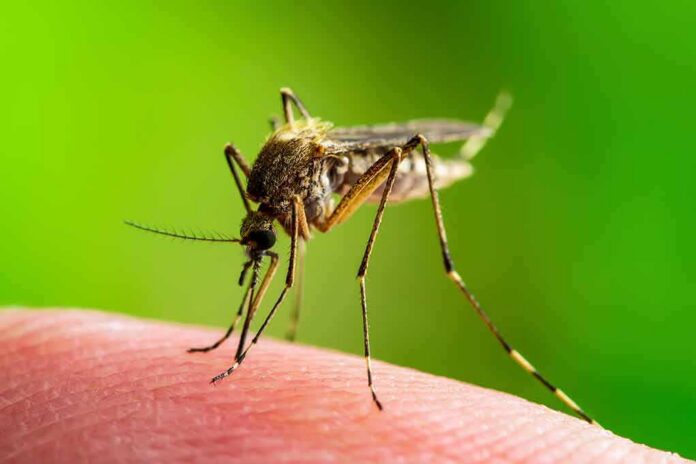
These technical details are not academic. Aedes aegypti is a day-biting mosquito tightly adapted to human environments; its breeding sites are small containers—bucket rims, plant saucers, gutters—hidden in plain sight. Because a large share of dengue infections are asymptomatic, and symptomatic illness can mimic a generic viral syndrome, entomologic surveillance and timely diagnostics often provide the first coherent picture of transmission dynamics.
Why this flare matters in the arc of U.S. dengue
Dengue is not endemic in the continental United States, but episodic local transmission has recurred when introductions meet favorable conditions. Since 2001, autochthonous outbreaks have appeared in Hawaii, Brownsville, Texas, and southern Florida, each revealing the same operational lessons: detection must be timely, communication must be coherent, and vector control must be aggressive and neighborhood-scaled to suppress Ae. aegypti populations before the virus can entrench. Florida’s 2009–2011 Key West episode produced 90 identified cases, a reminder that once transmission chains are established in dense urban blocks, they can persist across seasons without decisive environmental management.
The 2026 Florida patterns fit that playbook. Concentration of cases in Hillsborough and Pinellas points to urban transmission ecologies around Tampa Bay—older housing stock with abundant container habitats, high human mobility between neighborhoods, and weather that keeps vectorial capacity high into the fall. Add sustained travel-related introductions, and the system crosses a threshold where local transmission becomes statistically likely, not anomalous.
Clinical stakes and community actions
For clinicians, dengue’s risk is front-loaded around recognition and supportive management. The illness typically begins with abrupt fever, headache, myalgia, and rash; the danger peaks as fever abates, when plasma leakage can precipitate shock. Warning signs—abdominal pain, persistent vomiting, mucosal bleeding, lethargy, hepatomegaly, hemoconcentration—warrant close monitoring and judicious fluid management. Aspirin and NSAIDs are avoided because of bleeding risk. While most patients recover uneventfully, severe dengue clusters in specific risk groups and is more likely during a secondary infection with a different serotype due to antibody-dependent enhancement; that immunologic reality makes the serotype picture more than trivia, particularly in regions with repeat exposures.
For households, the highest-yield interventions are painfully simple: tip and toss standing water weekly, screen windows, use EPA-registered repellents, and work block by block to remove containers. Because Ae. aegypti bites during the day, community campaigns that focus solely on dusk-and-dawn behaviors miss the main transmission window. In outbreak conditions, local vector-control teams often pair community source reduction with adulticiding and larviciding targeted by case clusters and trap data.
The CDC has activated a Level 3 emergency response to Florida's dengue outbreak, sending epidemiologists, mosquito experts and lab teams to the Tampa Bay area.
Florida has logged 425 locally acquired cases this year, mostly in Hillsborough County, with one death, and… pic.twitter.com/p7Xv9RazXD
— Maverick (@agentmavericksi) October 30, 2026
How to read the numbers without losing the plot
Outbreak reporting often presents dueling figures because surveillance systems close their books on different days and use different inclusion criteria for “probable,” “confirmed,” “travel-associated,” and “locally acquired.” Florida’s week-40 arbovirus report—368 locally acquired, 288 travel-associated—reflects the state’s definitions and its publication cutoff. National coverage citing higher totals during the same window likely drew from CDC situation awareness streams with different cutoffs or case classifications. The epidemiologic reality, however, is steady: Florida experienced a substantial, well-documented wave of local dengue transmission in 2026, and public health agencies at every level treated it as such.
Sources:
zerohedge.com, orange.floridahealth.gov, beckershospitalreview.com, floridahealth.gov, kffhealthnews.org