

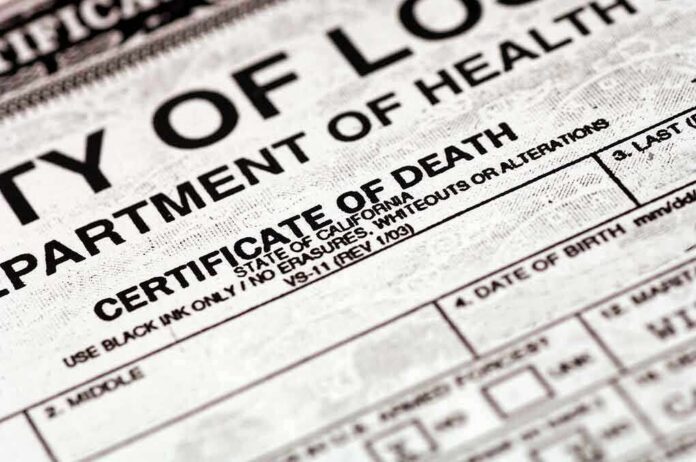
The central fact in Mehdi Hasan’s exchange with Ron DeSantis is not a debating flourish but a grim arithmetic: Florida’s COVID-19 policies played out in a state that ultimately recorded on the order of ninety thousand resident deaths linked to the virus, and possibly more, under a data regime repeatedly criticized for undercounting and opacity.
Key Points
- Florida’s cumulative COVID death toll crossed the 90,000 mark and later exceeded 93,000 resident deaths, placing the state among the higher-mortality jurisdictions in the United States.
- Independent analyses of excess mortality indicate that official COVID counts understated the true impact in Florida, especially in the first pandemic year.
- State officials repeatedly altered reporting practices and fought disclosure of detailed data, fueling accusations that the public picture of Florida’s toll was systematically softened.
- DeSantis and allies counter that, when age and underlying health are accounted for, Florida compares reasonably to some peer states, and that stringent lockdowns carried serious social and health harms.
- The available evidence is strong on the scale of death and on data-handling disputes; it is weaker on clean causal attribution of how much Florida’s specific policy mix increased or reduced that toll.
Florida’s COVID Death Toll: What the Numbers Actually Show
Any serious assessment of Florida’s pandemic record has to begin with the scale of mortality. Peer-reviewed analyses and state data converge on a simple reality: tens of thousands of Floridians died, and the cumulative toll ultimately climbed into the low six figures. A comprehensive review of the state’s trajectory in a medical journal put the figure at more than 93,000 COVID deaths over the first three years, noting roughly 38,000 deaths in the first 16 months, about 24,000 more during the five-month Delta wave alone, and another 31,000 during subsequent Omicron waves. State health-department data summarized by Health News Florida reported 93,229 resident deaths as of early 2024, broken out as 23,344 in 2020, 39,866 in 2021, 21,282 in 2022, and 8,403 in 2023.
Those totals align with national datasets: USAFacts, working from federal sources, calculates roughly 89,100 COVID-attributed deaths in Florida through July 2023, with daily deaths peaking at nearly 700 per day in September 2021. CDC provisional mortality files show Florida with more than 93,000 COVID deaths by mid-2023. Taken together, these figures substantiate Hasan’s political shorthand about “90,000 Floridians” and underline that Florida belongs in the upper tier of U.S. states in raw and per-capita COVID mortality.
Excess Mortality: Why Official Counts Understate the Toll
Official COVID death tallies, while stark, do not fully capture the pandemic’s impact. Excess mortality analysis—comparing observed deaths to historical baselines—is the standard epidemiological tool for that broader picture. One American Journal of Public Health study estimated that from March to September 2020, Florida experienced 19,241 excess deaths, 15.5% above historical trends; only 14,317 of those were officially attributed to COVID, leaving roughly 5,000 unexplained excess deaths in that early period. The authors concluded that total mortality was “significantly higher than historical trends even when accounting for COVID-19–related deaths,” implying under-attribution of COVID and indirect pandemic harms such as delayed care.
Later national work on excess deaths, cited by Truthout, similarly suggests that non-metropolitan areas and Republican-led jurisdictions saw larger uncounted losses, reinforcing the view that Florida’s burden is worse than the official COVID line items alone. The BMJ article on Florida’s data litigation adds another dimension: it describes the DeSantis administration as having “manipulated covid data to show deaths falling during a surge,” a characterization grounded in the state’s shift from reporting deaths by notification date to reporting them by date of occurrence, which temporarily made the trend appear more favorable during a spike. When excess-death studies and data-manipulation concerns are combined, the logical inference is that Florida’s true pandemic mortality exceeds the already-high official counts.
Data Transparency and Reporting Changes Under DeSantis
The dispute in which Hasan intervened is not only about how many Floridians died, but also about how those deaths were recorded and communicated. From early in the pandemic, Florida’s data practices drew criticism from epidemiologists, journalists, and even some state-linked officials. In mid-2020, the Florida Department of Law Enforcement released a list of COVID deaths that a top medical examiner publicly dismissed as a “sham,” highlighting methodological differences between medical examiner counts and health-department numbers. By 2022, the state’s auditor general had completed a review of the Department of Health’s response; a Miami Herald summary of that audit described a pattern of undercounts, inaccuracies, incomplete and delayed reporting, and what it called “no competent effort at contact tracing” in the pandemic’s early phase.
Parallel to those audit findings, the BMJ detailed Florida’s two-year legal battle to withhold granular COVID data from public release. According to that reporting, the state agreed in settlement to release older data and to continue publishing new data through 2026, while continuing to deny wrongdoing. Advocacy-oriented coverage scrutinized specific choices: a Truthout analysis argued that shifting to death-by-occurrence date, in mid-surge, created a misleading impression of declining fatalities, a change defended by the governor’s press secretary but criticized by outside observers as obscuring the real-time burden. These episodes do not by themselves prove intentional deception, but they establish that Florida’s data stream was contested, that large segments of the expert community did not consider it fully transparent, and that the administration exerted unusual control over what the public could see.
Policy Choices and the Limits of Causal Attribution
Hasan’s broader critique, and that of other commentators and officials such as HHS Secretary Xavier Becerra, is not merely that many Floridians died; it is that DeSantis’s chosen policy path—rapid reopening, limited mask mandates, a strong emphasis on “normalcy”—contributed to an outsized toll. The evidentiary basis for that claim, however, is more complex than the raw numbers. On the one hand, timeline-based narratives show Florida enduring severe waves at moments when other states had tighter restrictions. The Delta wave in mid-2021, for example, produced approximately 24,000 deaths in just five months, a period when schools were open, masking was contested, and statewide mandates were minimal. Florida also saw record-breaking daily deaths in 2020; Newsweek reported that in August 2021 the state hit record daily deaths amid continuing debate over mask mandates.
On the other hand, comparative statistics that adjust for age and chronic illness blunt the starkness of Florida’s record. During parts of 2021, CNN and PolitiFact both noted that Florida’s per-capita COVID death rate was near or slightly below the national average, and that its cumulative ranking by death rate put it around the middle of the state distribution rather than at the bottom or the top. DeSantis has leaned heavily on these mid-pandemic snapshots, even citing a Lancet-based standardized metric in which, he claimed, Florida performed better than California after adjustment—a boast the study’s lead author later disputed as oversimplified.
From an analytic standpoint, the crucial point is that neither side has yet produced a definitive causal model that isolates Florida’s policy effects from age structure, population health, variant timing, and vaccination uptake. The existing research weighs heavily toward documenting “what happened”—the scale and timing of deaths, the controversies over data—rather than providing the kind of counterfactual analysis (for example, synthetic-control or difference-in-differences studies with matched comparison states) that could quantify how many of Florida’s excess deaths are attributable to its specific decisions.
Florida’s Counter-Narrative: Lockdowns, Despair, and Trade-offs
DeSantis and his allies have not ignored the mortality figures; instead, they have reframed them within a broader argument about trade-offs. The governor has consistently contended that stringent lockdowns and prolonged school closures carry their own heavy costs in mental health, substance abuse, and economic damage. In a 2021 fact-check, PolitiFact examined his claim that lockdowns drove increases in suicides and substance abuse and found the evidence “questionable,” with epidemiologists describing his linkage as loose and incomplete. Nevertheless, the contention that policy evaluation must account for more than virus deaths—that excess mortality should include non-COVID causes and that quality-of-life harms matter—is not inherently unreasonable.
This framing was reinforced by Florida’s 2024 state-convened grand jury report on COVID policy, summarized by the governor’s office. That discussion argued that jurisdictions with stricter lockdowns tended to have higher overall excess mortality and suggested that mask mandates lacked statistically significant benefits. Critics have challenged both the methodology and neutrality of that grand jury process, but it illustrates the state’s effort to build an intellectual scaffold under its political narrative: that Florida accepted a high but not uniquely high COVID toll while avoiding what it portrays as greater harms from prolonged restrictions.
Hasan’s Intervention: Mortality as a Moral and Political Argument
Against this backdrop, Mehdi Hasan’s reminder to DeSantis about “90,000 Floridians” functions less as a statistical revelation than as a moral and rhetorical pivot. Hasan has long argued that COVID contrarianism—whether minimizing the virus’s lethality, exaggerating the downsides of vaccines, or dismissing public-health measures—translates directly into preventable deaths. In his television segments and commentary, he often foregrounds simple, concrete numbers: how many people died, which age groups suffered, which claims from officials proved false or misleading in retrospect.
By throwing Florida’s death toll back into DeSantis’s narrative of success, Hasan crystallizes a broader frustration among public-health advocates: that high-mortality jurisdictions led by officials who cast themselves as anti-lockdown champions have been able to argue from selective metrics and slices of time, while the cumulative human cost recedes into abstraction. The Miami Herald’s finding that Florida ranked around 12th in death rate among U.S. states and territories through early 2023, and the BMJ’s citation of Florida as 10th in per-capita mortality, give empirical weight to Hasan’s underlying premise that this is not a success story when measured by lives lost.
What We Know, What We Don’t, and Why the Debate Endures
Looking back with some distance, three conclusions are defensible. First, Florida’s COVID death toll was very high in both absolute and relative terms, and excess-mortality work indicates that the true burden was higher still than official figures suggest. Second, the state’s data practices—undercounts identified by its own auditor, transparency litigation, and reporting changes during surges—reasonably eroded external confidence in its narrative of performance. Third, while critics are on solid ground when they challenge triumphalist accounts of Florida’s pandemic record, the current public evidence base is not yet precise enough to attribute a specific number of “extra” deaths directly to particular DeSantis decisions.
The persistence of the Hasan–DeSantis dispute illustrates a deeper pattern in U.S. pandemic politics: mortality statistics have become proxy battlegrounds for ideological arguments over lockdowns, individual liberty, and trust in expertise. As long as primary records on decision-making—internal memos, contemporaneous risk assessments, detailed facility-level outcomes—remain limited, and as long as both sides reach for the numbers that favor their story, this controversy will endure. What does not change is the ledger of lives lost. Whatever one’s view of Florida’s choices, the ninety-thousand-plus resident deaths remain the immovable center of the debate.
Mehdi Hasan Reminds Ron DeSantis That 90,000 Floridians Died During the COVID Crisis https://t.co/7CXXdXmcKy
— Carol RN *Miss Rush & the Gipper* 👩⚕️🇺🇸 🇮🇱🦈 (@pasqueflower19) August 5, 2026
Sources:
twitchy.com, wusf.org, bmj.com, miamiherald.com, nbcmiami.com, pmc.ncbi.nlm.nih.gov, flgov.com, newsweek.com, truthout.org, cnn.com, en.wikipedia.org, youtube.com, foxnews.com, medium.com, floridapolitics.com, medpagetoday.com