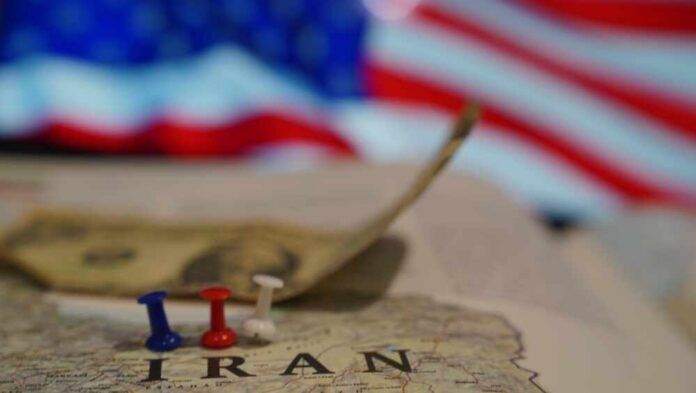
Iran’s hostage-taking machine may have a rare pressure point right now—and an American family is stuck waiting to see if Washington will use it.
Quick Take
- Attorney Ryan Fayhee says releasing detained Americans is the “easiest problem on the table” in current U.S.-Iran talks and could serve as a trust-building step.
- Abdolreza “Reza” Valizadeh, a 49-year-old American, has been detained in Iran for more than a year, with limited public detail on the underlying allegations.
- The U.S. has escalated formal pressure by designating Iran as a state sponsor of wrongful detention, demanding the release of all Americans.
- Policy experts and legal advocates argue deterrence remains weak unless Washington pairs diplomacy with tougher tools that raise costs for hostage-taking.
Hostage release emerges as the most achievable “deal” in a larger standoff
Ryan Fayhee, the lawyer for detained American Abdolreza “Reza” Valizadeh, told Fox News that freeing U.S. detainees is the “easiest problem on the table” for both Washington and Tehran as negotiations continue amid a fragile ceasefire tied to a broader U.S.-Israel-Iran conflict. Fayhee framed a release as “low-hanging fruit” that could demonstrate good faith and build trust quickly, without requiring either side to resolve the hardest security disputes first.
Valizadeh’s case illustrates the human cost of geopolitical brinkmanship. Public reporting identifies him as a 49-year-old American citizen held in Iran for over a year, but the available information does not clearly specify the exact date of his detention or the evidentiary basis for Iran’s case. That lack of clarity is common in wrongful-detention disputes and leaves families and advocates trying to move the issue onto the diplomatic front where leverage, rather than due process, often determines outcomes.
Iran’s long pattern of detaining Americans collides with a tougher U.S. posture
U.S. officials and outside experts describe Iran’s detention of Americans as a decades-long pattern designed to gain bargaining leverage. That historical record matters because it shapes how skeptical many Americans—conservatives and liberals alike—have become about whether international agreements restrain hostile regimes. In February 2026, the State Department designated Iran as a state sponsor of wrongful detention and publicly demanded that Tehran stop taking hostages and release all Americans, formalizing a sharper line.
The Trump administration’s broader message has emphasized results: securing releases and imposing costs when Americans are targeted. The White House’s 2026 U.S. Hostage and Wrongful Detainee Day statement highlighted a total of 101 Americans released from captivity abroad in one year, spanning multiple countries and negotiation tracks. That achievement reinforces the argument that persistent, high-level attention can work—yet it also raises the uncomfortable question of whether repeated swaps or concessions can incentivize the next detention if deterrence remains incomplete.
Deterrence debates focus on leverage, incentives, and the “price” of hostage-taking
A Capitol Hill panel led by WilmerHale underscored that hostage-taking can be driven by economic and political incentives, meaning a purely humanitarian appeal may not move decision-makers in Tehran. Panel discussions highlighted potential policy tools, including presidential authorities and mechanisms to enforce U.S. court judgments, aimed at increasing financial and legal consequences for regimes that profit from detentions. The core policy tension is clear: diplomacy may recover individuals quickly, but durable deterrence requires credible, consistent penalties.
What to watch: trust-building gestures versus structural fixes
Fayhee’s argument—that releases are the simplest confidence-building step—fits a pragmatic negotiating logic, especially during a ceasefire when both sides may want a visible, low-risk win. Reports have also indicated movement of some Americans in Iran to house arrest during swap discussions, suggesting talks have at least touched the detention issue. Still, limited public detail leaves outsiders unable to gauge how close any deal is, or whether Valizadeh’s case is being prioritized alongside other diplomatic objectives.
Lawyer for American detained in Iran says hostage deal is 'easiest problem on the table' for both sides https://t.co/Hx4BElglzR
— ConservativeLibrarian (@ConserLibrarian) April 21, 2026
For Americans frustrated with government dysfunction, this story lands in a familiar place: ordinary citizens caught between elite calculations, slow bureaucracy, and adversaries who treat people as leverage. Conservatives will focus on deterrence, sovereignty, and the need to end incentives for hostage-taking. Many on the left will focus on humanitarian urgency and the rule-of-law gap. Both sides, however, can agree on one standard—Washington should bring Americans home while building a policy that makes future detentions far less likely.
Sources:
WilmerHale Leads Capitol Hill Panel on Iranian Hostage Taking of Americans
U.S. Hostage and Wrongful Detainee Day, 2026
Iran Designated as a State Sponsor of Wrongful Detention