

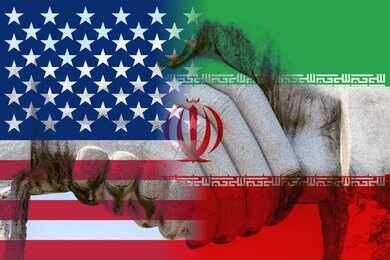
The Trump administration signed a 60-day ceasefire with Iran — but critics say the deal left Iran’s nuclear program intact, the Strait of Hormuz still vulnerable, and America with little to show for the fight.
Story Snapshot
- The U.S. and Iran signed a memorandum of understanding that includes a 60-day ceasefire and plans to reopen the Strait of Hormuz.
- Iran’s nuclear enrichment program was not dismantled — the deal focuses on stopping the shooting, not rolling back Iran’s nuclear gains.
- Multiple analysts across the political spectrum called the agreement a strategic defeat, saying the U.S. failed to meet its core war aims.
- The deal is not final — it is a framework with 30 to 60 days for further nuclear talks, meaning the outcome is still unresolved.
What the Deal Actually Says
President Trump announced the ceasefire agreement at the G7 summit, calling it a peace deal with Iran. Senior U.S. officials said frozen Iranian funds would be released on a “performance-based” schedule, meaning Iran has to follow through before getting paid. The agreement also calls for clearing mines and reopening the Strait of Hormuz to tanker traffic. A 30-to-60-day window was set for follow-on nuclear talks.[12]
What the deal does not include is a rollback of Iran’s nuclear program. Before Trump pulled out of the 2015 nuclear agreement, that deal had removed roughly 97 to 98 percent of Iran’s nuclear material. Since then, Iran resumed enriching uranium — reaching 60 percent purity. The current memorandum does not address that directly. Nuclear issues were pushed to future talks, which have not yet produced results.[5]
Did the U.S. Achieve Its Goals?
The Trump administration entered the conflict with several stated goals: stop Iran’s nuclear program, degrade its missile forces, reopen the Strait of Hormuz, and potentially push for regime change. The ceasefire reopened the Strait — that is a concrete result. But analysts at the Center for Strategic and International Studies (CSIS) said Iran’s strategy was to “endure, impose costs, and shift the conflict’s center of gravity outward,” and that Tehran was achieving “meaningful success” by straining U.S. alliances and disrupting energy markets.[2]
Sky News called the deal a “tacit admission of strategic defeat” and said the U.S. failed to achieve “nearly all” of its war aims.[9] The American Progress think tank argued that Iran moved from a “contained regime under intense popular opposition” to an “ascendant regional actor” by surviving the war.[1] These are left-leaning outlets, and their framing is heavily critical of Trump. But even setting aside the spin, the facts are hard to ignore: Iran’s nuclear program is still running, its missile force was not eliminated, and the regime is still in power.
A Familiar American Problem
This situation fits a pattern the U.S. has seen before. The Army War College has noted that America often wins on the battlefield but struggles to turn military success into lasting political results — a problem seen in Vietnam, Iraq, and Afghanistan.[20] Winning a firefight is not the same as winning a war. Iran did not need to defeat the U.S. military outright. It only needed to hold on long enough to make the cost too high — and that is exactly what it did.[17]
🚨 JUST NOW: The proposed Trump Iran deal would move to DISPOSE Iran's enriched uranium, carry out a ceasefire between Israel and Hezbollah in Lebanon, resume Strait traffic, end the blockade and allow tiered sanctions relief based on compliance
NO $300B FROM AMERICA!
"The… pic.twitter.com/VE9vjTQR8B
— Eric Daugherty (@EricLDaugh) June 17, 2026
The honest conservative take here is this: the ceasefire stopped the bleeding, and that matters. But Americans deserve to know what was actually agreed to. The full text of the deal has not been released. There are no public battle-damage reports, no intelligence assessments, and no clear accounting of what the U.S. gave up versus what it gained. Congress should demand those documents. Voters who supported Trump’s tough-on-Iran stance deserve a straight answer — not a victory lap over a 60-day pause that leaves Iran’s nuclear program untouched and the region’s future uncertain.[8]
Sources:
[2] Web – What America Has Lost in the War With Iran
[5] X – Iran War Update No. 38 (focus on Iranian strategic narrative)
[8] Web – U.S.-Iran deal a ‘strategic defeat’ for Israel, Middle East expert …
[9] Web – Warmongers in meltdown as Trump heralds Iran deal
[12] Web – A turnabout from Trump gives Iran the upper hand
[17] Web – Why Trump May Come to Regret the Iran War: A Reckoning with …
[20] Web – The Threat and Use of Force in American Foreign Policy Since 1989