

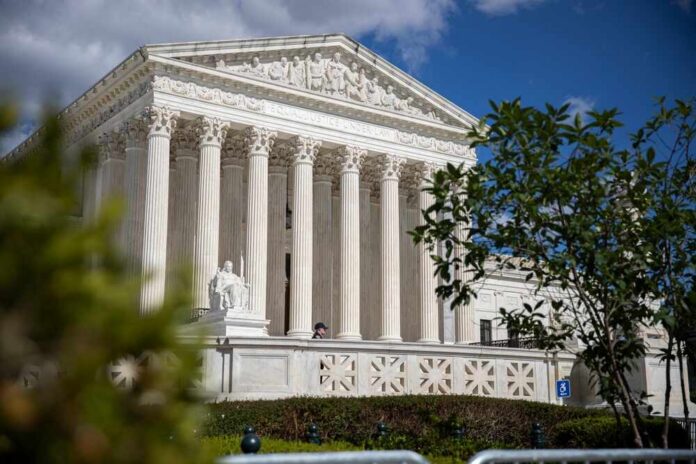
Mississippi’s next judicial map may hinge less on Jackson than on what the U.S. Supreme Court decides about race and redistricting in a Louisiana case.
Story Snapshot
- Gov. Tate Reeves announced a special legislative session to redraw Mississippi Supreme Court judicial districts, timed for 21 days after the Supreme Court rules in Louisiana v. Callais.
- A federal judge previously ordered Mississippi to redraw its judicial map after finding a likely Voting Rights Act Section 2 violation; the Fifth Circuit paused enforcement while the state appeals.
- The headline’s “Virginia gerrymandering vote” framing appears to be social-media spin; the confirmed trigger is the pending Supreme Court decision, not Virginia.
- The dispute pits legislative authority and “race-neutral” mapmaking arguments against civil-rights groups’ claims of Black vote dilution in statewide judicial elections.
Reeves sets a trigger date tied to a Supreme Court ruling
Gov. Tate Reeves, a Republican, said Mississippi will convene a special session to address judicial redistricting, but only after the U.S. Supreme Court issues its decision in Louisiana v. Callais. Under Reeves’ proclamation and public statements, lawmakers would meet 21 days after that ruling. The schedule reflects Mississippi’s decision to wait for “the new rules of the game” before writing lines that could be immediately challenged or overturned.
The immediate policy target is not congressional seats but the districts used to elect Mississippi Supreme Court justices. That distinction matters because judicial elections shape how state law is interpreted long after any single election cycle. Reeves framed the move as a question of constitutional roles: legislatures draw maps, while courts review disputes. Critics counter that delaying action can effectively extend a map that a federal judge already found unlawful under the Voting Rights Act.
Why Mississippi is revisiting judicial districts in the first place
The current dispute began with litigation arguing Mississippi’s Supreme Court electoral map diluted Black voting strength in violation of Section 2 of the Voting Rights Act. In August 2025, a federal judge ordered the map redrawn, concluding the existing configuration likely undermined minority voters’ ability to elect candidates of their choice. Mississippi appealed, and the Fifth Circuit paused enforcement while the appellate process plays out, leaving the contested map in place for now.
During Mississippi’s regular 2026 legislative session, lawmakers did not pass a new judicial map, citing the uncertainty created by the pending Supreme Court case in Louisiana. The practical effect is a freeze: no new lines until the nation’s highest court clarifies the standards lower courts should apply. For voters, the stakes are straightforward even if the legal doctrine is not—district boundaries can tilt who wins judicial seats and, by extension, the legal direction of the state.
How Louisiana v. Callais could reshape Voting Rights Act fights
Louisiana v. Callais centers on whether Louisiana’s congressional map unlawfully used race when creating a second Black-majority district, a question that can collide with Section 2’s requirement to avoid vote dilution. Reporting on the case suggests the Supreme Court could narrow how Section 2 claims work, potentially making it harder to compel states to draw majority-minority districts. If that happens, Mississippi and other states could face fewer court-ordered redraws grounded in Section 2.
Conservatives often view this debate through a constitutional lens: elections should treat citizens equally without government sorting voters primarily by race, and legislatures—not federal judges—should make inherently political line-drawing decisions within legal bounds. Liberals and voting-rights groups respond that ignoring race in areas with a long history of discrimination can lock in outcomes that keep minority voters from having a fair chance to elect preferred candidates. The Supreme Court’s ruling will influence which argument carries more legal weight.
The “Virginia” angle looks like hype, but the deeper issue is trust
The viral-style headline tying Reeves’ announcement to a “Virginia gerrymandering vote” does not match the core facts reported by multiple outlets, which point to the Louisiana Supreme Court case as the real trigger. That mismatch is a reminder of how quickly redistricting controversies get repackaged for partisan audiences. It also speaks to a broader, bipartisan frustration: many Americans see mapmaking as a game run by insiders—politicians, lawyers, and advocacy groups—while voters are left with the consequences.
Buckle Up, Mississippi: Governor Tate Reeves Drops BIG News After Virginia's Gerrymandering Votehttps://t.co/BWGM7MdJXl pic.twitter.com/rQwe8yDBMq
— Twitchy Team (@TwitchyTeam) April 25, 2026
The next key date is the Supreme Court’s decision in Callais, expected by the end of the Court’s term, with Mississippi’s special session slated for three weeks later. Until then, Mississippi’s judicial map remains in limbo—approved for use by the appeals court pause, but still under serious legal challenge. Whether the outcome strengthens state discretion or expands federal oversight, the fight will test how Americans balance equal protection, self-government, and confidence that elections are not being engineered from the top down.
Sources:
Mississippi governor calls session to redraw judicial districts
Mississippi governor says he will call special session to …
Mississippi will reexamine judicial redistricts after US …