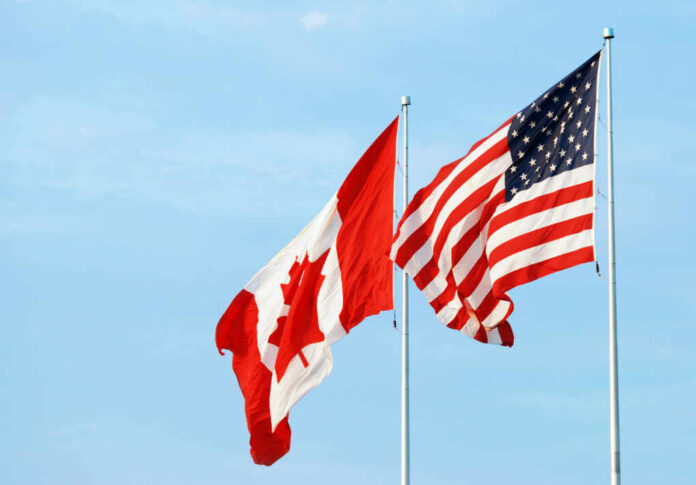
Canada’s prime minister just called the country’s long-standing economic closeness to the United States a “weakness”—a jarring message that signals a real shift in North American trade politics.
Quick Take
- Prime Minister Mark Carney used an April 19, 2026 video address to argue Canada must reduce reliance on the U.S. and “take care of ourselves.”
- Carney tied the shift directly to U.S. tariff hikes he described as reaching levels not seen since the Great Depression.
- Canada’s “Canada strong” strategy emphasizes new investment, new markets, and 20 trade deals across four continents in the past year.
- Autos, steel, and lumber—key Canadian employment sectors—sit at the center of the uncertainty created by tariff disruption.
Carney’s “Weakness” Framing Marks a Sharp Rhetorical Break
Prime Minister Mark Carney delivered his message in a roughly 10-minute “Forward Guidance” video address on April 19, 2026, distributed online. Carney argued that Canada’s historically close economic ties with the U.S.—long treated as a strategic advantage—now expose the country to policy shocks it cannot control. His core line was blunt: Canada’s former strengths “have become our weaknesses,” and those weaknesses “must be corrected.”
Carney’s language matters because leaders usually speak about the U.S.-Canada relationship in terms of shared security, integrated supply chains, and mutual prosperity. Calling those ties a “weakness” signals Ottawa is preparing Canadians for disruption rather than promising a quick return to normal. For American conservatives who favor hard-nosed trade leverage, it is also a reminder that tariffs don’t land in a vacuum: they trigger counter-strategies, re-routing of capital, and political narratives in allied countries.
Tariffs and Uncertainty: The Immediate Pressure Points
Carney’s reassessment was explicitly linked to American trade policy. He said the United States has “fundamentally changed its approach to trade,” raising tariffs to levels last seen during the Great Depression. The practical impact is uncertainty, especially for industries that depend on predictable access to the U.S. market. Autos, steel, and lumber were highlighted as exposed sectors, and Carney described the disruption as something “hanging over all of us” in daily economic life.
That uncertainty is not just a talking point; it affects real-world decisions. When companies cannot forecast cross-border costs, they delay investments, shift sourcing, or reconsider plant locations. Workers feel it first through reduced overtime, postponed expansions, and cautious hiring. The research available does not provide dollar figures or sector-by-sector job estimates, so any quantitative claims would be speculative. What is clear is that Ottawa is treating tariff volatility as structural, not temporary.
“Canada Strong” Diversification: Deals, Markets, and Domestic Messaging
Carney described a diversification push branded “Canada strong.” The plan centers on attracting investment from non-U.S. sources, striking new partnerships, and accessing new markets. He also said Canada signed 20 new trade deals across four continents in the past year—an aggressive claim intended to show momentum and options beyond the U.S. Separately, he spoke of “big structural changes” aimed at reducing reliance on a single foreign partner.
Because the research does not list the 20 deals or their terms, readers should treat that number as a directional signal rather than proof of immediate economic replacement for U.S. demand. Still, the strategy fits a broader global trend: governments are trying to “de-risk” supply chains and reduce single-point dependence. For conservatives skeptical of globalism, there’s an irony here—Canada is reacting to U.S. protectionism by leaning harder into global market diversification.
Symbolism and Sovereignty: Why the War of 1812 Reference Resonated
Carney’s address also leaned into national symbolism. Reporting notes he held up a toy soldier depicting General Isaac Brock, the British military leader killed defending Canada from U.S. invasion during the War of 1812. That imagery reframes a trade dispute as a sovereignty story: not merely economics, but independence and national resolve. It also helps Carney sell domestic sacrifice—higher adjustment costs now in exchange for less vulnerability later.
For Americans watching from the outside, the episode underscores how quickly allied relationships can be re-litigated when trade policy becomes a tool of domestic politics. Republicans in Washington may see tariffs as a negotiating instrument to rebalance terms and protect industry. Canada’s response shows the other side of that coin: once a partner starts building alternatives, some integration may not come back, even if tariffs later ease. The available reporting does not include a U.S. response.
Sources:
Carney says Canada’s previous relationship with U.S. a weakness that must be corrected
Carney says Canada’s US ties have become a weakness