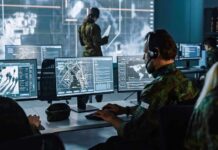


A Chinese commercial AI firm is bragging that “stealth” didn’t matter during America’s Iran strikes—and the uncomfortable part is how much of its tracking may have come from publicly available data.
Quick Take
- Hangzhou-based firms Jingan Technology and MizarVision claim their AI platforms tracked U.S. aircraft and naval movements during Operation Epic Fury.
- Jingan posted—and later deleted—audio it said captured B-2 radio communications, using AI-driven data fusion and open-source intelligence to reconstruct flight paths.
- Analysts caution the episode looks less like a “stealth failure” and more like a modern OSINT reality: public signals and commercial imagery can be stitched into actionable pictures.
- U.S. officials reportedly pushed commercial providers to curb some regional imagery, underscoring the policy dilemma around private data in wartime.
What the Chinese firms say they saw during Operation Epic Fury
Jingan Technology—also referenced in reporting under similar spellings—publicly claimed it tracked U.S. B-2 Spirit bombers involved in the opening phase of Operation Epic Fury, the U.S.-led strike campaign against Iranian targets that began in early March 2026. The firm said it fused intercepted signals, public information, and AI analysis to map aircraft movements, and it framed the episode as proof that “there is no absolute stealth” in the AI era.
MizarVision, another Hangzhou firm, marketed its own Iran-war “intelligence,” describing how it monitored U.S. carrier groups such as USS Gerald R. Ford and USS Abraham Lincoln, along with aircraft operating from regional bases. The broader message wasn’t subtle: the firms portrayed themselves as able to observe American power in near-real time. That messaging matters because it targets both customers and confidence—selling capability while feeding a narrative that U.S. dominance is easier to disrupt than Washington admits.
Why the B-2 audio claim is hard to verify—and still not easy to dismiss
Jingan’s most attention-grabbing “evidence” was audio it said captured communications from four B-2s, followed by an AI-assisted reconstruction of routes that reportedly focused on the return leg of flights. The company later deleted the audio, and independent verification has been limited in public reporting. That uncertainty should temper sweeping conclusions. Still, the episode highlights a practical vulnerability: even if specific intercept claims are exaggerated, the volume of routine emissions and public data can create patterns a determined adversary can exploit.
OSINT meets military-civil fusion: the bigger strategic problem
Reporting ties this trend to China’s military-civil fusion approach, where private firms build dual-use tools that can serve state objectives while operating as profit-seeking businesses. MizarVision has been described as having credentials consistent with supplying military customers, and Jingan has been portrayed as serving high-level Chinese defense clients. For Americans across the political spectrum who already distrust “deep” bureaucracies and opaque contracting, the parallel is striking: private tech plus government demand can scale surveillance fast—with fewer democratic checks.
U.S. response hints at a growing “commercial battlefield”
The U.S. reaction described in reporting—pressuring at least one commercial imagery provider to suspend some regional coverage—signals that Washington recognizes how commercial sensors can reshape warfighting and deterrence. That puts policymakers in a bind. Limiting data flows can protect troops and operations, but it also collides with free-market assumptions and the reality that data often routes globally. The broader story for taxpayers is familiar: government secrecy grows, costs rise, and accountability gets harder right when the stakes are highest.
What this means for Americans watching the Iran war and the China rivalry
Operation Epic Fury has already underscored how quickly modern conflict becomes an information contest, not just a contest of missiles and aircraft. If Chinese firms can credibly package public feeds—satellite imagery, shipping transponders, flight tracking, and radio monitoring—into “military-grade” products, then U.S. advantages depend more on disciplined emissions control, smarter procurement, and tighter operational security than on any single platform’s mystique. Limited public evidence leaves questions open, but the direction of travel is clear: the surveillance marketplace is expanding.
https://twitter.com/zerohedge/status/2044148720539685186
The political lesson is equally blunt. Americans frustrated by elite mismanagement—whether they call it the “deep state” or just a broken system—are watching a world where private actors can influence national security narratives at speed. Republicans may hold Washington in 2026, but the bureaucracy, the contractor ecosystem, and the global data economy don’t pause for election results. The next fights will be about rules, incentives, and competence: who controls data, who profits from it, and whether U.S. institutions can adapt without eroding liberty at home.
Sources:
Chinese firms market Iran war intelligence ‘exposing’ U.S. …
How a Chinese company said it used AI to track US …
Chinese firm claims it tracked US bomber jets over Iran …