

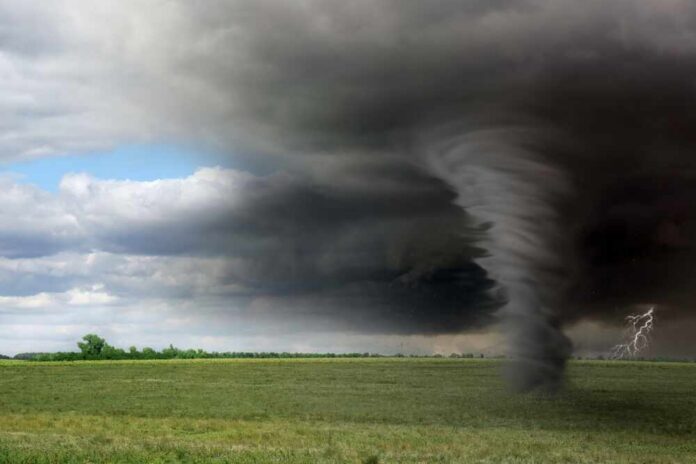
A rare early-March tornado outbreak tore through a 1,500-mile swath of the country, reminding millions that when disaster hits, neighbors and local responders—not Washington—are the first real line of defense.
Story Snapshot
- Severe storms from March 5-10 spawned tornadoes, destructive winds, large hail, and flooding risks from Texas to Michigan.
- National Weather Service surveys indicated multiple significant tornadoes, including EF3 damage in places such as Beggs, Oklahoma, and parts of southern Michigan.
- Reported deaths varied by outlet and timing, ranging roughly from six to eight as surveys and confirmations continued.
- Local agencies in hard-hit counties activated emergency operations, conducted search-and-rescue, and opened shelters amid outages and debris.
A Cross-Country Outbreak Hits Before “Tornado Season” Peaks
Storms from March 5-7 erupted as warm, humid Gulf air surged north and collided with a strong cold front across the central U.S., a setup that favors rotating supercell thunderstorms. Reports tracked a broad corridor from the Southern Plains into the Midwest and Great Lakes, putting tens of millions under watches and warnings. The early timing matters: communities were hit before the typical spring peak, when readiness messaging and seasonal staffing are usually highest.
National Weather Service offices began surveying damage footprints while NOAA tornado reports and local confirmations accumulated. The geographic sweep made the event especially difficult for emergency managers: one system produced multiple rounds of hazards—tornadoes, straight-line winds, hail, and heavy rain—across many states in quick succession. That kind of multi-state strain can complicate mutual-aid plans, because neighboring jurisdictions are often dealing with their own damage at the same time.
Where the Damage Was Worst: Oklahoma, Illinois, Indiana, Michigan
Damage assessments highlighted several severe focal points. Beggs, Oklahoma, saw an EF3 tornado with estimated winds around 135 to 140 mph and reports of fatalities. In Illinois, Kankakee County faced toppled structures, downed lines, and injuries; officials reported at least one death in the Aroma Park area as cleanup continued. Indiana reports described severe destruction in Lake Village, including a heavily damaged retail building and fatalities among elderly residents.
Southern Michigan also recorded intense impacts, including tornado damage consistent with upper-end ratings in some areas. Local responders described scenes of collapsed homes, trapped residents, and neighborhoods needing rapid search-and-rescue support. Those details underscore a reality that often gets lost in national debates: catastrophe response is intensely local at first. Residents depend on county dispatchers, volunteer departments, utility crews, and nearby hospitals long before federal resources can be requested, staged, and deployed.
Death Tolls, Tornado Counts, and Why “Early Numbers” Don’t Match
Fatality counts and tornado totals varied in reports because confirmations take time and storm surveys are methodical. Coroners must notify families and verify circumstances, while NWS teams compare radar data, photos, and on-the-ground damage indicators to rate tornado strength. Early figures can also shift as injuries later become fatalities or as separate incidents are linked to the same storm system. The most responsible reading is cautious: the event was deadly and widespread, and final numbers typically come after days of field work.
Policy Stakes: Preparedness, Infrastructure, and Trust in Institutions
Storms like this expose a pressure point shared by many Americans across politics: doubts that government systems are run for ordinary people, even when the need is basic public safety. Warning infrastructure, staffing, and resilient utilities are not partisan ideas, but they do collide with real debates over spending priorities and competent execution. When families are without power, or when rural roads are impassable, frustrations quickly turn toward institutions that seem slow, bureaucratic, or distracted.
For conservatives who favor limited government, the lesson is not that federal agencies are irrelevant, but that they should focus on core missions—accurate forecasts, clear communication, and support that strengthens local capacity instead of adding red tape. For liberals focused on equity, the same facts highlight how fragile housing, aging infrastructure, and limited medical access can magnify disaster harm. Either way, the outbreak is another reminder that functional governance starts with competence, not slogans.
Severe storms accompanied by tornadoes damage communities from the Plains to the Midwest @WashTimes https://t.co/Ps3hbnM9Ed
— Washington Times Local (@WashTimesLocal) April 15, 2026
As the storm system shifted east, forecasters indicated the most intense risk would ease, but ongoing surveys and rebuilding would continue in hard-hit communities. Residents will be dealing with roof repairs, vehicle losses from large hail, insurance claims, and the longer work of making homes livable again. The most immediate takeaway is practical: severe weather readiness cannot be seasonal anymore. Communities from traditional Tornado Alley to the Great Lakes are being reminded that preparedness must travel with the threat.
Sources:
Severe Weather Outbreak Brings Tornadoes and Destructive Storms to the Plains and Midwest
Photos: Midwest, Southern Plains slammed by deadly tornadoes, massive hail, flooding
Major tornado outbreak devastates parts of the US Plains and Midwest