When politicians try to convert a journalist’s presence at an adversary’s event into evidence of disloyalty, they are not just waging a rhetorical fight; they are testing the boundary between national security vigilance and the freedom to report from unfriendly places.
At a Glance
- Several House Republicans urged the State and Justice Departments to investigate journalist Max Blumenthal after he traveled to Iran for Ayatollah Ali Khamenei’s funeral.
- Blumenthal says he went on a press assignment, obtained a press visa, and did “nothing but report,” a claim echoed in press-freedom reporting on his return.
- Upon reentry to the U.S., border agents seized his phones; the episode fits a recurring pattern of device searches that press advocates argue chills reporting.
- The legal question is not whether covering an adversary is distasteful; it is whether attendance and reporting constitute foreign agency or unlawful support—standards with specific, high legal bars.
What actually happened: the demand for an investigation and the reporting trip it targeted
A trio of House Republicans led by Rep. Randy Fine asked the Trump administration’s State and Justice Departments to investigate Grayzone editor Max Blumenthal after he traveled to Iran during the mourning period for Ayatollah Ali Khamenei. The letter, described in conservative media accounts, seeks scrutiny of Blumenthal and potential financing of his outlet, tying the request explicitly to his attendance and reporting on the funeral. The act at issue, in other words, was not a covert meeting or a back-channel negotiation; it was a highly public trip with contemporaneous posts and reporting from Iran’s capital during an event that drew global attention.
Blumenthal, for his part, has presented a consistent account: he obtained a press visa and traveled on a reporting assignment to cover the funeral and related U.S.–Iran dynamics. In interviews with press-freedom groups after his return, he underscored that his activities in Iran were journalistic in nature—interviews with officials and ordinary Iranians, on-the-ground observation, and publication of his impressions and findings. The core dispute, therefore, is interpretive rather than factual: does presence plus reportage signal sympathy and potential foreign influence, or is it the practice of journalism in a hostile environment?
The border seizure and a recurrent press-freedom fault line
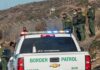
On his return to the United States, Blumenthal was stopped at Dulles; agents questioned him and seized his two phones, an incident documented by multiple outlets and by the Committee to Protect Journalists (CPJ). In isolation, that stop could be read as targeted scrutiny; in context, it aligns with a well-documented enforcement pattern. For years, U.S. border agencies have asserted authority to search travelers’ devices without a warrant, and journalists—because their phones and laptops contain reporting notes, source identities, and unpublished material—face distinctive risks when subjected to these searches. Press advocates have argued in court that such searches chill reporting and infringe First Amendment interests, even as the government maintains broad border-search powers.
Whether the seizure in Blumenthal’s case was justified under existing policies is a separate legal question; what matters for understanding the stakes is that this is not a novel procedural move. It is part of a recurrent practice that watchdogs track precisely because it can deter journalists from reporting in sensitive regions, gathering firsthand accounts, and returning with material the public might otherwise never see.
Journalism at adversaries’ events: history, law, and the difference between reportage and allegiance
American reporters have long worked in countries whose governments are antagonistic to Washington. The professional norm—sometimes romanticized, often simply necessary—is to go where the story is, which frequently means interacting with officials, attending state ceremonies, and moving in spaces curated by regimes that traffic in propaganda. None of that, by itself, makes a journalist a propagandist or a foreign agent. U.S. law reflects that distinction. The Foreign Agents Registration Act (FARA) is not a broad-brush ban on contact or proximity; it is a disclosure statute aimed at those who act at the direction or control of a foreign principal to influence U.S. audiences, with enforcement hinging on agency, funding relationships, and the nature of the messaging. Attending a funeral to report, even critically or vividly, is not the same as performing as a foreign principal’s agent.
This legal architecture is intentional. It preserves a wide berth for newsgathering while still giving prosecutors tools when someone crosses from journalism into covert political work for a foreign power. The House Republicans’ letter calls for an investigation; that request by itself asserts no proof of agency or unlawful support. To convert the allegation into a case, investigators would need evidence of directed activity, financial ties that meet statutory thresholds, or coordinated influence operations—evidence that goes far beyond presence at an event or even sympathetic statements about a moment’s significance.
Where the rhetoric outruns the record—and why the distinction matters
It is politically potent to portray a journalist’s presence at a regime ceremony as de facto endorsement. But potency is not proof. The public record around this episode is clearest on three points: the trip occurred and was public; the congressional letter sought executive-branch scrutiny tied to that trip; and the government, upon Blumenthal’s return, seized his devices under long-contested border-search authorities. Beyond that, the “sympathizer” label rests on inference. Meanwhile, Blumenthal’s account of his purpose—journalism—has appeared consistently in his own statements and in independent press-freedom coverage that documented the stop and seizure.
This is precisely why the press-freedom community worries about conflating access with allegiance. If being physically present in a hostile capital, interviewing officials, or even adopting language that reflects the scene on the ground can be repackaged as evidence of subversion, reporters will rationally avoid the most sensitive assignments. The result is a public square starved of primary-source observation, and a security apparatus increasingly insulated from scrutiny of its own decisions about whom to stop, search, or surveil.
GOP Reps demand investigation into Max Blumenthal for attending Ayatollah Khamenei's funeral in Iran, calling him a radical leftist propagandist and a potential threat to U.S. national security. https://t.co/UMeLyh8BuQ
— Bob Schatan (@RobertSchatan) August 30, 2026
How to weigh these episodes going forward
Two principles can coexist without contradiction. First, Congress has every right to ask the executive to look into conduct it finds troubling. Second, journalism—especially in adversary states—necessarily includes uncomfortable proximity to power and narratives that many Americans will reject. The safeguard is not to treat reporting as sacrosanct against any inquiry; it is to require that any escalation from inquiry to sanction be grounded in specific, statutory predicates such as direction or control by a foreign principal, material support to designated entities, or other clearly defined offenses.
That standard protects more than a single reporter. It preserves a system in which citizens can compare official claims with observational reporting from the field, including from places our government—and our adversaries—would prefer we see only through their chosen lenses. The Blumenthal episode shows how quickly those lenses can harden. It also shows why the law’s line between attendance and agency must hold.
Sources:
thegatewaypundit.com, blumenthal.senate.gov, x.com, memri.org, dailywire.com, tehrantimes.com, cpj.org, theguardian.com, rcfp.org