

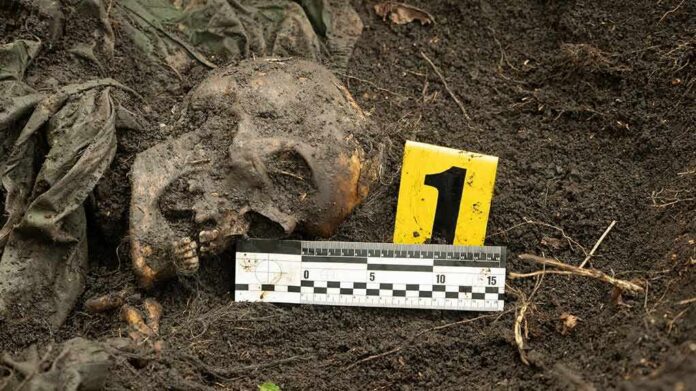
The turning point in many long-dormant unidentified-remains cases is no longer a new witness or a lucky archival find; it is the moment a DNA profile connects a nameless file to a living family tree, converting ambiguity into identity and, often, an unattended death into a suspected homicide.
At a Glance
- North Carolina investigators have identified remains recovered in Wilson County as those of 15-year-old Cindy Marcell Blizzard, who ran away from Maryland in 1977.
- The North Carolina State Bureau of Investigation (SBI) says the circumstances of recovery indicate probable foul play; the case is being investigated as a homicide.
- Identification relied on forensic DNA extraction from bone and investigative genetic genealogy to locate relatives and confirm Blizzard’s identity.
- The biological profile and recovery context were established through medical examiner analysis and multi-agency collaboration spanning state and federal partners.
What Investigators Established: Identity, Location, and Case Posture
Authorities have publicly identified skeletal remains found in a wooded area near a manufacturing facility in Wilson County, North Carolina, as those of Cindy Marcell Blizzard, a 15-year-old who left her Monkton, Maryland, home in the spring of 1977 and did not return. The SBI has stated that the circumstances surrounding where and how the remains were found “raised the probability of foul play,” and the investigation is proceeding as a homicide inquiry. A medical examiner’s assessment at the time narrowed the biological profile: a white female, likely 16 to 23 years old, with a postmortem interval then estimated as six months to two years. While the manner of death has not been publicly determined, homicide investigators are leading the case.
The remains were part of a longstanding unidentified-person case. The recovery context—wooded terrain adjacent to industrial operations—often complicates scene reconstruction, yet it can still yield taphonomic clues about deposition, movement, and time since death. In practical terms, the SBI’s homicide posture signals a focus on victimology, travel history, and any cross-state linkages between Maryland and eastern North Carolina in the late 1970s, a corridor long characterized by interstate trucking routes and seasonal labor flows.
How the Identification Was Made: From Bone to Family Tree
The identification hinged on two linked steps: laboratory DNA recovery from degraded bone and the genealogical inference that turns a DNA profile into a map of kinship. First, specialists extracted preserved genetic material from a bone sample, a routine but technically demanding process when dealing with decades-old remains. Second, investigators used investigative genetic genealogy, which relies on dense single nucleotide polymorphism (SNP) data to locate distant relatives—third or even fourth cousins—in searchable genealogy databases. Those relationships, once traced through public records and family trees, can converge on a likely identity, which is then corroborated by targeted confirmatory testing and case-context checks.
Over the past several years, investigative genetic genealogy has moved from an experimental tactic to a staple of cold-case work, credited with producing leads or identifications in hundreds of cases nationwide. The scientific literature explains the method’s power clearly: instead of the 20 or so short tandem repeats (STRs) used in conventional forensic DNA profiling, genetic genealogy interrogates hundreds of thousands of SNPs, vastly expanding the radius of detectable kinship and transforming a low-information profile into a network of inferable family ties. In unidentified-decendent cases, the approach restores names to the nameless with growing regularity, allowing long-stalled investigations to reorient around a known person rather than an abstraction.
Why Homicide Framing Follows Fast in Cold-ID Cases
When an unidentified person becomes a named victim, case posture often shifts quickly—especially if recovery circumstances suggest clandestine deposition rather than a witnessed accident or natural death. The SBI’s statement that circumstances “raised the probability of foul play” reflects a practical threshold: investigators need to secure potential evidence, revisit original missing-person reports, and sequence interviews while memories and records can still be recovered or cross-checked. That does not pre-empt a medical examiner’s manner-of-death determination; it prioritizes the investigative response to a case where an adolescent runaway from one state was found deceased in another under non-routine conditions.
This pattern is common across jurisdictions employing genetic genealogy in unidentified-remains cases. Academic and practitioner reviews describe a recurring arc: SNP-based profiles drive kinship leads; genealogical research distills likely identities; confirmatory testing closes the loop; investigators then reassess the recovery scene and victim’s last-known movements through a homicide lens if the context supports it. The operational goal is straightforward—to prevent loss of time-sensitive leads and to elevate investigative resources proportionate to the likelihood of criminal causation.
The 1977 Context: Runaways, Interstate Movement, and Case Fragmentation
Blizzard’s disappearance in 1977 situates this case within a different investigative era. Interstate coordination was slower, missing-person reporting norms were inconsistent, and the conceptual line between a “runaway” and a potential crime victim was too often drawn prematurely. Travel from Maryland to eastern North Carolina in the late 1970s could have occurred via personal contacts, commercial transit, or opportunistic rides along trucking corridors that threaded the I-95 spine and its feeder highways. For investigators, reconstructing that movement nearly five decades later depends on surviving records and the connective tissue offered by today’s data systems—state police archives, the FBI’s NCIC entries, and modern digital case-management platforms—none of which existed in their current form at the time.
Multi-agency collaboration is therefore not incidental to this identification; it is the operating model. The SBI acknowledged support from the FBI’s NCIC Investigation and Operational Assistance Group, the Maryland Department of State Police Homicide Unit, and the Raleigh Police Department’s intelligence team—precisely the kind of networked structure that allows a Maryland missing-person file from the 1970s to be reconciled with a North Carolina unidentified-remains case file of similar vintage.
Genetic Genealogy as Infrastructure, Not Novelties
The scientific and operational arc behind this identification mirrors the broader maturation of forensic genetic genealogy. What began as a headline-grabbing breakthrough is now embedded infrastructure in many cold-case units. Peer-reviewed summaries chronicle its application to both offender identification and decedent naming, underscoring how SNP-scale genotyping and genealogical analysis convert partial, degraded, or context-poor biological evidence into actionable family networks. As these cases accumulate, the discipline’s workflow—DNA extraction, SNP profiling, database querying under applicable policies, genealogical tree building, and confirmatory testing—has standardized, making outcomes like Blizzard’s identification not exceptional but expected in well-developed programs.
Importantly, this is not a shortcut around traditional investigation; it reboots it. Once a name is restored, investigators can refine timelines, locate associates, and re-examine geographic patterns that had no anchor when the decedent was “Jane Doe.” In Blizzard’s case, the most meaningful next steps will likely be classic detective work: reconstructing her movements after leaving Monkton, mapping known contacts, and comparing the recovery location to historical activity patterns—industrial shifts, workforce movements, and transportation nodes—in Wilson County in the late 1970s.
🇺🇸Skeletal remains found Dec. 29, 1977, in woods near a Wilson County, North Carolina plant have been identified as Cindy Marcell Blizzard, a 15-year-old who ran away from Monkton, Maryland, in spring 1977.
Investigators treated the case as a homicide from the start; dental… pic.twitter.com/ntVIl0sSm8
— NewsForce (@Newsforce) September 8, 2026
What This Means Going Forward
With identity established, a homicide investigation concentrates on means, motive, and opportunity. Expect renewed attention to archived Maryland reports from 1977; outreach to potential witnesses who were adolescents or young adults then; and a search for any analogous cases along travel routes between Maryland and North Carolina from 1977 into the surrounding years. Successful cold-case prosecutions often hinge on converging lines of circumstantial evidence supported by modern forensic re-evaluation—less a single smoking gun than a coherent, corroborated narrative assembled with today’s tools.
Sources:
foxnews.com, centsondollar.com, cbsnews.com