

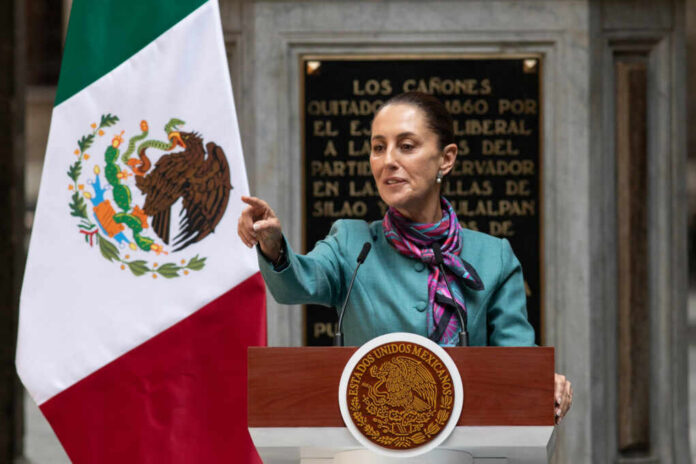
A little-known Texas congressional candidate has sparked outrage after reportedly suggesting a federal immigration detention center could be repurposed to imprison “American Zionists” and former immigration officers — remarks critics say raise alarming questions about political extremism, antisemitic rhetoric, and the normalization of state power against ideological opponents.
Story Snapshot
- Democratic runoff candidate Maureen Galindo is under fire for remarks about jailing “American Zionists” and former immigration officers in a Texas detention center.
- Her comments tap into conspiracy claims about “billionaire Zionist Jews” and controlling elites, blurring the line between populism and bigotry.
- Local and national Democrats now face a test over whether they will distance themselves or quietly hope voters look away.
- The episode shows how social media rhetoric can normalize state power used against political and religious opponents.
What Maureen Galindo Said And Why It Matters
San Antonio Democrat Maureen Galindo, now in a runoff for Texas’s Thirty‑Fifth Congressional District, reportedly told supporters on Instagram that she would turn the Karnes immigration detention center into “a prison for American Zionists and former immigration officers for human trafficking.” The San Antonio Current described those remarks and noted she tied them to a broader allegation that “billionaire Zionist Jews” are behind a trafficking conspiracy involving her opponent, Johnny Garcia, a local Democratic insider and former county spokesperson.[1][2]
San Antonio reporting portrays the comments as part of a pattern in which Galindo rails against elites, saying wealthy interests have “hijacked” local government and that millionaires and billionaires are using tax money to enrich themselves.[3][4] Her federal campaign website presents her as a champion of “participatory democracy” and promises to hold “the ruling class accountable,” but it does not describe any formal policy to jail political or religious groups.[5] That gap between official platform and online rhetoric feeds concern that extreme ideas are being floated without serious scrutiny.
From Housing Activist To Controversial Congressional Hopeful
Before this firestorm, Galindo gained attention as a housing activist and neighborhood organizer in San Antonio, arguing that developers and wealthy interests were pricing residents out of their communities.[3][4] Her insurgent 2026 campaign for the newly drawn Thirty‑Fifth District surprised observers when she advanced to a Democratic primary runoff after spending very little money, defeating a better‑funded, party‑backed moderate in the first round.[2][3] That upset reflected deep voter frustration with establishment politics and both parties’ perceived loyalty to donors over ordinary citizens.
As she has moved from local housing fights to a federal race, Galindo has sharpened her language about national and global elites. In an earlier interview, she complained that “millionaires and billionaires” had bought politicians and were using tax policy to enrich themselves, pledging to redirect resources “back into investing in America.” Many Americans across the spectrum share anger at rigged systems and special treatment for the well‑connected. The controversy stems from how she has attached that anger to specific religious and ideological labels and to talk of using state power against them.
Accusations Of Antisemitism And The ‘Zionist’ Distinction
The San Antonio Current reports that Galindo accused “billionaire Zionist Jews” of orchestrating a human‑trafficking scheme, language that echoes long‑standing antisemitic conspiracies about Jews controlling finance and politics.[1] The same outlet says she has also claimed that Zionists control media, Hollywood, and local politics, and that she called Israeli Prime Minister Benjamin Netanyahu a “war criminal” on social media.[1][3] Those details have led critics and civil‑rights advocates to describe her rhetoric as antisemitic and conspiratorial, not just anti‑Israel policy criticism.[1][2]
Galindo, according to the Current, insists she is targeting “Zionists” rather than Jews as a people, arguing that Zionists are actually putting Jewish communities at risk.[1] That distinction is increasingly common among activists, but it does not erase the impact of linking “billionaire Zionist Jews” to secret control and punishment schemes. The available reporting does not include original screenshots or full transcripts of her posts, leaving some questions about precise wording. Still, multiple outlets describe a consistent pattern: vague definitions of “American Zionists,” sweeping control claims, and talk of detention that goes beyond normal political debate.[1][2][3]
What This Reveals About Power, Punishment, And A Failing System
The controversy arrives during a period of intense national debate over government power, immigration enforcement, political extremism, and civil liberties. Many conservatives have spent years warning about “weaponized” government agencies and politically motivated prosecutions. Many progressives, meanwhile, have criticized immigration detention systems and abuses tied to federal enforcement policies. Galindo’s remarks unexpectedly fused both fears together. Rather than calling for dismantling immigration detention systems entirely, critics noted that she appeared to suggest repurposing a federal detention facility to imprison ideological and political targets tied to unproven conspiracy allegations.[1] Civil-liberties advocates warn that rhetoric involving detention camps, ideological enemies, and collective punishment, even when delivered casually online, can contribute to the normalization of extreme political language.[5]
Pro-Palestinian candidate Maureen Galindo is running for Congress in San Antonio, Texas, saying she would like to put American Jews into internment camps, aka concentration camps.
How do you think American Jews should respond to her? pic.twitter.com/ufLvqaBnX1
— Rabbi Poupko (@RabbiPoupko) May 20, 2026
At present, there is no evidence Galindo has introduced formal legislation, drafted detailed policy proposals, or established any actual legal framework for such actions.[4] For now, the controversy remains centered on rhetoric rather than enacted policy. But political analysts note that social media rhetoric can rapidly shape public discourse, especially when controversial ideas circulate repeatedly without strong condemnation from political leaders. As the runoff continues, the broader question facing Democratic officials in Texas may not simply involve Maureen Galindo herself, but whether party leaders are willing to publicly confront rhetoric that critics argue crosses the line from populist anger into dangerous political extremism.
Sources:
[1] Web – House candidate Maureen Galindo pledges to send ‘American …
[2] Web – Maureen Galindo | 2026 candidate for Texas’ 35th Congressional …
[3] Web – How Maureen Galindo went from a housing activist to a TX35 runoff
[4] Web – Maureen Galindo for D1
[5] Web – Maureen for US Congress