

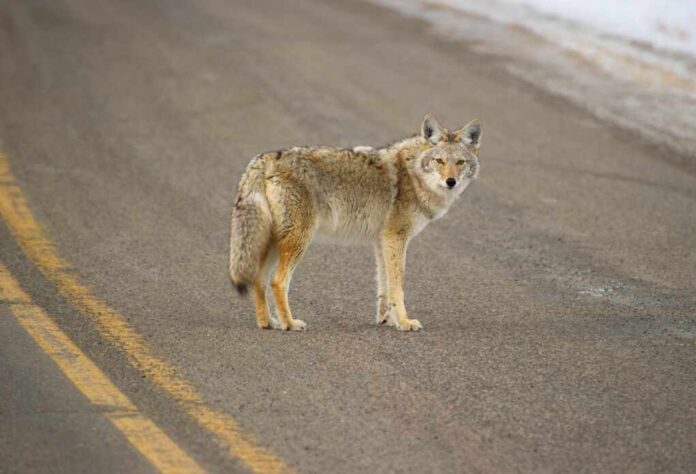
A single, undocumented coyote swimming to the shores of Alcatraz Island has become more than a viral moment—it’s a quiet challenge to the rules governing one of the Bay Area’s most important predator-free bird sanctuaries. Captured on a tourist’s video, the animal’s remarkable arrival in January 2026 has surprised park staff and wildlife professionals, raising urgent, long-term questions about how an island once protected by distance can remain safe from an expanding, highly adaptable predator population. The unresolved status of this lone coyote now frames a crucial debate: is Alcatraz about to follow the precedent of nearby Angel Island, where a single arrival quickly led to an established pack?
Story Highlights
- A tourist video captured what professionals say is the first documented coyote making it to Alcatraz’s southern shoreline.
- National Park Service staff searched but did not relocate the animal; its fate and origin remain unconfirmed.
- Wildlife professionals say seasonal dispersal and territorial pressure can push coyotes into risky, long-distance swims.
- Angel Island’s coyote history shows how a single arrival can eventually turn into a stable pack, raising long-term questions for Alcatraz’s nesting birds.
The Alcatraz swim that surprised even seasoned park staff
Aidan Moore, an Alcatraz tram driver, received the now-viral footage after a tourist recorded a coyote paddling toward the island. The animal reached the rocky southern edge, looked exhausted, then shook off water and climbed onto shore. National Park Service spokesperson Julian Espinoza said the swim is difficult even for people in excellent shape. Rangers searched, but no additional sightings were confirmed.
The basic facts are straightforward while the key details remain unresolved. Alcatraz sits roughly 1.5 miles from San Francisco, and the waters can be cold and choppy with strong tidal movement. Specialists interviewed in reporting said the coyote likely came from San Francisco, but currents and other launch points across the Bay complicate certainty. With no confirmed follow-up sightings or scat documented, the animal’s condition and whereabouts after landing remain unknown.
Coyote indulges in endless bird buffet after making daring 1.25-mile swim to Alcatraz https://t.co/kitw1kUcb4 pic.twitter.com/XSHGVEmnra
— New York Post (@nypost) January 28, 2026
Why coyotes keep showing up where they “don’t belong”
Researchers and longtime Bay Area observers describe coyotes as adaptable “survivalists” that have increasingly lived in urban San Francisco since the early 2000s. The timing matters. Fall through winter is a period when young coyotes often disperse to find territory and mates, and pressure from established packs can force risky movement. Specialists pointed to barriers such as highways that can increase mortality on land, potentially making water crossings more attractive.
Alcatraz also presents a strange incentive structure. The island is managed as part of the National Park Service’s Golden Gate recreation area and is known for nesting shorebirds. Reporting describes it as lacking mammalian predators, which is part of why bird activity is so important there. At the same time, the island has potential food sources for a coyote—rodents and birds among them—plus limited water availability that may depend on rain puddles. That mix creates uncertainty about whether a lone animal stays, leaves, or fails.
Angel Island is the precedent officials can’t ignore
Wildlife scientists keep returning to Angel Island for a reason: it demonstrates how quickly “one coyote” can become “a coyote problem,” depending on your perspective. A lone coyote reached Angel Island in 2017, and researchers have tracked that situation into a pack that grew to at least 14 by 2025. Specialists have suggested that additional coyotes may swim over or be drawn by mate calls, turning an isolated incident into an established population.
That precedent frames Alcatraz as more than a quirky viral moment. If coyotes can reliably cross open Bay water, islands once assumed to be naturally protected by geography may not stay predator-free. That matters for any sanctuary model built on the assumption that mammals cannot easily arrive. The National Park Service’s immediate response—searching after the report—signals awareness, but the lack of confirmed evidence afterward limits what can responsibly be concluded right now.
What happens next: monitoring, uncertainty, and real tradeoffs
As of the latest reporting in January 2026, there was no confirmed sign the coyote remained on Alcatraz, and no verified evidence a pack is forming. Analysts differed in tone but largely agreed on two basics: coyotes can survive in surprising places, and the island contains potential prey. Short-term impacts may be limited if the animal was alone and weakened. Long-term impacts depend on whether more coyotes repeat the swim.
For the public, the story is a reminder that “nature” doesn’t ask permission—and government agencies often end up reacting after the fact. For wildlife managers, the responsible path is boring but necessary: confirm presence, look for scat or other signs, and weigh protections for nesting birds against whatever reality the Bay’s expanding coyote population creates. For everyone else, the biggest unanswered question is still the simplest: did the coyote stay, or did it vanish back into the water?
Watch the report: San Francisco coyote makes rare swim to Alcatraz Island
Sources:
- Coyote makes astonishing swim to Alcatraz — the start of a prison island pack? We asked specialists
- Coyote spotted swimming to Alcatraz Island
- Coyote scrambles onto Alcatraz Island after perilous, never-before-seen swim | Live Science
- Coyote Spotted Swimming Over a Mile to Alcatraz in First Known Sighting of Animal on Iconic Calif. Island