
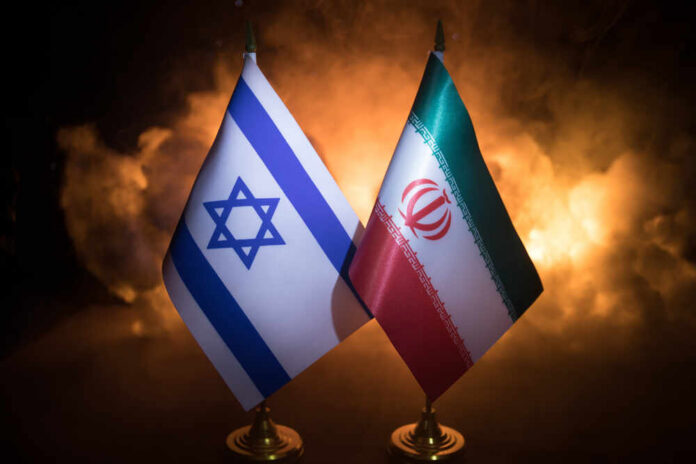
Iran’s claim that it struck Israel’s largest oil refinery underscores how fast this regional war is shifting from battlefield clashes to attacks that can spike energy costs and pressure U.S. strategy.
Story Snapshot
- Iran’s IRGC said it fired Khaibar Shekan ballistic missiles at Israel’s Haifa-area Bazan refinery as part of “Operation True Promise 4,” describing it as retaliation for strikes on Iranian fuel depots.
- Israeli alarms reportedly sounded, but independent confirmation of direct hits and the refinery’s operating status remained unclear in early reporting.
- Haifa’s refinery is a major strategic asset, widely reported as supplying roughly 50–60% of Israel’s domestic fuel and previously suffering a deadly 2025 strike and long shutdown.
- Reports also described a broader exchange that included Israeli strikes on Tehran-area fuel storage sites and Iranian launches toward other regional targets.
Missile Claims, Sirens, and a Fog-of-War Information Battle
Iran’s Islamic Revolutionary Guard Corps announced it launched Khaibar Shekan ballistic missiles toward Israel’s Haifa oil refinery on March 7–8, 2026, framing the barrage as the 27th wave of “True Promise 4.” Multiple outlets reported air-raid sirens in Israel and online videos showing smoke and flames near Haifa, but early coverage also stressed that the footage was not independently verified and Israel did not confirm specific damage.
Moneycontrol’s report, citing Reuters context, captured the central uncertainty: Iran claimed a successful strike, while Israeli officials offered no on-the-record confirmation of impacts. That gap matters because both sides are fighting militarily and narratively, using selective disclosure to shape deterrence. When claims center on critical infrastructure, the public’s first images often come from social media, and the most responsible reporting has to separate what is known from what is asserted.
Why Haifa’s Bazan Refinery Is a Strategic Pressure Point
Haifa Bay’s Bazan refinery is not just another target; it is an energy chokepoint. Coverage described the facility as Israel’s largest refinery, with Haifa’s output often characterized as covering about 50–60% of domestic fuel needs. In a conflict where daily life depends on transport fuel, jet fuel, and industrial feedstocks, even partial disruption can force rationing, raise prices, and complicate military logistics. That is why energy infrastructure has become a recurring focus.
The refinery’s vulnerability is not hypothetical. Reporting pointed to a June 2025 strike on the same site that killed three people, injured dozens, and shut operations for months. Argus-linked analysis referenced in broader coverage also described precautionary shutdowns and the “initial effects” on regional energy systems when conflict escalates. If Haifa again faces sustained disruption, the pressure extends beyond Israel, adding volatility to already skittish global oil markets.
The Tit-for-Tat Cycle: Tehran Fuel Depots, Then Haifa
The immediate backdrop was a reported Israeli strike on Iranian fuel storage and distribution infrastructure around Tehran. Iranian officials were cited confirming hits on fuel depots, and Israeli statements referenced attacks on fuel storage complexes. Iran’s missile launch was then described as direct retaliation, fitting a pattern of escalation where each side targets the other’s ability to sustain war and keep the lights on. That cycle increases the odds of miscalculation because energy strikes invite rapid reprisals.
Several reports also placed the Haifa claims inside a wider regional exchange, with Iran-linked launches mentioned toward U.S. and allied interests in the region. Separately, coverage said a U.S. Central Command post referenced Haifa strikes and was later edited—an anecdote that, at minimum, signals how tightly controlled wartime messaging can be. What remains missing in public reporting is a clear, independently verified assessment of damage at Haifa and the refinery’s operating status immediately afterward.
What This Means for the U.S. in 2026: Energy Security and Deterrence
For Americans watching from home—still fed up after years of inflation shocks and reckless spending—energy instability abroad is not an abstract problem. When Middle East supply risks rise, insurance, shipping, and benchmark crude prices can react fast, and consumers feel it at the pump. The reporting available so far does not quantify market impact from this specific incident, but it documents a pattern: both sides are increasingly willing to strike energy nodes, not just military bases.
Constitutionally, U.S. voters also expect clarity about how and why American forces are engaged overseas. The research here describes joint U.S.-Israel operations at the start of the wider conflict and notes Iran’s threats and actions against U.S.-connected targets in the region. With facts still developing, the key takeaway is accountability: when infrastructure targeting becomes normalized, the risk of a broader regional war grows—and so does the need for transparent objectives, measurable endpoints, and restraint against open-ended commitments.
Limited publicly confirmed details were available in the cited reporting beyond March 8–9, 2026, including definitive assessments of refinery damage and downtime. Until independent verification emerges, readers should treat viral clips and partisan victory claims cautiously and focus on the confirmed sequence: Israeli strikes on Iranian fuel sites, Iranian missile claims against Haifa, and an escalating pattern that puts energy security—both regional and global—at risk.
Sources:
Iran strikes Israel’s Haifa refinery in response to attack on oil depots in Tehran
NAMPA report on Iran-Israel escalation (text/22881219)
Jerusalem Post defense report on Israeli strikes and regional conflict
Op. “True Promise 4,” Wave 27: Haifa refinery hit
Iran Reports Drone Strike on Israeli Oil Refinery in Haifa
Israeli oil refinery in flames as Iran fires missiles (Times of India video report page)