
Iran and Russia launched provocative joint naval drills in the strategic Strait of Hormuz just as President Trump’s administration threatens military strikes over Tehran’s nuclear program, highlighting the dangerous alliance forming against American interests in the Middle East.
Story Snapshot
- Iran and Russia commenced joint naval exercises in the Gulf of Oman on February 19, 2026, directly coinciding with U.S. military buildup and nuclear negotiations
- The drills occur in the Strait of Hormuz, the critical waterway controlling 20% of global oil transit, raising risks of economic disruption and miscalculation
- Trump administration deployed two carrier strike groups to the region while pursuing diplomatic solutions, with potential military strikes reportedly prepared
- Experts characterize the exercises as symbolic messaging rather than genuine military coordination, revealing Iran’s isolation despite Russian participation
Iran-Russia Naval Drills Challenge U.S. Regional Dominance
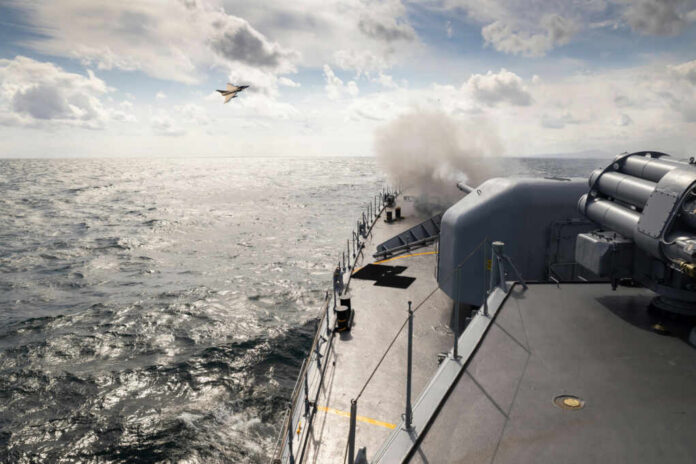
Iran and Russia launched joint naval exercises on February 19, 2026, in the Gulf of Oman, northern Indian Ocean, and Strait of Hormuz, deploying the Russian corvette Stoiky alongside Iranian warships, missile boats, helicopters, and IRGC special forces. The drills simulate anti-piracy operations, ship liberation scenarios, and offensive tactical maneuvers in waters critical to global energy security. Iranian Rear Admiral Hassan Maqsudlu framed the exercises as necessary to “strengthen security” and prevent “unilateral action,” a thinly veiled reference to potential American military strikes. This coordination undermines U.S. deterrence efforts and signals Tehran’s willingness to leverage authoritarian partnerships against American interests.
Timing Reveals Strategic Defiance Amid Trump Pressure Campaign
The naval drills coincide precisely with President Trump’s renewed “maximum pressure” campaign against Iran’s nuclear program, which began escalating in January 2026 with threats of military action over Tehran’s uranium enrichment and brutal crackdown on protesters. The Trump administration deployed significant military assets to the Middle East, including two carrier strike groups and additional warplanes, while simultaneously pursuing diplomatic solutions through Oman-mediated talks in Geneva. Iran responded by conducting separate IRGC drills that partially closed the Strait of Hormuz and announcing these joint exercises with Russia. White House spokesperson Karoline Leavitt indicated the administration prefers diplomacy but acknowledged arguments for strikes, with sources suggesting military action could occur as early as February 21.
Symbolic Gesture Masks Weak Strategic Partnership
Despite the provocative timing, experts assess these exercises as largely symbolic rather than substantive military cooperation. Mohammad Parsi, a former Iranian naval officer, characterized the drills as “small and symbolic,” noting Russia is unlikely to provide meaningful support against the United States and primarily uses Iran as leverage against the West. Unlike previous Maritime Security Belt exercises dating back to 2019, the 2026 iteration notably excludes China and features minimal Russian participation with only the Stoiky corvette. This reflects Iran’s international isolation despite its attempts to portray robust partnerships. Russia’s limited commitment exposes the hollow nature of Tehran’s anti-American alliances while the regime continues oppressing its own citizens and pursuing dangerous nuclear ambitions.
Strategic Waterway Control Threatens Global Economic Stability
The exercises in the Strait of Hormuz carry significant economic implications, as this narrow waterway handles approximately 20 percent of the world’s oil transit, making it essential to global energy markets. Iran’s partial closures during the drills and warnings to airlines about southern rocket launches demonstrate Tehran’s willingness to weaponize this chokepoint against international commerce. Gulf shipping firms and regional allies like Saudi Arabia and the United Arab Emirates face heightened risks from potential miscalculation or escalation. Maritime security analysts note shipping insurance rates will likely increase, while the coordination advances naval technology sharing among adversarial nations. This threatens the free flow of commerce that American leadership has traditionally guaranteed, underscoring why Trump’s decisive approach remains necessary to counter Iranian aggression.
New Post: Iran’s navy holds joint military exercises with Russia amid renewed threats from Trump https://t.co/DqBepuG2Ge #latestnews
— News 4 Social – Talk About Latest Trend (@newsforsocial) February 20, 2026
The Iran-Russia naval exercises represent another chapter in Tehran’s decades-long pattern of destabilizing behavior, from supporting terrorist proxies to pursuing nuclear weapons in violation of international norms. President Trump’s willingness to project American strength through military positioning while keeping diplomatic channels open demonstrates the kind of resolute leadership needed to counter authoritarian regimes. These drills may serve as propaganda for Iran’s regime, but they cannot mask the fundamental weakness of a government that must rely on symbolic gestures with declining powers like Russia while its own people suffer under oppression.
Sources:
Iran and Russia to Hold Joint Navy Drills as U.S. Pressures Tehran on Nuclear Program
Iran and Russia hold joint naval drills amid fears US could strike as soon as Saturday
Iran, Russia Begin Naval Drills As U.S. Military Buildup Continues
What Iran’s Naval Exercise With China And Russia In The Strait Of Hormuz Actually Means
Russia, Iran Hold Navy Drills As Trump Renews Threats