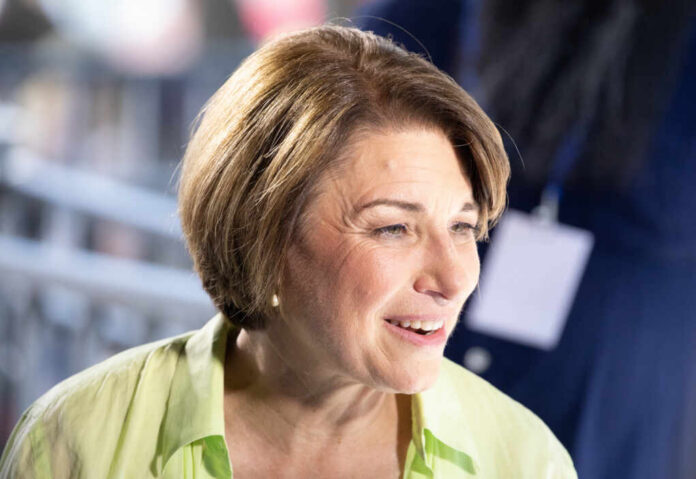
Amy Klobuchar’s sudden announcement that she is running for Minnesota governor fundamentally reshapes the 2026 election, a contest already defined by two major statewide crises. Her bid follows the exit of Democratic Gov. Tim Walz, who stepped away from his re-election campaign amid political fallout from a massive COVID-era fraud case. Klobuchar now enters a high-stakes race where the state government’s failures on fraud and intense protests over federal immigration enforcement—specifically the Trump administration’s “Operation Metro Surge”—are the central flashpoints. Klobuchar is attempting to position herself as a reformer who will tackle corruption while also being a political counterweight to the federal government’s enforcement strategy.
Story Highlights
- Klobuchar announced her Minnesota governor bid on January 29, 2026, after Gov. Tim Walz ended his reelection campaign earlier in January.
- Her entry reshapes a race already dominated by two crises: a major COVID-era fraud case tied to state programs and protests over federal immigration enforcement.
- Operation Metro Surge has brought large-scale ICE activity to Minnesota and has been linked in reporting to deadly protest-related shootings of two U.S. citizens.
- Klobuchar is pitching herself as both a reformer on fraud and a political counterweight to the Trump administration’s approach, while asking for bipartisan support.
Klobuchar’s Bid Opens a High-Stakes Minnesota Fight
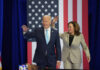
Sen. Amy Klobuchar formally launched her campaign for Minnesota governor on Thursday, January 29, 2026, moving into a race that was scrambled when Democratic Gov. Tim Walz stepped away from another run earlier this month. Klobuchar framed her decision as a shift from federal work to state leadership, arguing Minnesota needs problem-solving leadership now. Election Day is set for Tuesday, November 3, 2026, giving both parties a long runway.
Klobuchar’s timing is inseparable from the political vacuum Walz left behind and the reality that Minnesota has leaned Democratic for roughly two decades. Republicans have not won the governor’s mansion since Tim Pawlenty’s 2006 reelection, but the opening created by Walz’s exit initially looked like the GOP’s best shot in years. Klobuchar’s statewide name ID, fundraising ability, and record of winning statewide races changes that calculus immediately.
Sen. Amy Klobuchar said Thursday she is running for governor of Minnesota, promising to take on President Donald Trump while unifying a state that has endured a series of challenges even before the federal government's immigration crackdown. https://t.co/tiJMRgGj1P
— PBS News (@NewsHour) January 29, 2026
The Fraud Case Still Looms Over State Government
The Walz era is being shadowed by a “massive fraud scandal” described in coverage as the nation’s largest COVID-era scheme involving child-care centers, a reputational hit in a state known for competent administration. Reporting does not accuse Walz personally of wrongdoing, but it does describe the case as politically damaging enough to create real vulnerability for Democrats. Klobuchar is responding by promising prosecutions for theft of taxpayer money and changes to state systems.
For conservative voters, the case is a clear test of whether Minnesota’s leadership will protect taxpayers with strict oversight or keep feeding big-government programs that invite abuse. Klobuchar is trying to separate herself from the failures without disowning her party’s governing record. Her messaging emphasizes accountability—“people who steal taxpayer money go to jail”—but specific legislative or administrative fixes were not detailed in the provided reporting, leaving policy specifics to be filled in later.
Operation Metro Surge Turns Immigration Into the Central Flashpoint
Federal immigration enforcement is the second major force reshaping the 2026 race. Reporting describes a Trump administration operation—Operation Metro Surge—starting in December 2025 and accelerating in early January 2026 as hundreds of additional federal agents arrived. Minnesota officials filed a federal lawsuit on January 12 challenging the operation, underscoring that the policy fight is now both political and legal. Protests have followed, with national attention fixed on Minneapolis.
The reporting also connects the operation’s protest environment to two fatal shootings of U.S. citizens—Renee Good and Alex Pretti—during demonstrations, a development that intensified tensions. Klobuchar delayed her planned announcement earlier in the week after Pretti, described as a 37-year-old intensive care nurse, was fatally shot by Border Patrol agents. She then contacted White House officials urging deescalation. Those facts explain why immigration, not just local issues, is now driving the governor’s race.
Democrats Sell “Not a Rubber Stamp” While Asking for Bipartisanship
Klobuchar’s announcement message blends two ideas that often collide: resisting Trump administration “overreach” while also claiming she can find common ground. She explicitly told voters she will not be a “rubber stamp” for the administration, and she invited “Democrats, Independents, and Republicans” into her coalition. That positioning matches her long-running image as a bipartisan-leaning Democrat, but it also shows Democrats believe opposition to Trump remains a motivator in Minnesota’s coalition.
Republican strategists quoted in coverage argue the political landscape shifted fast. One Minnesota GOP strategist said Republicans looked poised to do well statewide just weeks ago, but that protest imagery and the “ICE out” energy could now complicate GOP prospects. National party committees are also framing the contest as a referendum on “years of mismanagement and misplaced priorities” under Democratic control. The limited research provided does not include polling, so relative strength remains an open question.
What Conservatives Should Watch Between Now and November
Minnesota’s race will likely hinge on two measurable questions: whether state leaders can credibly clean up fraud without expanding bureaucracy, and whether immigration enforcement can be carried out with clarity, lawfulness, and public confidence. The lawsuit against Operation Metro Surge, plus the protests and deaths cited in reporting, means courts and public safety decisions will shape the political narrative. Voters should demand specifics, because broad promises are easy—accountability in government rarely is.
Klobuchar’s move also has national implications. Coverage suggests her governor bid could position her for bigger ambitions later, but Minnesota voters will judge her first on whether she can manage state systems, protect taxpayers, and balance public order with constitutional rights. With Trump back in the White House and immigration enforcement a defining issue, this governor’s race is becoming a proxy battle between two governing philosophies—one rooted in expanding state management, and another demanding tighter control and clearer limits.
Watch the report: Amy Klobuchar gubernatorial campaign announcement video
Sources:
- Sen. Amy Klobuchar Announces Run for Minnesota Governor Amid Immigration Turmoil
- Amy Klobuchar launches Minnesota governor bid
- Klobuchar launches Minnesota governor bid after Walz ends re-election run amid massive fraud case