
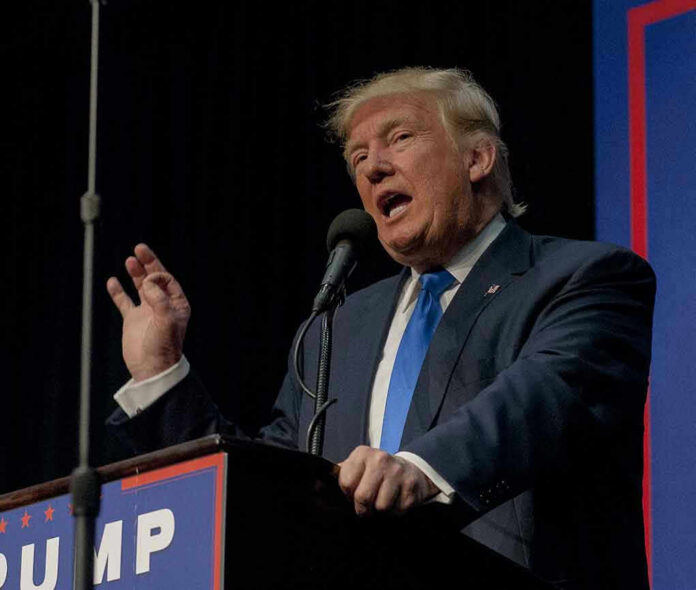
Presidential travel in a battleground state during early voting is never just about policy; it is a calculated way to shape the political climate around down‑ballot races, and President Trump’s latest Michigan swing fits that pattern squarely.
At a Glance
- President Trump is visiting Michigan during the state’s early voting window for the August 4 primary, with public events in Oakland County and at General Motors’ Milford Proving Ground.
- The White House frames the trip as an economic and manufacturing-focused visit, tied to tariffs, job growth, and the Gordie Howe International Bridge opening.
- Republican Senate contender Mike Rogers and other GOP candidates are explicitly linked to Trump’s Michigan events, underscoring the trip’s campaign function.
- The timing and geography of the visit align with competitive Senate and gubernatorial primaries, illustrating how presidential “official” travel doubles as targeted midterm campaigning.
Trump’s Michigan Trip: What Is Happening and Why It Matters
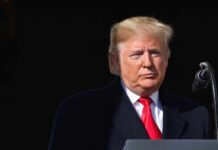
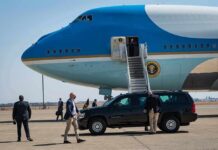
President Trump’s travel schedule places him in Michigan at a moment when the state’s 2026 primary has already moved into early voting and its Senate race is emerging as one of the cycle’s marquee contests. The Associated Press and other outlets report that he is set to rally in Oakland County on a Monday that coincides with the start of in‑person early voting for the August 4 primary, where both Senate and governor nominees will be chosen. In parallel, Reuters and local Detroit coverage describe a visit to General Motors’ Milford Proving Ground to tout trade and industrial policy and to highlight what the White House calls a manufacturing revival.
On paper, these are official events: remarks about the economy, manufacturing, and cross‑border infrastructure. But they are also being staged in the precise window when Republican and Democratic voters are forming impressions of Senate contenders and beginning to cast ballots. The overlap is not incidental. It is a textbook example of how a sitting president uses governing‑branded travel to influence the terrain of a high‑stakes congressional race.
Early Voting, Senate Stakes, and the Michigan Calendar
To understand the political weight of the trip, you need the calendar. Michigan’s 2026 U.S. Senate election will be decided in November, but the primary that sets each party’s nominee falls on August 4. According to Ballotpedia, early voting for that primary runs from July 25 to August 2, with mail voting starting even earlier. Trump’s Oakland County rally is reported as taking place just as in‑person early voting begins, putting the president in front of Michigan voters while they are actively casting ballots rather than merely thinking abstractly about the contest.
That timing is acutely relevant to the Senate race. Reuters identifies Republicans coalescing around former Congressman Mike Rogers for the Senate seat, while Democrats are locked in a competitive primary among Rep. Haley Stevens and state senators Mallory McMorrow and Abdul El‑Sayed. When a president who has endorsed Rogers appears in the state amid early voting, the effect is to boost that candidate’s visibility and signal national party investment in the race, even if the official program is written in the language of jobs, tariffs, and bridges.
Economic Message on the Surface, Campaign Muscle Underneath
The public framing from the White House and allied institutions stresses the economy. Detroit News reports that Trump’s Michigan visit is organized around remarks on economic issues and timed to the opening of the Gordie Howe International Bridge, a major new freight and commuter link between Detroit and Windsor. Reuters similarly describes the GM Milford event as a chance for the president to tout trade and industrial policy, emphasize new factory investment, and claim a manufacturing revival in the state.
Fox 2 Detroit coverage illustrates how that economic narrative is deployed on the ground. The president’s appearance at the Milford Proving Ground is billed as an opportunity to defend sweeping tariffs and promote tax cuts, with aides asserting that his policies protected roughly 170,000 Michigan jobs. There is no dispute that these are central planks of Trump’s governing agenda. But in the same breath, local reporting notes that he will “stump for” Republican gubernatorial candidate John James and U.S. Senate candidate Mike Rogers at the event, making the dual purpose explicit.
This blend of economic messaging and electoral advocacy is typical of modern presidential travel. Policy themes provide the official justification and define the news hook; candidate endorsements and partisan contrasts ride on top of that framework, benefiting from the media attention and symbolic weight of a presidential visit without turning every stop into a formal campaign rally.
Concrete Links to the Michigan Senate Race
If the trip were merely about macroeconomic speechmaking, the connection to the Senate race would be indirect. In Michigan, however, Trump has drawn a clear line between his appearances and specific candidates. The National Republican Senatorial Committee (NRSC) promoted a January event in Detroit by announcing that “President Trump is headed to Michigan today to tout his historic economic wins in the past year,” and that Mike Rogers, whom Trump has endorsed for the U.S. Senate, would be in attendance. That is not a vague association; it is an official party statement pairing the president’s economic branding with the fortunes of a single Senate contender.
Combine that with the timing of the July GM and Oakland County events, and the pattern sharpens. Trump is using economically themed visits to reinforce his “America First” argument and, at the same time, to elevate his chosen Senate candidate in front of the very voters who will be deciding Rogers’ primary and, later, the general election. Reuters’ description of Republicans rallying around Rogers as Democrats battle through a contested primary underscores just how much is at stake at that level of the ballot.
How Presidential Travel Functions in a Battleground State
The Michigan swing is also illustrative of a broader structural phenomenon: presidential travel to competitive states is almost never purely governing, nor purely campaign. It operates in a hybrid mode where every official gesture has electoral consequences. When a president visits an auto facility in a congressional district with a crowded field of Democrats vying to challenge a Republican incumbent, as Semafor notes about Trump’s trip to GM in Milford, the choice of venue sends a signal. It spotlights local economic issues that may favor Republican arguments, gives the incumbent cover to appear aligned with presidential priorities, and forces Democratic hopefuls to respond on ground not of their choosing.
Battleground travel also serves as a demonstration of party cohesion. A president’s presence at events with Senate, gubernatorial, and House candidates creates visual and narrative unity—Republicans presenting a single, integrated agenda around jobs, tariffs, crime, and affordability; Democrats, by contrast, must navigate their own internal primary battles before they can respond as a unified bloc. That asymmetry can be particularly visible during early voting, when different factions within the Democratic party are still fighting for nomination while the Republican slate appears consolidated behind Trump-endorsed figures.
The Gordie Howe Bridge, Trade Tensions, and Cross-Border Politics
Trump’s Michigan itinerary is further complicated by its overlap with the opening of the Gordie Howe International Bridge, which has been a flashpoint in U.S.–Canada trade relations. Michigan Advance reports that the Canadians pressed ahead with a celebratory opening ceremony after a planned joint event was canceled, in the context of renewed trade tensions following Trump’s escalation of tariffs. The bridge itself is a symbol of cross‑border economic integration; speeches delivered in its shadow inevitably touch on broader questions of globalization, sovereignty, and industrial policy.
Travel timed to such an opening carries layered meaning. On one level, a president can claim credit for negotiating terms that he argues protect domestic manufacturing. On another, critics can portray the cancellation of joint celebrations as evidence of strained alliances. In Michigan, where auto production is deeply tied to Canadian supply chains, those tensions intersect with voters’ lived experience of trade policy. When Trump speaks about tariffs and jobs in that context, he is not only addressing national economic concerns; he is also contesting the narrative that his approach has damaged regional prosperity and international partnerships.
From Manufacturing Revival to Midterm Map
Stepping back, Trump’s Michigan trip fits a strategic arc aimed at shaping the midterm landscape. Reuters frames the GM visit as part of an effort to “refocus attention on the economy” with fewer than 100 days before the U.S. midterm elections. After months in which foreign policy and inflation have dominated the national conversation, the White House appears keen to re‑anchor the president’s political identity in industrial recovery, job creation, and a tangible manufacturing footprint in states like Michigan.
For voters, the question is not whether the visit is “really” about governing or campaigning; it is about results. Has the promised manufacturing revival manifested in sustained wage growth and job security in places like Oakland County and the Milford corridor, or is the economic branding more rhetorical than substantive? The presence of Senate and gubernatorial candidates at these events—and the explicit intention to stump for them—does not diminish the importance of the policy debate. It simply makes clear that the president’s economic claims are being directly translated into arguments about which party should control the Senate seat that will help set the next phase of that agenda.
🇺🇸 President Trump is heading to Michigan today as the Senate race heats up.
Early voting is already underway in the battleground state, and Republicans are pushing hard to flip the seat. The visit comes as the race between Mike Rogers and Abdul El-Sayed draws national attention.…— Braking News (@daft6464) July 27, 2026
Reading the Signals as Michigan’s Senate Race Intensifies
For an attentive Michigan voter or observer, several signals emerge from Trump’s early‑voting visit. First, the administration views the state’s Senate race as strategically important enough to warrant presidential time during a crowded midterm calendar. Second, the White House believes that an economic message—centered on tariffs, manufacturing, and infrastructure like the Gordie Howe Bridge—is the most advantageous frame for that contest. Third, Republicans are actively leveraging the visit to solidify support around Mike Rogers and allied down‑ballot candidates, using the optics of a sitting president’s trip as a form of political capital.
None of this is unusual; it is how modern presidential politics operates. But understanding the mechanics helps clarify what is at stake. When Trump takes the stage in Oakland County or at GM’s proving ground, he is not only defending his record—he is trying to ensure that the senators and governors elected in Michigan will reinforce that record in the next Congress. Early voting means those efforts unfold in real time, as ballots are being cast. In a close Senate race, that timing can matter as much as any single speech line.
Sources:
facebook.com, washingtontimes.com, detroitnews.com, usnews.com, wtop.com, lasvegassun.com