
The U.S.–Bahrain civil nuclear agreement may signal energy progress, but it risks igniting new regional tensions as nuclear ambitions shadow the Gulf.
At a Glance
- The U.S. and Bahrain signed a civil nuclear cooperation agreement on July 16–17, 2025, in Washington.
- The deal is part of a broader $17 billion investment package spanning energy, tech, and defense.
- Bahrain targets carbon neutrality by 2060 with help from U.S. nuclear technology.
- The pact counters Iran’s nuclear posture while deepening U.S. strategic ties in the Gulf.
- Implementation will require a formal 123 agreement to enable technology transfers.
A Strategic Partnership in a Nuclear Era
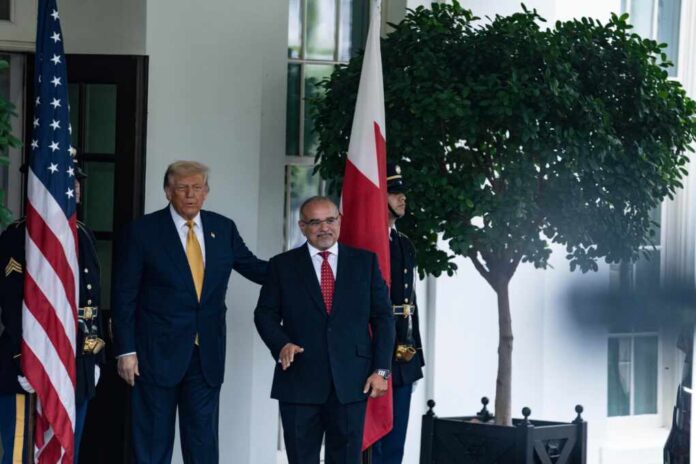
President Trump and Secretary of State Marco Rubio hosted Bahrain’s Crown Prince Salman bin Hamad Al Khalifa in Washington to cement a civil nuclear cooperation accord. The deal expands the long-standing U.S.–Bahrain alliance beyond defense into energy security and technology. It complements the Foundational Infrastructure for Responsible Use of Small Modular Reactor Technology (FIRST) program, aimed at deploying small modular reactors to emerging markets.
This strategic move strengthens U.S. influence in the Gulf while providing Bahrain with a path to diversify energy sources and reduce carbon emissions. The agreement also places the U.S. in a stronger position to supply nuclear technologies to allies, enhancing American industrial competitiveness.
Watch a report: US signs nuclear deal with Bahrain amid Middle East conflict
Regional Tensions: A Calculated Risk
The timing of the deal is critical. It comes on the heels of escalating military confrontations between the U.S., Israel, and Iran, including recent strikes on Iranian nuclear facilities. Iran has vowed retaliation, heightening fears of broader conflict that could engulf the Gulf region.
While the U.S. frames the Bahrain pact as a model for peaceful nuclear development, critics warn it could exacerbate regional insecurities. Other Gulf nations like Saudi Arabia and the UAE may seek similar deals, potentially fueling a civilian nuclear race with latent military risks. Iran, already under suspicion for covert weapons development, might view this U.S.–Bahrain cooperation as provocation.
The Road Ahead: Oversight and Opportunity
Before any reactors are built or technology is transferred, the U.S. and Bahrain must finalize a 123 agreement—an essential legal framework ensuring nonproliferation standards. The process will require strict oversight to guarantee that nuclear collaboration remains peaceful.
For Bahrain, this partnership offers a pathway to energy diversification and leadership in sustainable development. For the U.S., it’s a strategic foothold in the Gulf’s energy future. Yet, the challenge remains: can this deal promote stability in a region already teetering on nuclear uncertainty, or will it push rivals into an arms race cloaked in civilian ambition?