
California’s governor tried to pin gas-price anxiety on President Trump—and ended up spotlighting why Californians keep paying some of the highest fuel costs in America.
Quick Take
- Gov. Gavin Newsom’s press office posted on X that California gas has stayed under $5 for nearly two years while warning “Trump’s new war” could rattle markets.
- The U.S. Oil & Gas Association fired back, arguing California’s policies—not Washington—drive the state’s price premium and refinery strain.
- As of late February 2026, California’s average was about $4.65 per gallon versus roughly $2.98 nationally, keeping a wide gap even after national prices eased.
- California’s reliance on imported crude and ongoing regulatory costs remain central points of dispute in the back-and-forth.
Newsom’s Gas Post Triggers a Fast Industry Rebuttal
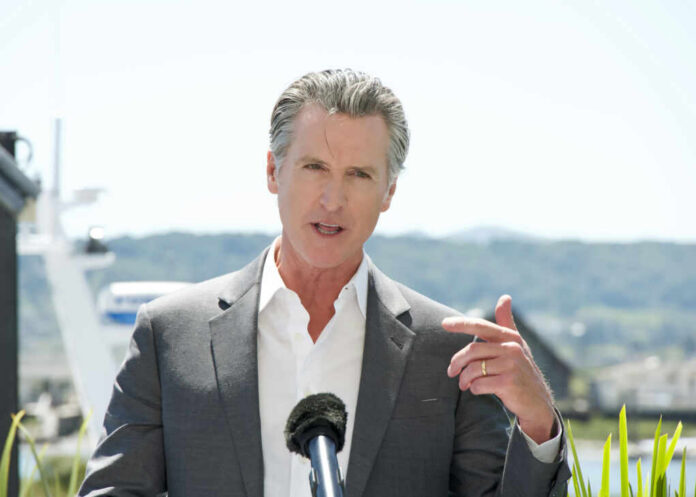
On February 28, 2026, Newsom’s official press operation used X to tout that California’s average gasoline prices had remained below $5 per gallon for nearly two years. The same post claimed “Trump’s new war” was already rattling markets and suggested the state was watching closely. The message quickly drew pushback because “below $5” is a low bar in a state where drivers have been conditioned to expect a steep premium.
On March 1, the U.S. Oil & Gas Association responded on X with a point-by-point critique. The trade group argued Newsom’s team was celebrating a problem Californians live every day: the state’s elevated baseline fuel costs. It also highlighted California’s dependence on imported crude—framing it as a self-inflicted vulnerability in a nation with large domestic resources and an administration openly promoting expanded U.S. production.
The Numbers Behind California’s Persistent Price Gap
Price comparisons gave the exchange its punch. Reports circulating with the viral thread cited AAA figures placing California at about $4.646 per gallon in late February 2026, compared to a national average near $2.984. That spread—well over a dollar and a half—makes it hard for state officials to credibly frame California as a model of affordability on energy, even if the average stays just under a round-number threshold.
USOGA also emphasized structural supply issues, including California’s heavy reliance on imported crude oil. In its reply, the group put the import share at 63% and argued the state has significant reserves it does not fully develop, even as it pays more for supply from abroad. Those claims fit a long-running conservative critique: policy choices that constrain domestic production can leave consumers paying more while decision-makers blame external forces.
Regulation, Refineries, and the Cost of “Managing” Energy
The broader context is California’s regulatory environment, where taxes, boutique fuel requirements, and emissions rules intersect with refinery capacity. The research summary notes the Low Carbon Fuel Standard as one longstanding part of the state framework and points to refinery closures and exits as another factor that can tighten supply. When capacity shrinks in a state with unique fuel blends, disruptions can translate quickly into higher prices at the pump.
At the same time, not every claim about the size of California’s policy-driven price impacts holds up equally well across sources. A 2025 state fact-check addressed widely shared assertions that specific programs or taxes add massive per-gallon costs, countering that some estimates were exaggerated and that certain components were measured in cents, not dimes. That disagreement matters because it shows how easily energy debates turn into slogan-versus-slogan messaging instead of transparent accounting.
Trump’s Energy Agenda Sharpens the Contrast With Sacramento
The exchange also landed amid a clear political split between Trump’s national energy posture and Sacramento’s approach. The provided research describes Trump-era moves to roll back Biden policies, end certain EV subsidies, and push expanded drilling to increase supply, while national gasoline averages fell below $3. California leaders have opposed parts of that agenda, including offshore development near the Pacific Coast, reinforcing a familiar red-state/blue-state divide over energy and cost-of-living priorities.
Newsom’s reference to “Trump’s new war” was not clearly defined in the research, leaving a key part of the original jab vague. When a claim is imprecise, it is easier for critics to dismiss it as political signaling rather than an evidence-based warning. For voters focused on household budgets, the more concrete story is the visible gap between California’s pump prices and national averages—an everyday reminder that policy outcomes matter more than social-media spin.
What This Means for Voters Watching the Constitution and the Economy
Nothing in the exchange changed policy overnight, but it highlighted a governing instinct conservatives distrust: using state communications power to redirect blame while residents absorb the costs. When energy becomes more expensive, everything from groceries to commuting gets squeezed, and families lose flexibility. The dispute also underscored a practical national-security point raised by critics—greater reliance on imported crude can increase exposure to global shocks, regardless of who occupies the White House.
CA Governor Tries to Troll Trump Over Fuel Prices, but Is Savagely Brought Back to Reality by Gas Assoc. – RedState https://t.co/uwRLEXh5aF
— Rick Santini (@RickSantini2) March 2, 2026
For Newsom, who is frequently discussed as a future national contender, the episode reinforced a messaging risk: boasting that gas stayed “under $5” can sound detached to working families who remember $3 gas in much of the country and see California far above that. For the Trump-aligned argument, the viral rebuttal offered a simple contrast—expand American energy and lower national averages, or regulate, restrict, and explain away a permanent premium.
Sources:
Free Republic thread aggregating coverage of Newsom gas-price post and USOGA response
Fact check: Claims swirling on California gas prices
Trump’s plan for rising energy costs: pump oil, make data centers pay