

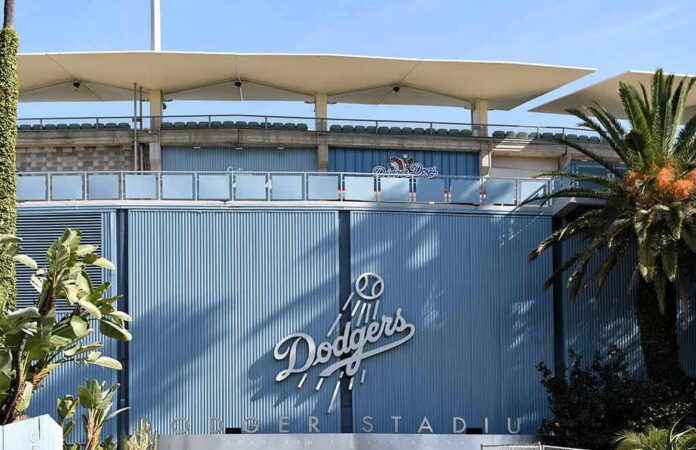
Teams don’t just sell food and drink; they sell a story about themselves. The Dodgers’ #RuiningBaseball margarita was a deliberate act of narrative judo—taking an accusation about payroll dominance and turning it into a branded, in-stadium experience—illustrating how modern sports organizations weaponize outrage as entertainment without addressing the underlying competitive-balance debate that fuels it.
At a Glance
- The #RuiningBaseball margarita was a branded, $25, NLCS-only concession with a specific recipe and hashtag—an intentional promotion, not a menu fluke.
- Coverage framed the drink as trolling critics of Dodgers spending, reflecting an “engage-the-critics” marketing play rather than policy commentary.
- The episode sits inside MLB’s broader payroll disparity fight; MLB relies on a luxury-tax model, not a hard cap, keeping room for eye-popping outlays.
- Media attention was wide but largely second-hand; no on-record Dodgers executive explained the promotion’s intended tone.
What Actually Happened: A Designed, Hashtag-Forward Playoff Concession
During the NLCS, Dodger Stadium sold a concession explicitly labeled the “#RuiningBaseball margarita,” priced at $25 and described across outlets as a tequila, mango, jalapeño mix with a chile-mango garnish—positioned as a limited, playoff-only offering. Multiple reports relayed the same bundle of facts: the name, the ingredients, the price point, and the postseason setting. While the coverage ran through aggregation channels and commentary sites as much as traditional news pages, the convergence on those particulars establishes the core: this was a real, branded item, rolled out in a high-visibility series, not an accidental listing or rumor.
The branding did not hide its source of provocation. By embedding the criticism directly into the product name via a hashtag, the team’s game-day environment acknowledged and commercialized the very narrative its detractors use—namely, that the Dodgers’ spending spree has “ruined” baseball. The form matters: a menu board and point-of-sale experience, not a press release, channel the message as part of the entertainment product itself.
How Sports Marketing Turns Accusation Into Identity
This is a familiar technique. When a brand is accused of something that won’t be adjudicated in a courtroom but will play endlessly on social media, it can metabolize the charge into merch, slogans, or gameday novelties, turning critics’ language into a badge for loyalists. In baseball, where fandom is tribal and game days are extended rituals, a concession item is a near-perfect delivery system: it’s visible, photographable, and instantly memeable. The Dodgers’ drink fits that pattern precisely—self-aware, a little barbed, and designed to travel through camera rolls and comment threads, not white papers.
Crucially, there is no evidence the club intended this cocktail as a policy argument about competitive balance. Available reporting shows a themed concession aligned with a postseason moment and an online narrative; it does not show an institutional brief on how to fix (or even seriously address) payroll disparity. That separation—between symbolic performance and structural policy—explains why the stunt can energize a base while exasperating those who see the spending gap as existential to the sport.
The Counter-Read: Mockery, Not Wit
Several outlets characterized the margarita as overt mockery of fans and rival teams offended by the Dodgers’ financial firepower. OutKick used “openly mock,” The Spun called it “taunting,” and the Daily Caller framed it as converting anger into a cocktail. That interpretation is plausible on its face; the name is provocative and the price premium conspicuous. But those verdicts, while emphatic, rest largely on commentary rather than contradicting the base facts or supplying new ones about intent. The strongest thing we can say from the record is that the drink was conspicuously labeled and widely noticed, and that commentators—pro and amateur—read it as trolling. Some Dodgers fans, predictably, leaned into the joke.
The absence of an on-record Dodgers explanation allowed those frames to set. In modern reputation dynamics, silence cedes definition to the loudest narrators. If the club’s aim was “playful needle,” it still accepted the tradeoff: viral reach in exchange for being painted as dismissive.
The Real Backdrop: MLB’s Payroll Architecture Makes This Joke Legible
Why does a cocktail name sting? Because it sits atop a genuine tension in MLB’s economic design. Baseball has no hard salary cap; instead it uses a graduated Competitive Balance Tax (CBT), which functions more like a luxury tax than a spending ceiling. That architecture permits wide variance between the top and bottom payrolls in any given season and across eras, ensuring that a few big-revenue clubs can push far beyond the field when they choose. Public analyses in recent seasons have placed the Dodgers at or near the top of payroll and CBT outlays, with figures that tower over low-revenue rosters.
That asymmetry feeds two simultaneous truths. First, aggressive spenders can assemble depth and star power at a scale available to very few. Second, the tax itself is a cost of doing business rather than a binding constraint, especially for clubs with dominant local media revenue. The result is a durable controversy in which rivals argue for cap-like reforms and high-spenders defend the current system as both legal and competitive. The Dodgers’ own baseball operations chief has dismissed “ruining baseball” as a lazy narrative—again, a rhetorical defense, not a policy paper.
Price, Setting, and Why This Landed the Way It Did
Context amplified everything. A $25 price tag for a playoff specialty drink is not aberrant in major-market postseason venues, but as a symbol, it supports the mocking read—luxury consumption layered on luxury payroll. The NLCS setting magnified visibility and implied institution-level endorsement; what might have been a cheeky August Tuesday novelty instead looked, to detractors, like a victory lap conducted mid-bracket.
Mechanically, this is why the stunt worked as marketing and inflamed as discourse. It gave home fans a winking in-group token while confirming opponents’ priors about big-money swagger. And because it happened at the ballpark, not in a marketing deck, it required no additional explanation to achieve distribution. The cameras did the work.
What This Actually Tells Us About the Game
A cocktail cannot alter competitive balance, but it can expose the uneasy truce between commerce and sport. MLB’s current ruleset enables super-teams without mandating them; some clubs exploit that freedom, others can’t or won’t. As long as that’s true, “ruining baseball” will persist as a chant and a counter-meme. The Dodgers’ margarita made that subtext literal and saleable. It also underscored a larger communications reality: in an outrage economy, the fastest way to take ownership of a narrative is to sell it back to your audience with a smile—and a garnish.
Sources:
foxnews.com, nypost.com, trending.thespun.com, dailycaller.com, jjjp.ca, sports.yahoo.com, mlb.com, essentiallysports.com, cbssports.com