Trump’s Iran war is exposing a hard truth for the MAGA coalition: national strength is popular, but another open-ended Middle East fight is not.
Quick Take
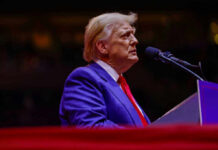
- Reports of Trump approving strikes after talks with Netanyahu underscore how tightly U.S.-Israel decisions are now linked in the Iran conflict.
- The 2025 “Twelve-Day War” included U.S. strikes on hardened nuclear sites, followed by an uneasy ceasefire that has not resolved core disputes.
- Assessments diverge on results: Trump described Iran’s facilities as “obliterated,” while other reporting indicates only a months-long setback.
- Conservative voters who backed “no new wars” are split between stopping Iran’s nuclear program and rejecting another prolonged intervention.
How the “Trump Approved Strikes” Narrative Took Hold
U.S.-Israel coordination has been central to the latest round of conflict, with multiple accounts emphasizing direct Trump-Netanyahu discussions before major operations. The research available does not confirm the exact Reuters headline circulating online, but the broader premise matches documented patterns: Israeli operations against Iranian nuclear and missile capabilities, followed by U.S. involvement aimed at targets Israel could not hit alone. That gap between a viral claim and verifiable sourcing is driving mistrust.
Trump’s second-term posture has shifted between diplomacy and force depending on Iran’s nuclear trajectory and regional attacks. A key flashpoint in the timeline came after international alarms over Iran’s nonproliferation violations and fast-moving enrichment progress, followed by Israeli strikes and then U.S. strikes on fortified facilities. The main takeaway for voters is that “limited” action has repeatedly escalated into larger commitments once red lines are crossed and retaliation follows.
What Happened in 2025—and Why It Still Matters in 2026
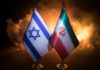
The 2025 confrontation, often summarized as a short war followed by a ceasefire, set the template for today’s instability. Israel launched a major operation against Iran’s nuclear infrastructure and related targets, and U.S. forces later struck facilities including Fordow, Natanz, and Isfahan—sites associated with the nuclear program. Iran then retaliated against a U.S. base in Qatar, and Trump announced a ceasefire shortly after, ending the immediate exchange without ending the strategic conflict.
Damage assessments remain politically consequential because they shape the case for “finishing the job” versus pulling back. Trump publicly argued the targeted sites were completely destroyed, while other assessments cited in the research suggest the program was only set back for months. Iran also disputed the extent of damage. For Americans already skeptical after decades of shifting war rationales, competing claims make it harder to judge whether the U.S. is buying real security or only another cycle of strikes.
MAGA’s Split: Strength Abroad vs. Limits at Home
Conservative frustration in 2026 is not only about inflation, border failures, or the culture wars that dominated the previous decade; it is also about broken expectations on foreign policy. Many Trump voters supported maximum pressure and deterrence but believed it would prevent major new wars. As the Iran conflict drags on, that promise is being tested against rising energy costs, fears of mission creep, and the concern that “temporary” operations become permanent deployments.
Constitutional and Governance Questions Conservatives Keep Asking
Even voters who accept the need to stop a nuclear-armed Iran are pressing for clarity on objectives and lawful authority. The research points to mixed signals about end goals—disarming proxies, degrading nuclear capacity, and broader ambitions that can blur into regime-change logic without a clear endpoint. That ambiguity matters because prolonged war tends to expand executive power, normalize emergency measures, and crowd out domestic priorities like border security and fiscal discipline that energized the conservative base in the first place.
Limited public detail is available in the provided research on the exact scope of 2026 operations and the decision chain behind newer strikes, beyond references to discussions between Trump and Netanyahu and Israeli authorization of additional action. What is clear is that U.S. involvement is now a central variable in the conflict’s trajectory, and that conservative unity depends on whether the administration can show a defined mission, measurable outcomes, and an exit strategy that avoids repeating the post-9/11 playbook.
Sources:
A guide to Trump’s second term military strikes and actions
The road to the Israel-Iran war