
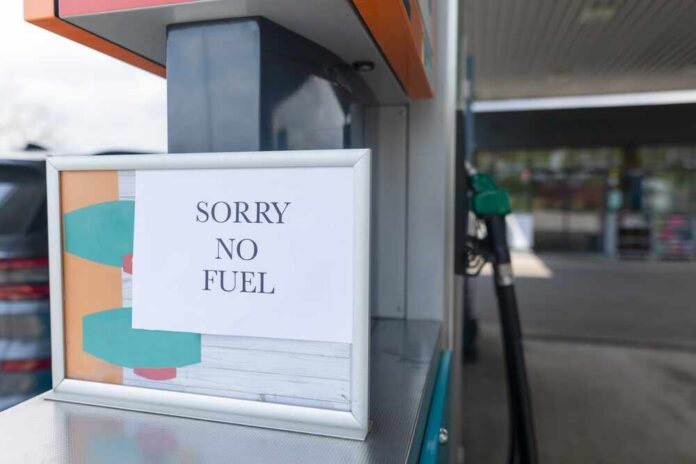
Cuba’s regime says the island’s diesel and fuel oil are “totally dry,” raising sharp questions about Havana’s failures and the risks to U.S. security just 90 miles from Florida.
Story Highlights
- Cuba’s energy minister announced reserves of diesel and fuel oil are exhausted, triggering deeper blackouts [2].
- Broadcast reports describe multi-day outages and say a recent Russian oil donation has already been consumed [1].
- Havana blames the United States embargo, but hard data separating sanctions impact from state mismanagement is not provided [1][2].
- Limited, opaque Cuban reporting hampers verification, leaving key facts—volumes, timelines, and causes—under-documented [1][2].
Cuban Officials Confirm Fuel Reserves Are Exhausted
United Press International reported Cuba’s energy minister Vicente de la O Levy said the nation’s diesel and fuel oil reserves had run “totally dry,” a declaration that formalizes weeks of mounting outages and rationing [2]. France 24’s coverage adds that blackouts have lasted for up to two days at a time as the grid buckled under dwindling supplies [1]. Officials framed the collapse as the result of United States policy pressure, while independent verification of inventories, refinery output, and port receipts remains scarce in public view [1][2].
France 24 reported Cuba had received no fuel from December until a Russian vessel delivered about one hundred thousand tons as a donation last month, a shipment the outlet says has already run dry amid persistent demand and system losses [1]. That timeline, if accurate, suggests a prolonged import gap that would strain any grid reliant on imported hydrocarbons. Still, neither broadcast nor wire copy supplies audited tank-level data, refinery throughput logs, or shipping manifests that would allow outside analysts to confirm the precise depletion curve [1][2].
Attribution Dispute: Embargo Claims Versus System Failures
Cuban officials and some media place primary blame on the United States embargo, asserting that financing constraints and trade pressure throttled supply access [1][2]. The same reports, however, do not separate the embargo’s effects from other factors such as aging power plants, chronic maintenance backlogs, or supplier decisions unrelated to sanctions. The available coverage acknowledges the shortage as real but does not provide a causation breakdown that quantifies how much each factor—policy, pricing, logistics, or internal mismanagement—contributed to the collapse [1][2].
For readers seeking clarity, the evidence record presented in these accounts is thin on primary documentation. There is no released reserve ledger, no month-by-month import receipts, and no grid dispatch data accompanying the claims [1][2]. That opacity invites competing narratives: one that simplifies events to embargo consequences and another that highlights Havana’s decades of operational neglect. A rigorous answer likely involves both external pressure and internal fragility, but the current public record cannot apportion responsibility with precision based on the cited sources [1][2].
Implications for the United States: Security, Migration, and Energy Reality
Spiraling blackouts in Cuba can reverberate across the Florida Straits through heightened migration pressure and opportunistic activity by adversarial states seeking influence near U.S. shores. Reports indicate Russia stepped in with emergency oil, underscoring how energy voids become leverage points for strategic competitors [1]. Washington must prepare for secondary effects—coast guard strain, humanitarian contingencies, and information warfare—while reinforcing lawful, targeted policies that protect American interests without fueling counterproductive instability [1][2].
🇨🇺 Cuba has officially declared that it has run out of fuel and expects the energy system to collapse in the coming days.
Cuba has completely exhausted its reserves of diesel and fuel oil, Energy Minister Vicente de la O'Levy announced on state media on Wednesday.
Some parts of… pic.twitter.com/BIGecNEehk
— Sprinter Press Agency (@SprinterPress) May 15, 2026
For conservatives, the lesson is familiar: energy security matters, transparency matters, and wishful narratives do not keep the lights on. Cuba’s dependence on imported fuel, aging infrastructure, and opaque state control left families in the dark and the economy on ice. Americans should reject similar traps at home—no to fragile grids, no to anti-fossil ideologies that drive costs up, and yes to an all-of-the-above strategy that keeps our nation strong, affordable, and independent while holding hostile regimes to account [1][2].
Sources:
[1] YouTube – Cuba runs out of fuel, diesel amid US blockade • FRANCE 24 English
[2] Web – Cuba says it has completely run out of fuel, blames U.S. embargo – UPI