President Trump’s administration is heading back to court over tariff refunds after a judge ordered what critics are calling a broad repayment of unlawfully collected duties.
Quick Take
- The Justice Department says it will appeal a Court of International Trade order requiring refunds of tariffs collected under the International Emergency Economic Powers Act.[1][2]
- The administration argues the court cannot force repayment of duties that reached final liquidation unless the importer of record sued to recover the money.[1][3]
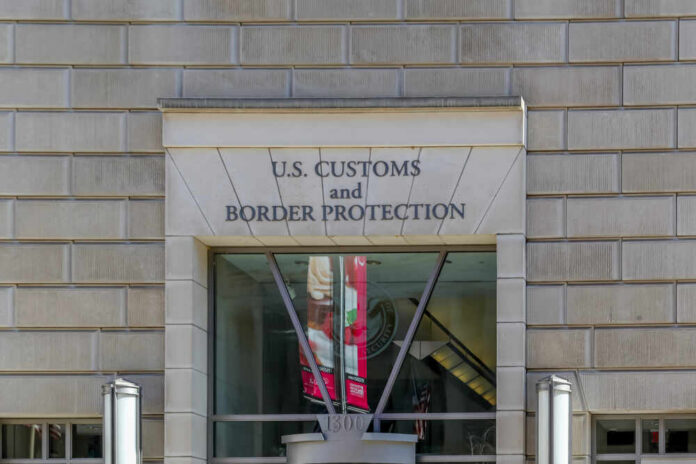
- Customs and Border Protection has already launched refund processing steps, but the government is still fighting the scope of who qualifies.[2][3]
- The case now centers on whether relief belongs only to named litigants or to all affected importers of record.[1][5]
Appeal Sets Up Fight Over Refund Scope
The Justice Department told the Court of International Trade late Friday that it plans to appeal the judge’s universal refund order, which would require repayment of tariffs collected under the International Emergency Economic Powers Act.[1][2] The administration’s position is that the court cannot order refunds for duties that have already liquidated unless the importer of record separately sued to recover the money.[1] That is now the core legal fight.
The dispute matters because the Supreme Court already rejected the tariff authority itself, but the refund question was left unresolved in the practical sense of who gets paid back and how.[3][5] Legal commentators say the process is not automatic and that importers may need to protect their claims through protests or Court of International Trade litigation.[3][4] That procedural uncertainty gives the administration a textual argument that refunds should track individual entries and claims, not a blanket nationwide payout.
Customs System Is Already Moving
Customs and Border Protection has launched a refund portal and is preparing to process claims, which makes this fight more than a courtroom theory.[2] Advisers to importers say businesses should identify affected entries, confirm liquidation status, and preserve documentation for any refund request.[3][4] Those steps reflect a customs system built around entry-level records, not a simple one-click nationwide refund rule, even as the judge’s order points in a broader direction.
That is where the administration’s legal position faces pressure. Sidley reports that the Court of International Trade ordered that “all importers of record” are entitled to the benefit of the Supreme Court decision, and other reports say the government is seeking a stay of that broad remedial language.[3][2] If higher courts do not narrow the order quickly, agencies, brokers, and importers will treat that language as the benchmark for repayment.
Importers Are Being Told To Preserve Claims
Trade-law firms are warning clients not to wait for the appeal to run its course.[3][4] They advise importers to file protests or bring Court of International Trade actions to preserve refund rights, especially for liquidated entries that may otherwise be harder to recover.[3][4] That advice reinforces the government’s narrower-remedy theory in one sense, because it shows that refund rights are being handled through ordinary customs procedures rather than through an automatic classwide payment system.
PRG Senior Principal Josh Zive makes a key distinction in Law360's coverage of the Trump administration's latest tariff appeal: not all tariff cases should be grouped together.
Unlike the earlier IEEPA duties, Section 122 of the Trade Act expressly authorizes temporary … pic.twitter.com/S6hzTZzUxj
— Andrew J. Ferraro (@andrewjferraro) May 28, 2026
At the same time, the broader public record cuts against a hard no-refund posture. Multiple legal summaries describe the tariffs as unlawful and the refund exposure as substantial, while customs guidance and refund portals indicate that the bureaucracy is already building a process for claims.[2][3][4][5] For a conservative audience worried about fiscal discipline and administrative overreach, the larger issue is simple: unlawful collections should not become a revenue stream just because the government wants to slow-roll repayment through litigation.
What Happens Next In Court
The next phase will likely turn on the government’s appeal of the Court of International Trade’s remedial order and any request for a stay that limits payments while the appeal is pending.[1][2][3] If the stay is granted, refunds could be delayed for months or longer. If it is denied, Customs and Border Protection may continue processing claims while the appellate fight continues, creating competing pressures between legal finality and administrative repayment.
That tension explains why importers are being told to act now instead of waiting for a final appellate answer.[3][4] The record shows a real dispute over whether the refund obligation belongs only to litigants or to all importers of record affected by the illegal tariffs.[1][3][5] The administration is betting that the answer is narrower; the Court of International Trade has already signaled the opposite.
Sources:
[1] Web – Trump Administration Will Appeal Ruling Requiring Tariff Refunds
[2] Web – How to request IEEPA tariff refunds – Avalara
[3] Web – Federal Circuit Clears the Way for IEEPA Tariff Refund … – Buchalter
[4] Web – International Emergency Economic Powers Act Tariff Refund Claims
[5] Web – Supreme Court Invalidates IEEPA Tariffs – Stinson LLP