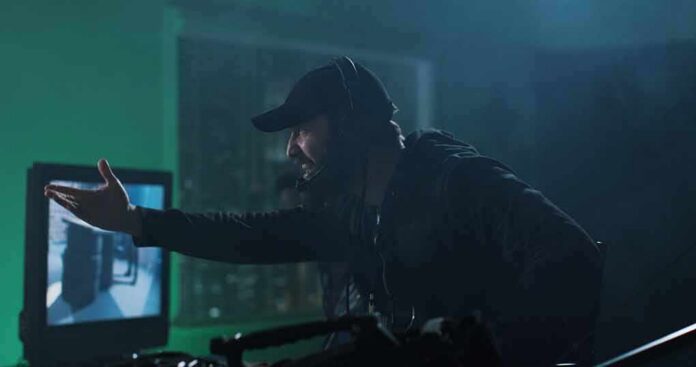
Nathan Fillion’s Guy Gardner works because he is difficult: the performance leans into ego, insecurity, and blunt-force bravado, turning one of DC’s most polarizing Green Lanterns into an engine for story rather than a speed bump to it.
The Short Version
- Fillion openly calls Guy Gardner a jerk and builds the portrayal around fearlessness, not virtue.
- The acting choice is to prioritize selfish, self-serving beats that feel truthful to the character.
- Gardner’s abrasiveness is anchored in backstory: rejection, a punitive father, a coma that “flipped the switch.”
- Across DCU appearances, Gardner is positioned as connective tissue—a recurring thread unifying projects.
Fillion’s Central Claim: Fearless, Flawed, and Deliberately Unnice
Fillion is not coy about the part he’s playing. He has described Guy Gardner as a jerk, and he draws a sharp line between the Green Lantern Corps’ criterion—fearlessness—and any moral predicate of goodness. You do not have to be nice to wear the ring; you have to be unafraid. That distinction is the key to his performance. It gives him permission to choose the rudest truthful action rather than the most heroic-seeming one, which is why he frames Gardner’s moment-to-moment decision-making as a search for the most selfish, self-serving move that still rings emotionally honest to the scene.
This is more than a glib logline. It’s an acting philosophy that suits a character long portrayed in comics as cocksure, confrontational, and, at his worst, insufferably abrasive. Fillion has said he likes to “lean into faults and flaws,” and with Gardner he pushes that impulse to the foreground—ninety percent flawed and unapologetic about it. The effect is to stabilize the character’s center of gravity: Gardner isn’t a nice guy who occasionally lashes out; he is the guy whose first instinct is to push, posture, and provoke, and who then has to live with the consequences.
What Makes “Jerk” Playable: Backstory, Insecurity, and the Switch Flip
No actor can sustain one note. Fillion threads the needle by grounding Gardner’s aggression in biography rather than pure malice. He points to formative wounds—being passed over, a fraught relationship with a harsh father—as the fuel for Gardner’s incessant need to prove himself. In that reading, the character’s swagger is a compensatory armor: a cultivated fearlessness worn loudly enough to drown out the private suspicion that he was never first choice and never fully seen.
Then there is the canonical rupture. Fillion flags what he calls the coma switch, a storyline pivot in which Gardner’s personality hardens after a traumatic event; he even floats the possibility of lingering brain injury as a psychological accelerant for the persona fans recognize. You do not need a diagnostic label to understand the artistic utility here. It licenses heightened behavior without detaching it from the man’s continuity—this version of Gardner is contiguous with who he was, yet refracted by trauma into a more abrasive spectrum of traits.
Mechanism on Screen: How the Performance Reads
On screen, a Guy Gardner built this way alters scenes by changing their pressure system. He enters and the oxygen thins. Dialogue becomes a contact sport because his default tactic is to escalate—staking claim, baiting rivals, testing allies. That impulse creates narrative friction that other characters must either defuse or ride through. It also clarifies why fearlessness, not kindness, is the ring’s throughline for him: he will say the impolitic thing and take the physical risk others angle to avoid. Drama needs heat; Gardner supplies it without apology.
The selfish-first rubric, paradoxically, also sets a baseline for growth. When a character predictably chooses himself, any deviation—restraint, empathy, tactical silence—registers. The arc reads because the starting point is honest. This is why “not nice” can be freeing for an actor: it’s not permission to be cartoonishly cruel, it’s a constraint that forces sharper choices. Each beat asks the same question—what would a prideful, thin-skinned, fearless operator do—and then tests the answer against circumstance and consequence.
Continuity as Design: Gardner as DCU Thread
Fillion has also been explicit that Gardner is meant to function as connective tissue across the current DCU rollouts. That is not mere cameo bait; it’s a character-design choice. A recurring, disruptive personality can knit disparate stories by providing a consistent tone of conflict—what editors call line cohesion. Fillion has said as much, describing Gardner as part of the fabric and himself as a thread within a broader quilt of projects. The implication is that the same flawed, fearless persona will appear at different registers across titles, maintaining identity while modulating to fit each story’s needs.
Practically, that continuity does two things. First, it sets audience expectation: when Gardner walks in, you anticipate friction, gallows humor, or a blunt tactical pivot. Second, it establishes a yardstick for other Lanterns. In a universe that often celebrates stoic rectitude, Gardner’s pugnacious self-certainty becomes a contrast instrument—throw him next to a more measured ring-bearer and the differences in leadership, ethics, and team dynamics pop immediately. Friction is the point; comparison is the payoff.
Why This Interpretation Lands with Audiences Primed for Fidelity
Superhero audiences come to adaptations with strong priors about who a character is supposed to be, and they punish portrayals that feel sanded down. Studies around comic adaptations consistently show that fans privilege fidelity to key traits; in some work on comic-book audiences, large majorities of fans and even nonfans reported that staying true to core characteristics mattered in their evaluation of a film or series. Gardner, historically written as abrasive and combative, benefits from a portrayal that does not apologize for those edges. Fillion’s insistence on fearlessness over niceness maps cleanly to that expectation lane and reads as faithful rather than revisionist.
Media dynamics amplify this effect. Entertainment coverage tends to distill complex acting talk into character labels, so when Fillion says “jerk,” headlines follow. That compression can be reductive, but it also works here because the label is not a gimmick—he is articulating the organizing principle of the performance. For viewers already anchored in the comics, the shorthand acts like a fidelity signal; for newcomers, it sets a clear behavioral frame they can test against the text as episodes roll out.
Nathan Fillion on appearing in “Lanterns” and how he’s the #DC Universe’s main througline: ‘It’s nice that there’s a bunch of us witnessing the birth of the DC Universe that’s being thrown at us in these pieces, and Guy Gardner is becoming a thread in the backdrop. He’s a very…
— Scott Smith (@scotty2smithy) September 21, 2026
The Craft Payoff: Character as Engine, Not Ornament
The most important consequence of Fillion’s approach is mechanical: it makes Gardner useful. A universe crowded with noble stoics risks tonal homogeneity; Gardner’s brand of fearless selfishness punctures that sameness and forces stories to make sharper moral distinctions. He is the character who will kick the door rather than parse the etiquette of entry; that saves writers from contriving conflict and lets them explore consequence. When the ring chooses fearlessness, it sometimes gets a battering ram. A well-played battering ram clarifies what the rest of the team is for.
One Caveat on Evidence and One Clear Outcome
Much of the public record for these remarks arrives through interview excerpts relayed by entertainment outlets rather than full transcripts; even so, the quotes are consistent across venues and align with decades of Gardner’s print characterization, giving them unusual coherence for press-cycle commentary. The result is straightforward: Fillion is playing Guy Gardner as fearless, selfish, and shaped by old wounds—on purpose—and positioning that persona as a recurring throughline for the DCU. The performance choice is not only defensible; it is dramatically generative.
Sources:
screenrant.com, episodemag.com, bleedingcool.com, comicbasics.com