UN General Assembly week is less a ceremony than a concentrated marketplace of power: a rare few days when a U.S. president can broadcast doctrine to the world and compress monthslong diplomacy into a New York hallway. In that format, President Trump has repeatedly used the UN stage to project leverage, sharpen confrontations, and stack leader-to-leader meetings—exactly the mix that makes the venue feel like a “home game” for his style.
At a Glance
- Trump’s UN week combined a high-profile General Assembly address with an unusually dense schedule of bilaterals in New York.
- His speechmaking at the UN emphasized pressure on adversaries—especially Iran—and sovereignty-first themes.
- The week functioned as a hub for direct diplomacy: multiple leaders, one city, back-to-back sessions.
- UNGA is structurally built for this: a staging ground that turns agenda-setting, symbolism, and speed into political capital.
What UN Week Offers a U.S. President
Every September, the General Assembly’s high-level week concentrates global attention and travel budgets into midtown Manhattan. The mechanics matter. Unlike set-piece summits with months of pre-negotiation and a narrow agenda, UN week is a flexible, leader-dense calendar: plenary speeches for signaling, bilateral and “pull-aside” meetings for transactional progress, and media oxygen on tap. That architecture favors a president who treats visibility and tempo as tools—using the rostrum to define choices for adversaries, then using the corridors to test leverage in person. The White House’s own framing for Trump’s recent UN week aligned with that logic: a major address paired with a run of leader engagements designed to show American power deployed against persistent problems.
That model is not hypothetical. Associated Press reporting captured Trump using the UN platform to dial up pressure on Iran and to claim movement—saying U.S. and Iranian officials met after his General Assembly remarks—while aides previewed an agenda built to confront long-running challenges and press for outcomes rather than photo-ops. The UN week design makes those moves plausible because it collapses logistics: everyone is already there.
Trump’s Message Architecture: Confrontation Over Ceremony
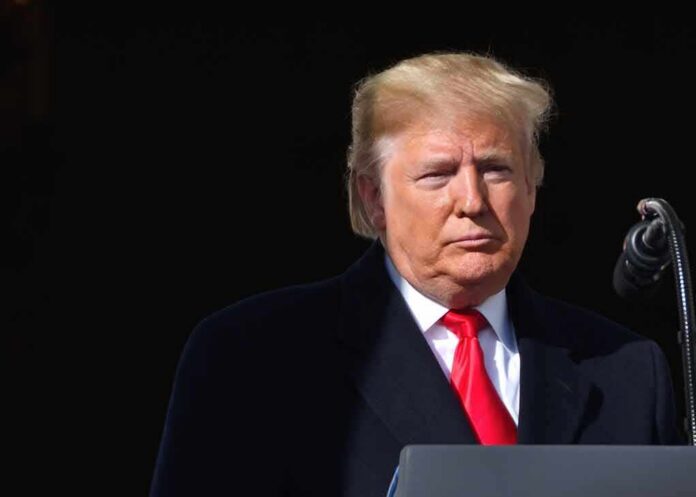
Trump’s UN addresses have been constructed as arguments rather than anthems: sovereignty foregrounded, multilateralism critiqued, adversaries named. That rhetorical posture suits a forum where attention is scarce and clarity wins. Coverage has consistently described his UN remarks as direct and combative—criticizing the UN’s performance, migration patterns, criminal cartels, and the Iranian government—delivered with the refrain that where others equivocate, he acts. The point is strategic: use the microphone to reduce ambiguity. In a venue tuned to diplomatic euphemism, sharp lines travel farther.
That approach also dovetails with Fox’s editorial framing of UN week as a stage for “sovereignty politics,” a storyline its hosts amplified around Trump’s appearances. While commentary is not evidence of outcomes, it accurately reflects the rhetorical choice Trump has made at the UN: to treat the General Assembly as a stage for declarative intent rather than consensus prose. When the week’s value lies in agenda-setting, that choice can be consequential.
The Schedule: Dense, High-Profile, and Designed for Leverage
Density is a form of power in diplomacy: the more leaders you see, the more signals you send and the more options you create. White House schedules and pooled reporting placed Trump in a classic UN-week cadence—General Assembly address plus back-to-back leader meetings, including sessions with Ukrainian President Volodymyr Zelenskyy and other heads of government, with additional outreach to Latin American and Gulf partners. The same geographic compression that snarls New York traffic turns a U.S. presidential suite into a revolving door of statecraft; leaders who might take weeks to arrange elsewhere can be seen in hours in New York.
This is why UN week often punches above its formal deliverables. Even when no joint communiqué is signed, the aggregate effect of a dozen targeted conversations can shift negotiating baselines. For a president oriented toward testing leverage—pressing, probing, offering binary choices—that throughput is the point. AP’s account of U.S.–Iran contact after Trump’s speech underscores the channel-creation function the week uniquely provides.
Why the “Home Game” Frame Resonates—and Its Limits
The “home game” metaphor, popularized by cable segments during Trump’s appearances, lands because it captures a real fit between forum and method: a microphone large enough for blunt signaling, and a meeting matrix built for quick, high-stakes asks. UN week makes it easy to dramatize policy; the press pack is assembled, the flags are arranged, and the choreography is global by default. For a president who prizes visible firmness—especially toward Iran and other adversaries—the UN’s spectacle is not a bug; it is a feature that can amplify deterrence messaging and extract responses in real time.
There are boundaries. The UN is not designed to favor any one leader; it is a neutral marketplace where everyone shows up with their own cameras and talking points. Outcomes are conditioned by hard power, coalition math, and timing, not just by performance at the podium. That is why seasoned diplomats describe UNGA as indispensable rather than decisive: it supplies access and attention, but not automatic wins. Within that architecture, Trump’s teams have nevertheless treated the week as an accelerator for pressure campaigns and face-to-face diplomacy—uses for which the forum is well suited.
Mechanism and Consequence: How Messages Turn into Moves
Turning a speech into statecraft follows a familiar pathway. First, define an adversary’s choice set publicly—raise the reputational cost of noncompliance and the domestic cost of concessions. Second, work the margins privately in bilaterals: explore partial steps, sequencing, or side-payments that make movement possible without theatrics. Third, harvest the media cycle: ensure that allies, markets, and third countries hear the same signal and adjust their own positions accordingly. Trump’s teams have used this triad repeatedly, with Iran as the prime exhibit during UN week; AP’s report of immediate U.S.–Iran contact after his address illustrates the template.
When it works, the UN’s density multiplies those effects—one televised line refracts through dozens of meetings and interviews over 72 hours. When it doesn’t, the week still clarifies: adversaries lock in defiance, allies calibrate hedges, and the next steps crystallize. Either way, the New York convening accelerates the feedback loop that leaders need to make consequential calls.
@FoxNews on @TheFive Watters’ claim that Trump put nukes “on the table” is simply false. Trump said no such thing in his UN speech. That’s not reporting—it’s putting words in Trump’s mouth.
— Tampa Bay FL (@Tampa_Bay_AMF) September 22, 2026
Bottom Line
UN week rewards presidents who know how to use tempo, theater, and proximity. Trump has done so by pairing a forceful sovereignty message with an unusually packed schedule of high-value meetings and by aiming his rhetoric where it can open a negotiating lane—or close one. That is why the “home game” label has stuck in commentary: the forum’s mechanics line up with his methods. The institution remains neutral, but the calendar favors leaders who treat visibility as leverage and access as action. On those terms, Trump has repeatedly made New York work for him.
Sources:
facebook.com, wusf.org, foxnews.com, chathamhouse.org