
The Garden Grove chemical-tank crisis is a case study in how modern communities price industrial risk: even when toxic exposure is limited, the disruption, danger, and public costs are real—and regulators increasingly force companies to internalize them through structured settlements that combine compensation, penalties, and years of safety oversight.
At a Glance
- A proposed $125 million civil settlement with GKN Aerospace channels money to residents and businesses, reimburses public emergency costs, imposes penalties, and mandates multi-year safety monitoring.
- Roughly 50,000 people were evacuated over Memorial Day weekend after a storage tank at GKN’s Garden Grove facility entered a hazardous state involving methyl methacrylate (MMA), a volatile monomer.
- GKN denies legal liability in the settlement and has emphasized cooperation, mitigation actions, and community support contributions, while officials and media documented the scale and cost of the emergency.
- The case fits a national pattern: high-consequence chemical incidents trigger swift relief and enforcement, while root-cause findings and systems fixes unfold over years under federal and local oversight.
What the settlement actually does—and why that structure matters
The Orange County District Attorney filed a civil agreement seeking $125 million from GKN Aerospace entities, subject to court approval. Reported terms allocate the lion’s share to a claims program for residents and businesses, with additional civil penalties, reimbursement of emergency response and abatement costs, and a safety and monitoring regime that installs outside-expert oversight for years. This architecture is no accident. Modern environmental enforcement increasingly couples near-term relief (to stabilize families and small businesses after large-scale evacuations) with forward-looking controls that reduce the probability and consequence of recurrence. By directing funds to both people and systems, prosecutors are codifying a principle long taught by major-accident investigators: pay for the harm, then reengineer the risk.
Several numbers are load-bearing. Coverage of the proposed agreement cites a roughly $100 million claims program for those displaced, $15 million in penalties, and more than $8.4 million to reimburse public emergency costs. The monitoring requirement extends for at least seven years under an external expert—strong medicine designed to turn episodic hazard control into institutional habit.
The incident itself: a hazardous tank, a volatile monomer, and mass evacuation
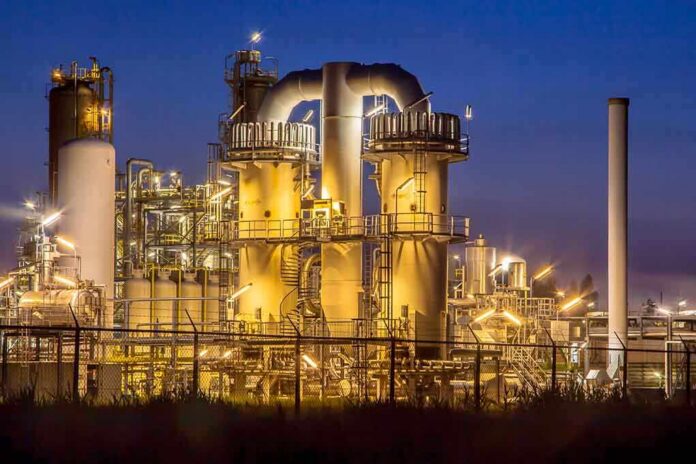
The Garden Grove emergency centered on methyl methacrylate (MMA). MMA is highly flammable, can polymerize under heat, and when mishandled can escalate into a pressure-and-vapor hazard. Officials warned at the time that a tank at GKN’s facility was in “crisis,” prompting wide evacuation buffers while firefighters and hazmat teams worked to cool, inert, or otherwise stabilize the contents. Over a holiday weekend, the operational challenge multiplied: protect the community, protect responders, and prevent a tank failure that could ignite, disperse vapors, or both. Those tradeoffs explain the conservative posture—move people first, then methodically neutralize the risk.
Here, the public impact is unambiguous even if toxic exposures were limited. Tens of thousands of residents and numerous businesses were displaced for days; agencies incurred significant costs; and the county’s emergency-management system tied up resources that could not serve other calls. That is exactly the kind of offsite consequence—evacuations and service disruption—that risk regulators and prosecutors treat as harm in its own right, not merely a near-miss footnote.
GKN’s position—and how no-admission settlements function
GKN has consistently emphasized several points. First, company statements argued officials reported no chemical leak, no contamination, and no injuries. Second, GKN highlighted round-the-clock monitoring, cooperation with local, state, and federal agencies, and third-party environmental work at the site. Finally, the company underscored community contributions—millions earmarked for relief funds and charities—and positioned the settlement as a resolution without admission of liability. That framing is common in large civil environmental cases: companies constrain litigation risk and expedite relief while legally preserving their defenses.
From a community-risk lens, the no-admission phrasing is less important than the practical outcomes. The agreement would finance claims, cover public costs, and bind the company to multi-year safety governance under external scrutiny. Those are tangible controls that reduce future hazard regardless of what the pleadings say about fault. Put differently: in industrial-risk governance, dollars and oversight move risk; rhetoric does not.
How investigators and regulators think about “cause”
Public debate after chemical scares often fixates on whether a leak occurred. Investigators approach cause differently. The U.S. Chemical Safety Board’s root-cause model integrates equipment condition, process design, operating procedures, maintenance, training, alarms, human factors, and organizational safety culture. A “cause” can be an upstream management-system failure that allowed a tank to approach runaway or polymerization thresholds even if physical containment never catastrophically failed. That distinction matters because it directs corrective action: alarms and cooling capacity, inhibitor management, relief systems, and decision authority for shutdowns do more to prevent the next incident than arguing over the semantics of “leak.”
Placed in the national risk landscape, what happened in Garden Grove is not an outlier. EPA’s Risk Management Program tracks thousands of facilities handling hazardous chemicals; ten-year analyses have documented more than 1,500 reportable accidents, hundreds with offsite impacts including evacuations and shelter-in-place orders. The key lesson across these events is consistent: robust process safety management—and credible external verification—shrinks both the likelihood and the footprint of emergencies.
$125 million settlement reached after dangerous Garden Grove chemical leak
https://t.co/ybRWQOjKXW— Tim Conway Jr Show (@ConwayShow) October 13, 2026
What meaningful prevention will look like over the next decade
The most consequential terms in the proposed settlement are the ones the public will not notice when they work. External expert oversight for seven years is long enough to stress-test whether new procedures, maintenance regimes, inhibitor programs, and emergency drills survive leadership turnover and budget cycles. When outside auditors have authority and continuity, they can insist on leading indicators—near-miss reporting quality, corrective-action closure rates, management-of-change rigor—that correlate with fewer late-night calls to evacuate neighborhoods.
For residents and businesses, a well-run claims program matters in two ways. It directly compensates disruption, and it also signals to neighboring firms that the real cost of operational drift includes displacing a city and writing checks. That signal effect—a predictable, sizable penalty for losing control of process safety—nudges boards to treat integrity budgets and operator training as strategic necessities, not discretionary spend. When combined with transparent RMP compliance and the prospect of CSB interest if controls degrade, the region’s risk posture improves even if headlines fade.
Bottom line
The Garden Grove settlement framework reflects a mature, outcomes-focused approach to chemical-risk governance: compensate widely, penalize meaningfully, and hardwire better safety through independent oversight. GKN’s insistence on no legal admission does not blunt the substance: $125 million aligned to relief, public reimbursement, and long-horizon monitoring is the market price of avoidable hazard. Communities do not need to wait for a plume to measure harm. The evacuation itself—and the mobilization required to prevent the worst—is proof enough to demand both restitution and reform.
Sources:
nypost.com, article.wn.com, cbsnews.com, abc7.com, en.wikipedia.org, calmatters.org, latimes.com, nbclosangeles.com, abcnews.com, response.epa.gov, apha.confex.com