

When a school shooting fractures a community, the first hours determine whether chaos hardens into trauma or is met with coordinated care; in Bend, Oregon, the state’s rapid emergency mobilization, paired with decisive local action, set the tone for both immediate security and longer-term recovery.
At a Glance
- Four people were killed at Silver Rail Elementary—three children and a teacher—and two others were wounded; the 16-year-old suspected shooter also died.
- Oregon activated a coordinated state response led by the Department of Emergency Management and later formalized recovery measures through executive action.
- Police accounts indicate a community member confronted the gunman as officers arrived within minutes, underscoring how fast-moving interventions intersect with law enforcement in modern active-shooter events.
- The state’s follow-on plan covered student learning continuity, substitute staffing, building repairs, victim services, and federal grant coordination.
What Happened: The Essential Facts
Silver Rail Elementary in Bend became the site of a deadly attack that left three children and a teacher dead, with two additional victims wounded. The suspected shooter—identified by police as a 16-year-old—also died at the scene. The governor’s office set the casualty baseline: three children and one adult killed; one child and one adult injured; and the 16-year-old suspect deceased. Independent reporting, citing police, matched the core contours, including the suspect’s age and identity and that the child victims were 5, 8, and 11 years old. While any single detail in early crisis reporting can shift as investigations firm up, the broad facts of loss and rapid response are well established.
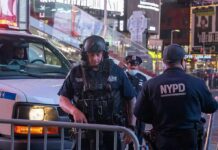
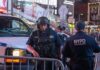
Operationally, police and bystander actions converged. A community member who saw the assailant enter the school pursued and engaged him; officers arrived within minutes to secure classrooms and treat the wounded. That sequence—civilian intervention at the flashpoint, swift law-enforcement arrival, and room-by-room clearance—tracks with contemporaneous police briefings and follow-on coverage that relayed the same core timeline.
How Oregon’s Emergency Apparatus Activated
The state response moved on two tracks—incident management and community recovery. Immediately, the Oregon Department of Emergency Management (OEM) served as the state’s coordination hub, linking law enforcement, schools, public health, and human services to stabilize the scene and support local authorities. The governor’s office made that mandate explicit, tasking OEM to “coordinate across multiple state agencies,” a phrasing that reflects the Incident Command System (ICS) model Oregon uses for multi-agency operations. ICS is not jargon; it is the standardized playbook that aligns objectives, resources, and communications when seconds matter.
Within days, the governor outlined a structured recovery plan. Beyond condolences, the state committed to tangible measures: an executive order to unlock emergency resources; rapid collaboration between OEM and the Oregon Department of Education; substitute educator surge support; administrative flexibility for the district; facility assessment and repairs; mental-health and victim services; and coordination to tap federal funding streams—most notably Project SERV, a U.S. Department of Education grant program that covers crisis response and recovery in schools. Those steps shift the posture from first response to sustained community care, ensuring instruction can resume while trauma services and practical supports remain in place.
Inside the Response: Police, Civilians, and the Modern Active-Shooter Playbook
Contemporary active-shooter protocols emphasize immediate threat interdiction, even before full perimeter control, and joint operations that span patrol officers, fire/EMS, and—when needed—federal partners. In Bend, officers’ rapid arrival—measured in minutes—mirrors that doctrine; it also aligns with the reality that bystanders may act in the gap between first shots and first uniforms. Police officials credited a community member who confronted the shooter after seeing him enter the school; media attributed the suspect’s death to that intervention as officers converged and took control.
This intersection of civilian courage and professional response is not an aberration; it’s a recurring feature of real-world incidents where proximity, initiative, and training (formal or not) can alter the trajectory before an incident commander has fully spun up. The tactical challenge for responders is to absorb that early, unscripted action into a safe, disciplined clearance—room by room, casualty by casualty—without compounding risk. Bend’s timeline, and the swift shift from interdiction to medical care and reunification, reflects a system that has drilled for this contingency and executed under pressure.
From Tragedy to Recovery: What “State Support” Actually Means
In the days after a school shooting, educational leaders face intertwined problems: physical plant readiness, teacher capacity, student attendance and instruction, and the psychological scaffolding that lets children and staff walk back through the doors. Oregon’s plan addressed each layer. The executive action directed OEM to coordinate mission assignments and resource tasking; the Oregon Department of Education moved on short-term waivers and staffing relief so the district could stabilize schedules and provide instructional continuity; state partners supported building repairs, family services, and coordination with federal programs designed for precisely this scenario.
These measures matter because recovery is logistics plus trust. Parents need to know buildings are secure and staff bandwidth is real—not aspirational. Teachers need clinicians, peer support, and the assurance that coverage and planning time won’t evaporate the second headlines fade. Districts need flexible dollars with clear guidance so administrators aren’t choosing between trauma counseling and bus fuel. Project SERV funding, in particular, can underwrite counseling, overtime, transportation for altered schedules, and secure entry improvements when local budgets are already strained.
A shooting at Silver Rail Elementary School in Bend, Oregon, left three children and a teacher dead after authorities said a 16-year-old former student forced his way into the building and opened fire in a special education classroom. https://t.co/0KTVr1RCiY
— NBC Montana (@NBCMontana) October 28, 2026
What We Know—and What Responsible Reporting Centers
The verified backbone of this event is stable: four victims killed at the school; two wounded; the 16-year-old suspected shooter dead; rapid engagement by a community member and police; and a state-led recovery framework that moved quickly from statement to execution. In the weeks after mass-violence incidents, motive, weapon provenance, and charging decisions around firearm access often evolve more slowly—that cadence is normal investigative work, not hesitation. The public needs the near-term truth first—who was harmed, who is safe, and how the state is helping—while investigators follow the documentary trails that take longer to surface.
Why This Response Model Matters Beyond Bend
No state can legislate away all risk, but it can compress harm through preparation and coherent governance. Bend’s experience underscores three durable lessons. First, speed saves lives; every jurisdiction should benchmark dispatch-to-door times and train to shave them. Second, civilian interventions will continue to occur; agencies should build training and communications that assume, and safely integrate, that reality. Third, recovery is a policy choice; executive authority, education waivers, and federal grant activation are tools that must be ready before anyone needs them. Oregon used them as intended—moving from shock to structure without losing sight of the children and educators at the center of the loss.
Sources:
apps.oregon.gov, bbc.com, kten.com