

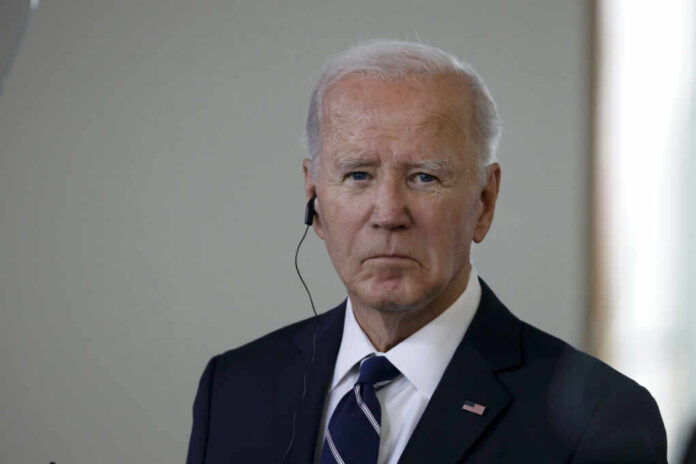
A shaky, unverified video of former President Joe Biden is becoming a political Rorschach test—fueling distrust in media and government while leaving basic facts unanswered.
Quick Take
- Partisan outlets circulated a TikTok-sourced clip said to show an 83-year-old Biden moving slowly through a Delaware coffee shop, but the recording date and full context are unclear.
- Neither report cited official confirmation from Biden’s team or independent verification of when and where the footage was taken.
- The episode highlights a broader problem: low-trust information spreads faster than verified reporting, deepening public cynicism across party lines.
- In a second Trump term with unified GOP control, Democrats have strong incentives to amplify narratives about Republican “extremism,” while Republicans point to perceived media double standards around Democratic leaders’ fitness and accountability.
What the Video Claims to Show—and What’s Still Unknown
Reports from The Gateway Pundit and MEAWW describe a short video that allegedly shows former President Joe Biden walking slowly through a coffee shop in Delaware while bystanders appear to pay little attention. Both writeups emphasize Biden’s age and physical frailty, and both hinge on a TikTok post reportedly shared “last week” relative to early April 2026. The biggest limitation is basic verification: the reports acknowledge uncertainty about when the footage was recorded.
The lack of confirmed details matters because it determines whether the clip documents a specific public event or simply recycles older footage without context. Neither writeup, as provided, documents the coffee shop’s exact location beyond “Delaware,” explains why Biden was there, or confirms whether the moment was public, private, or staged. Without those facts, audiences are left arguing over implications rather than evidence—exactly the kind of environment where sensational claims can outrun reliable information.
How Low-Verification Clips Shape Politics in a High-Distrust Era
In 2026, the information battlefield is less about one video than the system that turns fragments into “proof.” A clip with unclear provenance can still drive narratives about competence, transparency, and elite protection—especially when people already believe institutions shield powerful figures. Conservatives often point to years of media downplaying concerns about Biden’s capacity while focusing intensely on Trump. Liberals argue viral clips are weaponized to demean opponents and distract from policy debates.
Both reactions can be true at once: political incentives push partisans to share the most damaging interpretation first, then demand the other side disprove it. That pattern weakens the public’s ability to distinguish documented fact from performative outrage. When outlets rely on a single social post without independently confirming date, setting, or participants, the end result is predictable—more heat than light, and another data point for Americans who feel the “deep state” and media class curate reality.
What Responsible Reporting Would Need Before Big Conclusions
A fair assessment of the clip requires verifiable answers to straightforward questions. Reporters would need the recording date, the precise location, and confirmation that the video shows Biden at the time claimed. They would also need context: Was this an official stop, a personal visit, or something else entirely? Finally, an on-the-record statement from Biden’s representatives or corroboration from neutral local sources would help establish whether the scene reflects an actual event or a re-circulated moment.
Until that happens, the strongest factual takeaway is not about Biden’s health, but about the modern political-media loop. Unverified content gains traction because it is emotionally satisfying, not because it is well-substantiated. For voters already exhausted by inflation-era fiscal fights, border failures, and endless culture-war feints, that dynamic reinforces a shared conclusion across left and right: government and the institutions around it keep failing basic standards of competence and honesty.
Why This Resonates Now, Even With Limited Confirmed Facts
The clip’s virality shows how quickly age-and-fitness narratives return when the country lacks trust in leadership pipelines. Republicans, controlling Congress in Trump’s second term, will keep arguing for transparency and accountability from Democratic leadership circles. Democrats, seeking leverage against the White House, will continue painting GOP governance as destabilizing. In that contest, half-verified moments become ammunition—even when they do little to inform citizens about policy outcomes.
For Americans who want something sturdier than partisan outrage, the best approach is simple: treat the video as unproven until the date and setting are confirmed, and judge leaders primarily on decisions and measurable results. The broader story is that the country’s political class keeps rewarding viral narratives over verifiable facts. That reality, more than any single coffee-shop clip, explains why so many citizens feel the system serves itself first.
Sources:
Barely Anyone Notices Feeble Biden Shuffling Around Delaware Coffee Shop (VIDEO)
Video shows ‘frail’ Joe Biden being ignored by bystanders during coffee stop in Delaware