

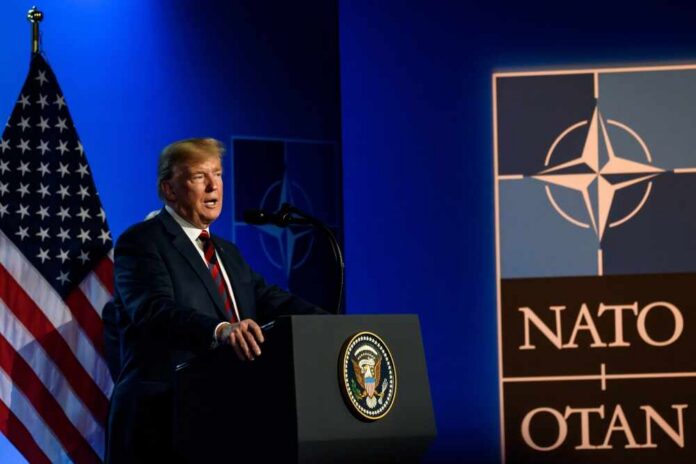
President Trump signals a bold America First move by reviewing U.S. troop reductions in Germany, demanding NATO allies pay their fair share after decades of freeloading on American blood and treasure.
Story Highlights
- Trump announces review of reducing U.S. troops in Germany via Truth Social, decision imminent.
- Pentagon pulls 700 airborne troops from Germany, Romania, and Poland without replacement.
- America First policy pressures Germany for failing NATO 2% defense spending obligation.
- Congress pushes amendments to block further withdrawals, even Republicans voice concerns.
- Move occurs amid Russian threats in Ukraine, raising questions on NATO commitments.
Trump’s America First Challenge to NATO Allies
President Donald Trump posted on Truth Social on April 29 that the United States is studying a possible reduction of troops in Germany, with a decision coming soon. This action stems from long-standing frustrations with NATO partners, especially Germany, not meeting their 2% GDP defense spending commitments. Current U.S. troop levels in Germany stand at about 35,000 personnel, down from Cold War peaks but still the largest in Europe. Trump’s push aligns with his second-term agenda to prioritize American resources over subsidizing European security. Former Ambassador Richard Grenell has advocated strongly for this shift, criticizing Germany’s reluctance to bolster Western defenses. The Pentagon already implemented an initial cut of 700 airborne troops across Germany, Romania, and Poland, framing it as a force posture adjustment rather than a full withdrawal.
Pentagon’s Initial Troop Cuts and Official Framing
The Pentagon announced the non-replacement of 700 U.S. airborne troops in Eastern Europe, part of Secretary of Defense Pete Hegseth’s plan for balanced military posture. U.S. Army Europe and Africa emphasized this does not signal lessened NATO commitment or retreat from Article 5 obligations. Estonia’s Defense Minister praised sustained U.S. presence there, highlighting selective reassurances to frontline allies against Russia. However, the timing coincides with Russia’s assault on Ukraine and hybrid threats to NATO, amplifying European anxieties. Reports suggest potential further pulls from Bulgaria, Slovakia, and Hungary by year-end, though unconfirmed by official sources. This measured reduction tests whether allies will step up, echoing Trump’s repeated calls for fair burden-sharing.
Congressional Pushback and Bipartisan Concerns
U.S. Congress prepares amendments to the National Security Strategy blocking future Europe troop withdrawals and bolstering NATO ties. Even Republican leaders like Senator Roger Wicker and Representative Mike Rogers oppose the moves, fearing unacceptable drawdowns from key positions such as Romanian rotational brigades. German officials, including advisers to Chancellor Angela Merkel, labeled the decision deplorable amid personal tensions, including Merkel’s G7 snub. Critics from think tanks like the Council on Foreign Relations warn of catastrophic signals to adversaries, potentially emboldening Russia. Brookings notes Germany remains vital as a logistics hub despite downsizing needs. These reactions underscore deep state resistance to Trump’s reforms, frustrating conservatives who see endless foreign entanglements draining American strength.
Strategic Risks and Broader Implications
The troop review risks undermining NATO confidence amid Russian aggression, with Eastern allies facing uncertainty over U.S. guarantees. Germany could lose up to a third of its U.S. presence, weakening a key hub for global operations. While reallocations to Poland offer some offset, the unilateral approach—tied partly to diplomatic spats—challenges post-Cold War norms. Both conservatives weary of globalism and liberals distrustful of elite foreign policy agree: Washington elites prioritize power over American interests. Trump’s stance reinforces limited government abroad, forcing allies to defend themselves and freeing resources for domestic priorities like border security and energy independence. Yet unconfirmed expansions heighten debates on balancing strength with sovereignty.
Shared Frustrations Across the Divide
Americans on both sides lament federal overreach, from overspending to endless wars subsidizing ungrateful allies. Conservatives applaud ending the protection racket where Germany thrives on U.S. dollars while skimping defense. Liberals decry perceived elite gamesmanship eroding global stability. This troop review spotlights how entrenched bureaucrats and politicians cling to outdated commitments, sidelining the working families pursuing the American Dream. True reform demands accountability, pressuring NATO to act while safeguarding core U.S. interests.
Sources:
Council on Foreign Relations: Trump’s Sudden and Dangerous Troop Withdrawal from Germany
Brookings Institution: Why Cutting American Forces in Germany Will Harm This Alliance
CBS News: Trump US troop drawdown in Europe raises NATO concern, Republican rebuke
EPC: President Trump’s Decision to Reduce US Troops in Germany: Motives and Implications
Anadolu Agency: Trump considers pulling out US troops from Germany: Report