

Global chaos over a $400 fashion watch is exposing just how fragile basic public order has become in Western cities hooked on hype, social media, and crowd control by panic instead of common sense.
Story Snapshot
- Limited-edition Swatch “Royal Pop” pocket watch launch triggered massive, unruly crowds and store shutdowns across the United States and Europe.
- Nine Swatch locations reportedly closed for safety after lines swelled, crowds surged, and police were called in to restore order.[2]
- At a major Pennsylvania mall, hundreds packed entrances before dawn, forcing a heavy police response, a delayed opening, and at least one arrest.[1][2]
- The frenzy shows how social-media hype, speculative reselling, and weak preparation can turn routine commerce into security incidents.
Limited-Edition Watch Drop Turns Into Security Headache
News reports describe the launch of Swatch’s “Royal Pop” pocket watch, a collaboration with luxury maker Audemars Piguet, as less of a product release and more of a flashpoint for mob-like crowds.[2] The roughly four-hundred-dollar watch quickly shot up to several thousand dollars on resale sites, drawing flippers and collectors who treated mall entrances like lottery tickets.[2] That manufactured scarcity combined with lax planning turned multiple shopping centers into scenes that looked more like concert gates than retail storefronts.
According to coverage from a New York television outlet, some crowds outside Swatch stores became unruly enough that the company decided to close nine locations for the day.[2] Stores in SoHo and at Roosevelt Field Mall were among those that, in the middle of the product launch, were effectively forced to “take a time out.”[2] The company did not issue a detailed public security report, but the outlet’s account ties the closures directly to crowd behavior, not to any external threat or government order.
Police Responses, Arrest, And Delayed Mall Openings
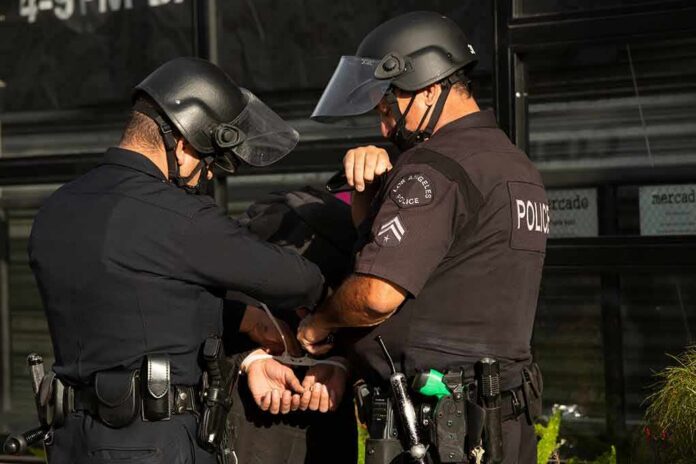
At King of Prussia Mall outside Philadelphia, local reporting describes shoulder-to-shoulder crowds wrapping around the complex before dawn as people tried to be first through the doors.[1] Witness accounts cited in a YouTube news segment talk about “two to three hundred people” tightly packed, pushing toward the entrance as the opening time approached.[1] Police said large groups “stormed the property,” prompting a heavy law enforcement presence and a decision to delay the mall’s opening by roughly two hours.[1][2]
The broadcast states that one person was arrested in connection with the chaos, though details of the charge or any injuries were not provided.[1] That lack of clarity highlights a recurring problem: media and social posts easily label these events as “brawls,” while the underlying documentation only clearly shows crowding, disruption, and at least one arrest.[1][2] Without full incident reports or body-camera footage, the public is left to sort out how much of the story is true disorder and how much is sensational framing designed to drive clicks.
From Shopping To Speculation: Hype Culture Meets Weak Planning
The same outlet notes that the watch’s official price around four hundred dollars contrasted sharply with resale listings near three thousand dollars, creating an obvious incentive for speculators to camp out and rush doors.[2] Those dynamics are familiar from sneaker drops and gaming console releases: when companies deliberately restrict supply and stoke hype, crowds swell, patience disappears, and tempers flare. In this case, media accounts suggest Swatch underestimated that risk, then resorted to sweeping closures once crowds became difficult to manage.[2]
The record so far does not prove that each of the nine shuttered locations faced identical danger levels.[2] There is no store-by-store list of incidents, nor public decision memos weighing alternatives such as ticketed entry, barricades, or additional security.[2] That gap leaves room for criticism that mall operators and corporate leaders defaulted to shutdowns instead of using narrower tools that would have protected both safety and the basic freedom to go about normal shopping without being treated like a problem to be cleared.
What This Says About Modern Crowds And Corporate Responsibility
Researchers and security professionals have long warned that limited-edition “drops” create a predictable pattern: artificial scarcity, online hype, and the lure of quick profit combine to turn ordinary consumers into crowds that can tip into chaos if access feels arbitrary.[1][2] The Swatch launch fits that pattern, with the added twist of global scale—reports and social clips show similar scenes from Europe to major American malls. That spread underscores how quickly hype-driven behavior crosses borders when social platforms amplify every line and scuffle.
Moment Swatch worker confronts angry crowd desperate new £335 watch and tells them to go home as 'I have no more to sell' – as brawls, stampedes and chaotic scenes unfold at stores of luxury Swiss brand https://t.co/EP7W8f9yv1
— Daily Mail (@DailyMail) May 18, 2026
From a conservative perspective, this is not about demonizing shoppers; it is about demanding accountability from corporations and local authorities who should know better by now. Retailers choose scarcity strategies that invite potential disorder, then rely on police and emergency resources to clean up the fallout.[2] When they respond by locking doors and pushing peaceful customers away along with the troublemakers, they send a broader message: your time, your plans, and your access to public spaces are secondary to their marketing games and risk aversion.
Sources:
[1] YouTube – King of Prussia Mall Swatch store to stay closed Sunday …
[2] Web – Giant crowds force Swatch stores to close during ‘Royal Pop’ pocket …