A long-awaited U.S. indictment targeting Raúl Castro over the 1996 downing of two civilian aircraft could finally deliver a measure of justice long demanded by victims’ families and Cuban Americans in Miami.
Story Highlights
- Federal officials are expected to announce an indictment of Raúl Castro tied to the Brothers to the Rescue shootdown that killed four men [1][3][4].
- Florida authorities previously renewed investigative efforts, keeping the case active for victims’ families [2].
- Reports cite alleged audio and chain-of-command evidence as drivers behind the charging push [3][4].
- The move underscores a broader push to hold foreign leaders accountable for attacks on civilians [1].
What Is Reportedly Coming Out Of Miami Today
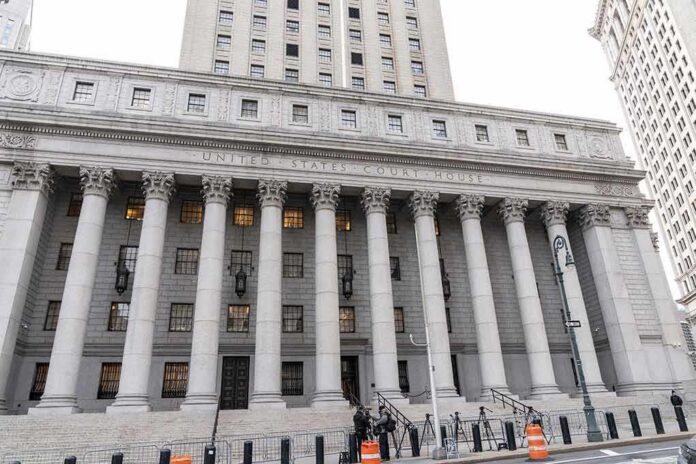
Federal officials and multiple news outlets report that prosecutors in Miami are preparing to unseal criminal charges against former Cuban President Raúl Castro over his alleged role in the February 24, 1996 shootdown of two Brothers to the Rescue aircraft.[1][2][3] Reuters, the Associated Press, and NBC News reported that the Justice Department is expected to formally announce the indictment during a Miami event honoring the victims of the attack.[1][2][5]
The case would mark one of the most consequential criminal actions ever pursued by the United States against a former Cuban leader and would reopen one of the most painful episodes in modern U.S.-Cuba relations.[2][3] According to reporting from Reuters and the Associated Press, investigators believe Raúl Castro — who served as Cuba’s defense minister at the time — may have played a direct role in the chain of command that authorized Cuban military jets to shoot down the civilian aircraft.[1][2] While the precise charges remain under seal pending formal court action, reports indicate the legal theory centers on the unlawful use of lethal force against civilian aircraft that resulted in the deaths of American citizens.[1][3]
The 1996 Shootdown And The Lives Lost
On February 24, 1996, two small aircraft associated with Brothers to the Rescue were shot down by Cuban military jets, killing volunteers Mario de la Peña, Carlos Costa, Pablo Morales, and Armando Alejandre, facts long acknowledged across official and media records [1][2]. Families in South Florida built a sustained, bipartisan push for accountability, arguing that the attack was a deliberate strike on unarmed civilians rather than a confused air intercept gone wrong [2]. That advocacy helped preserve evidence and political will across administrations [2].
Florida investigators kept parallel attention on the case in recent years, reopening lines of inquiry and coordinating with federal counterparts as new leads surfaced, according to public statements and legal filings described in available reports [2]. That persistence ensured the victims’ names—de la Peña, Costa, Morales, and Alejandre—remained central to any potential action. It also reinforced a core principle: when Americans are killed, time should not immunize the perpetrators from eventual legal exposure [2].
Evidence, Process, And The Limits Of What Is Public
Reports surrounding the anticipated indictment point to alleged command-and-control evidence tying Raúl Castro to the authorization process behind the attack.[1][3] Reuters and other outlets reported that prosecutors have reviewed internal Cuban military communications, command structure evidence, and prior statements connected to the shootdown investigation.[1] Some media reports have also referenced alleged recordings and testimony involving Cuban military officials, although most underlying evidence has not yet been publicly released or independently authenticated in court.[3] Because grand jury proceedings remain secret unless charges are formally unsealed, much of the available information currently relies on anonymous officials and secondary reporting rather than publicly filed evidentiary records.[1][2]
By JOSHUA GOODMAN, ALANNA DURKIN RICHER and ERIC TUCKER MIAMI (AP) — The Justice Department is preparing to seek an indictment against former Cuban President Raúl Castro, three people familiar with the matter told The Associated Press on Frid… https://t.co/VEJAMjmw8W
— Capital Gazette (@capgaznews) May 15, 2026
Legal analysts note that any indictment would represent the beginning of a judicial process rather than a final determination of guilt. If charges are formally filed, prosecutors would still need to establish jurisdiction, authenticate evidence, and address major legal questions involving foreign sovereign authority, extradition limitations, and enforcement challenges.[2][5] Even so, many victims’ families and members of Miami’s Cuban exile community view the expected indictment as a major symbolic step toward long-delayed accountability.[4][5]
Why This Matters To American Security And Rule Of Law
Holding foreign leaders to account for lethal actions against civilians aligns with core American principles: sovereignty, the rule of law, and the sanctity of life. When U.S. citizens are killed, the government has a duty to pursue justice that transcends diplomatic convenience. The anticipated action also signals that policies which appeased hostile regimes or downplayed past atrocities are giving way to a firmer standard that deters future abuses by raising the cost of targeting civilians [1][4].
Conservatives who have long criticized resets with authoritarian regimes will recognize this case as a test of moral clarity. If prosecutors can prove orders flowed from the top, accountability should not stall because the perpetrator was powerful, retired, or shielded by propaganda. The families’ decades-long perseverance underscores a simple conviction: justice delayed should not become justice denied. Today’s expected announcement suggests the system may finally be catching up to that conviction [1][2][3][4].
Sources:
[1] Web – DOJ Seeks Raúl Castro Indictment Over 1996 Brothers to the …
[2] Web – Florida Reopens Investigation into Raúl Castro Over 1996 Brothers …
[3] YouTube – Raúl Castro could face charges in Brothers to the Rescue shootdown
[4] YouTube – Feds to announce Raúl Castro’s indictment in 1996 shootdown